







Question: You have a customer table called CUST containing: CustID ( primary key ) CustName ( the name of the customer ) CustPhone ( the phone
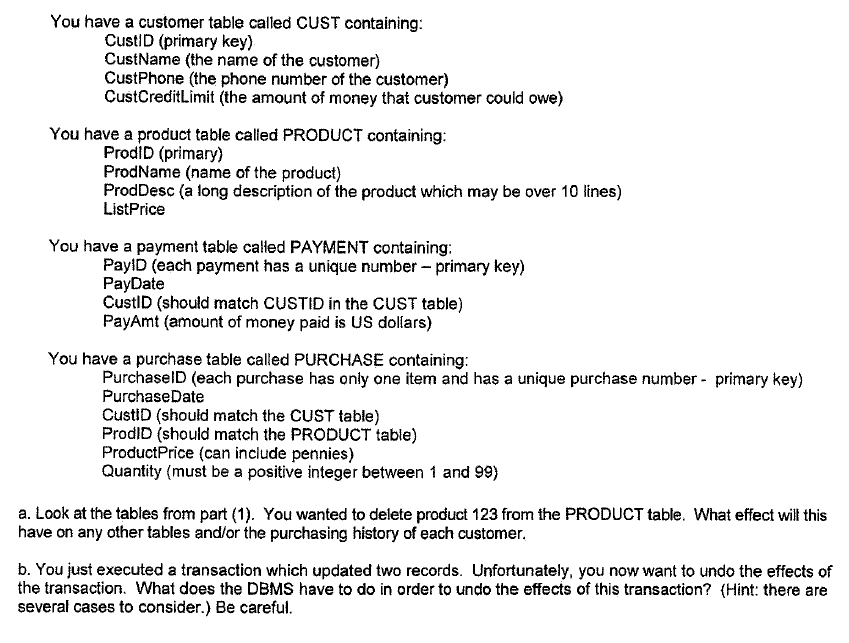
You have a customer table called CUST containing:
CustID primary key
CustName the name of the customer
CustPhone the phone number of the customer
CustCreditLimit the amount of money that customer could owe
You have a product table called PRODUCT containing:
ProdlD primary
ProdName name of the product
ProdDesc a long description of the product which may be over lines
ListPrice
You have a payment table called PAYMENT containing:
PaylD each payment has a unique number primary key
PayDate
CustID should match CUSTID in the CUST table
PayAmt amount of money paid is US dollars
You have a purchase table called PURCHASE containing:
PurchaselD each purchase has only one item and has a unique purchase number primary key
PurchaseDate
CustiD should match the CUST table
ProdID should match the PRODUCT table
ProductPrice can include pennies
Quantity must be a positive integer between and
a Look at the tables from part You wanted to delete product from the PRODUCT table. What effect will this have on any other tables andor the purchasing history of each customer.
b You just executed a transaction which updated two records. Unfortunately, you now want to undo the effects of the transaction. What does the DBMS have to do in order to undo the effects of this transaction? Hint: there are several cases to consider. Be careful.
Step by Step Solution
There are 3 Steps involved in it
1 Expert Approved Answer
Step: 1 Unlock

Question Has Been Solved by an Expert!
Get step-by-step solutions from verified subject matter experts
Step: 2 Unlock
Step: 3 Unlock
 Study Help