







Question: You have data from an unknown distribution. You are told that this data set has a population mean 3.00 standard deviations to either side

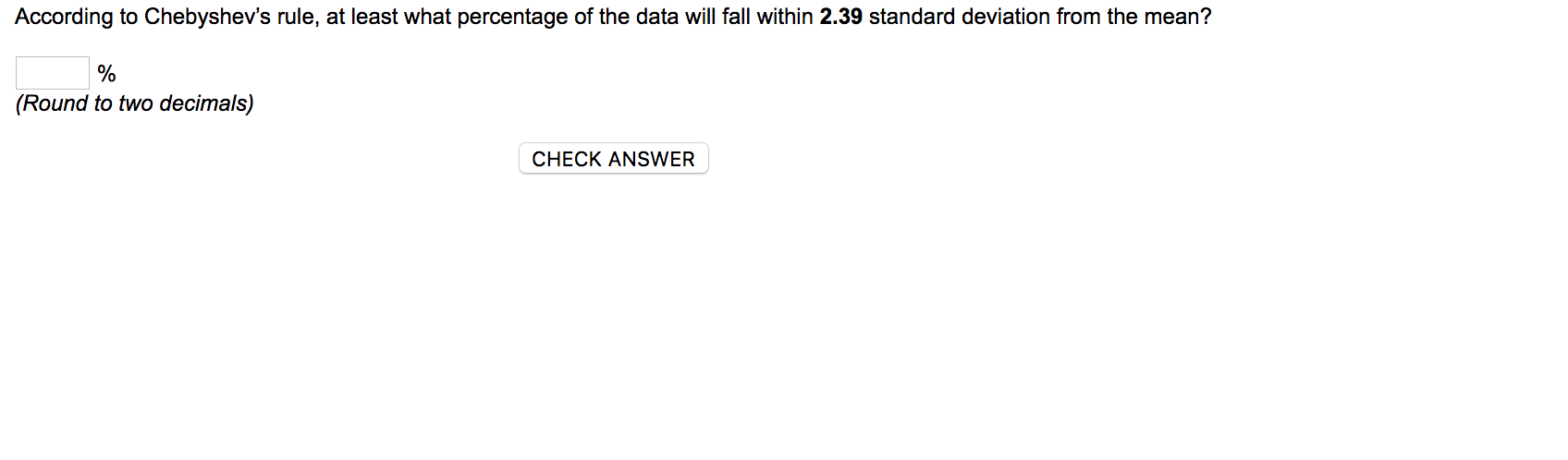


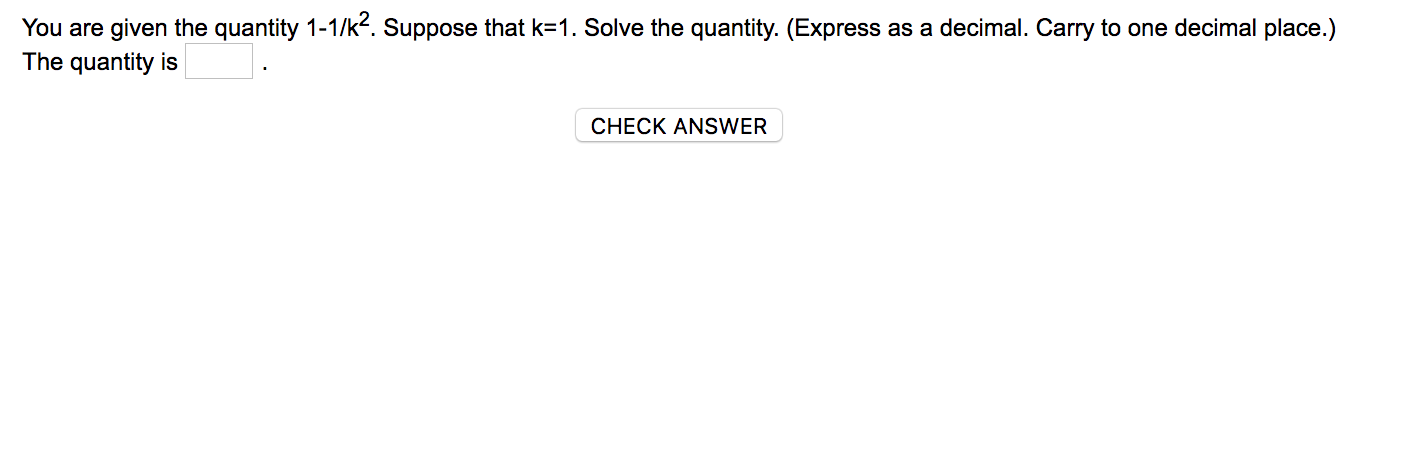
You have data from an unknown distribution. You are told that this data set has a population mean 3.00 standard deviations to either side of the mean. You quickly assert, "I know that at least = 9390 with population standard deviation = 309. Your professor wants to know the percentage of data that can be found within % of the data will be within 3.00 standard deviations to either side of the mean." [Answer as a percent with one decimal place.] CHECK ANSWER According to Chebyshev's rule, at least what percentage of the data will fall within 2.39 standard deviation from the mean? % (Round to two decimals) CHECK ANSWER The variable x is known to have a population mean of 4950, but we have no information about the shape of its distribution. At least what percentage of the data will fall within 3.42 standard deviations of the population mean ? Report your answer to one decimal place. CHECK ANSWER For any data set, Chebyshev's Theorem provides a minimum guarantee about the proportion of the data points that lie within k standard deviations above or below the mean. When we use 4.51 standard deviations, what is this minimum guarantee, as a percentage of the data? Use one decimal place in reporting your answer in percent, but don't use the % sign. CHECK ANSWER % You are given the quantity 1-1/k. Suppose that k=1. Solve the quantity. (Express as a decimal. Carry to one decimal place.) The quantity is CHECK ANSWER
Step by Step Solution
There are 3 Steps involved in it

Get step-by-step solutions from verified subject matter experts
 Study Help