



Question: You just turned on a four port Ethernet Switch (it hasn t learned any addresses yet), and connected a host to each port. You send
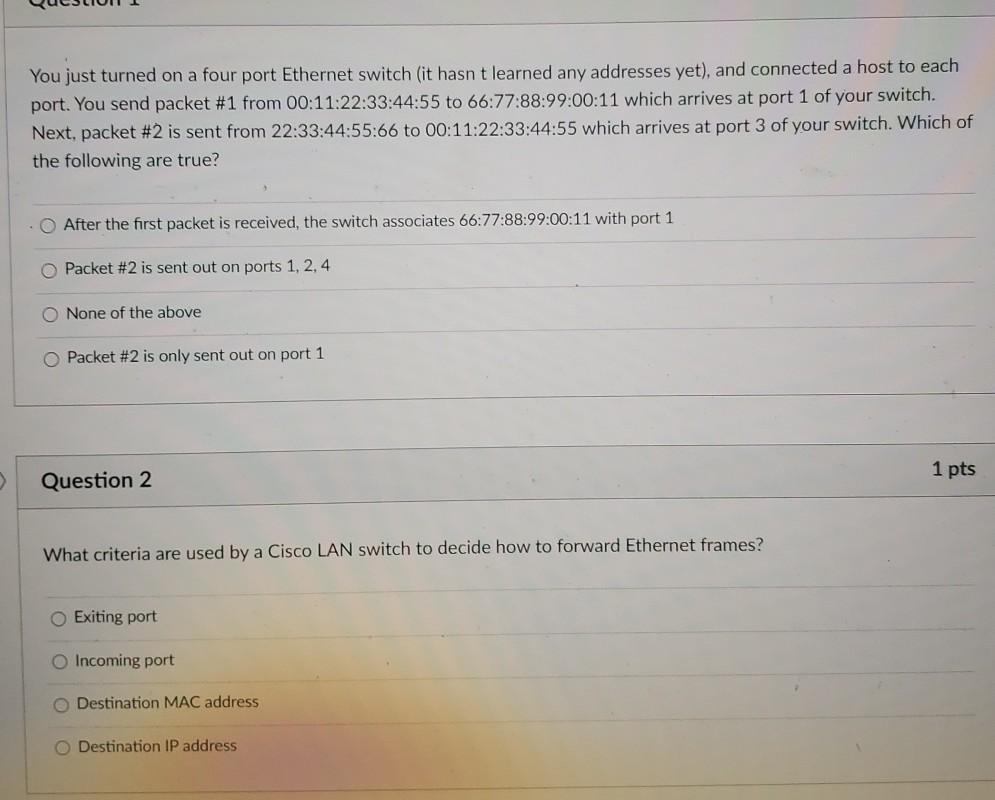
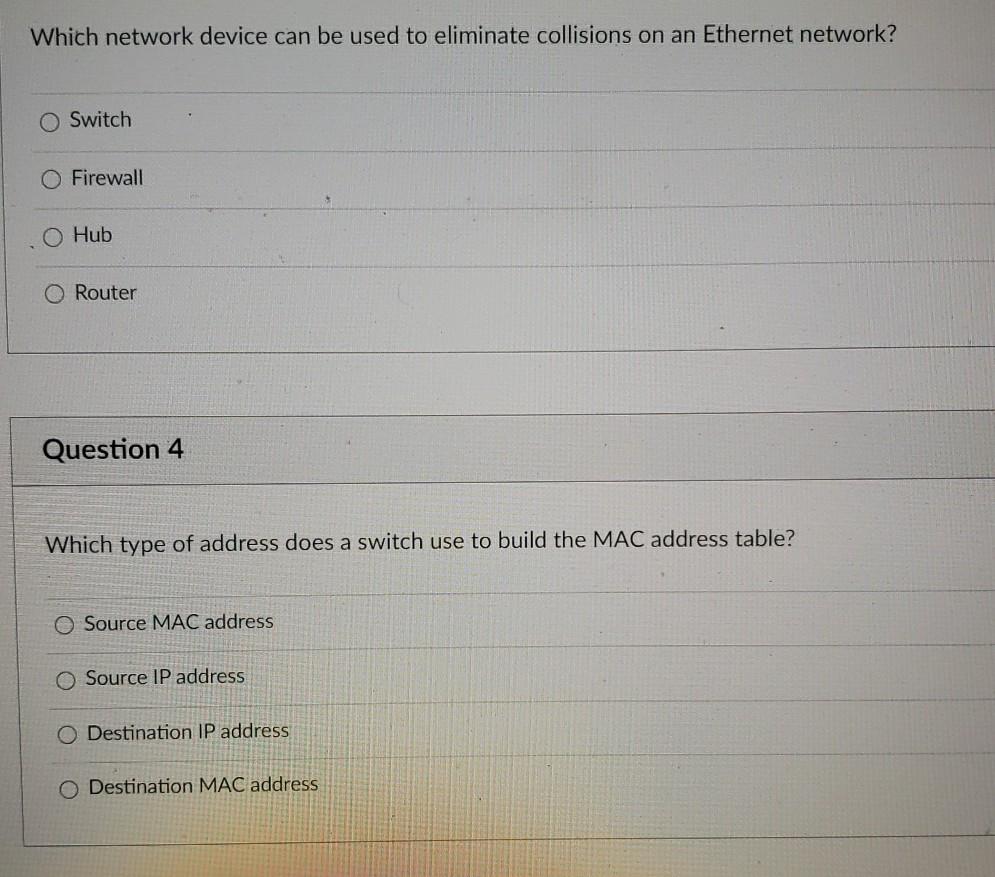
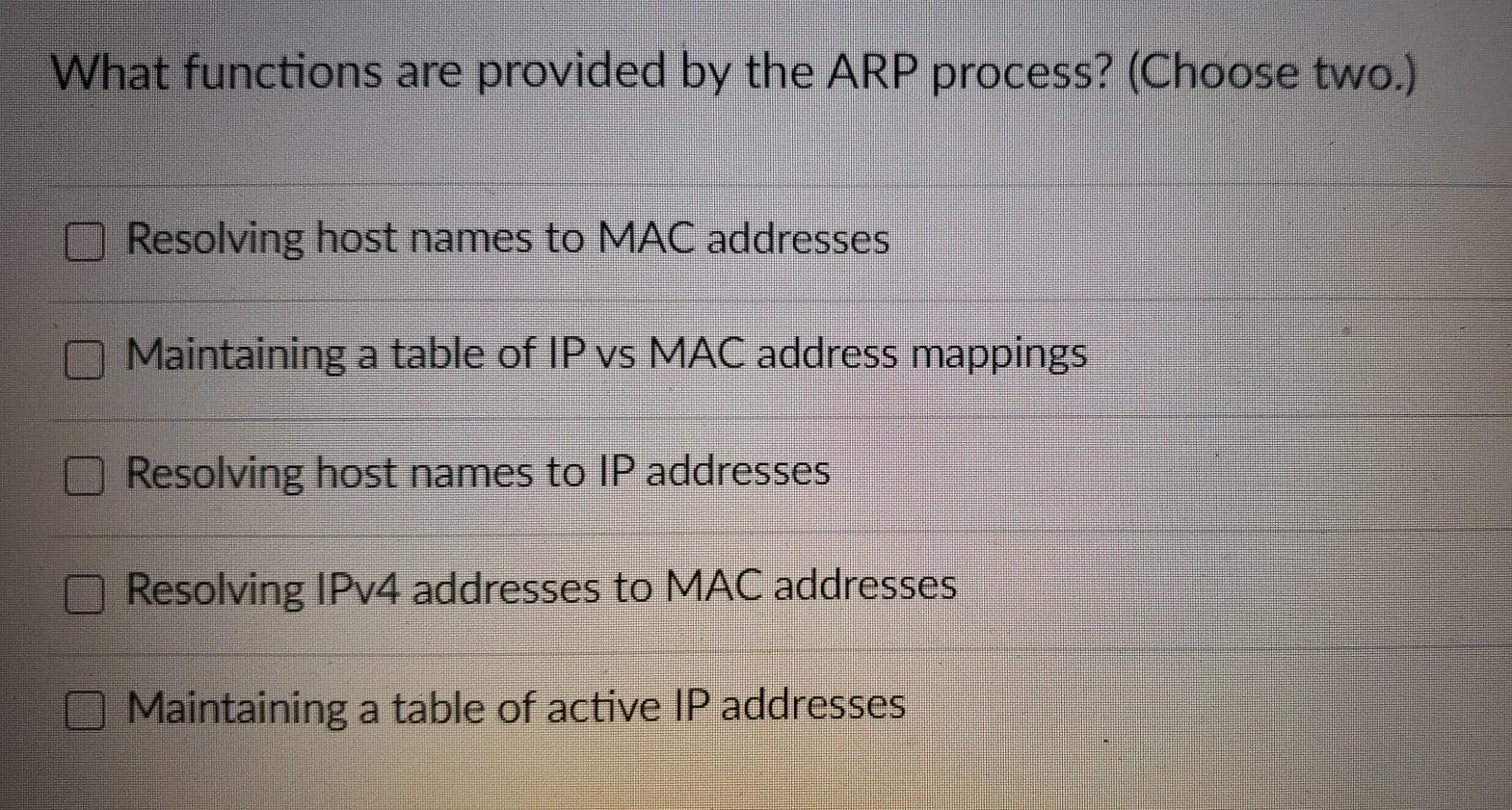
You just turned on a four port Ethernet Switch (it hasn t learned any addresses yet), and connected a host to each port. You send packet #1 from 00:11:22:33:44:55 to 66:77:88:99:00:11 which arrives at port 1 of your switch. Next, packet #2 is sent from 22:33:44:55:66 to 00:11:22:33:44:55 which arrives at port 3 of your switch. Which of the following are true? After the first packet is received, the switch associates 66:77:88:99:00:11 with port 1 Packet #2 is sent out on ports 1, 2, 4 O None of the above O Packet #2 is only sent out on port 1 > 1 pts Question 2 What criteria are used by a Cisco LAN switch to decide how to forward Ethernet frames? Exiting port O Incoming port Destination MAC address O Destination IP address Which network device can be used to eliminate collisions on an Ethernet network? Switch O Firewall O Hub Router Question 4 Which type of address does a switch use to build the MAC address table? O Source MAC address O Source IP address Destination IP address O Destination MAC address What functions are provided by the ARP process? (Choose two.) Resolving host names to MAC addresses Maintaining a table of IP vs MAC address mappings Resolving host names to IP addresses Resolving IPv4 addresses to MAC addresses Maintaining a table of active IP addresses
Step by Step Solution
There are 3 Steps involved in it

Get step-by-step solutions from verified subject matter experts