



Question: You will draw out the steps of DNA replication. In each box, draw the event described. You will use 3 different colours: one for
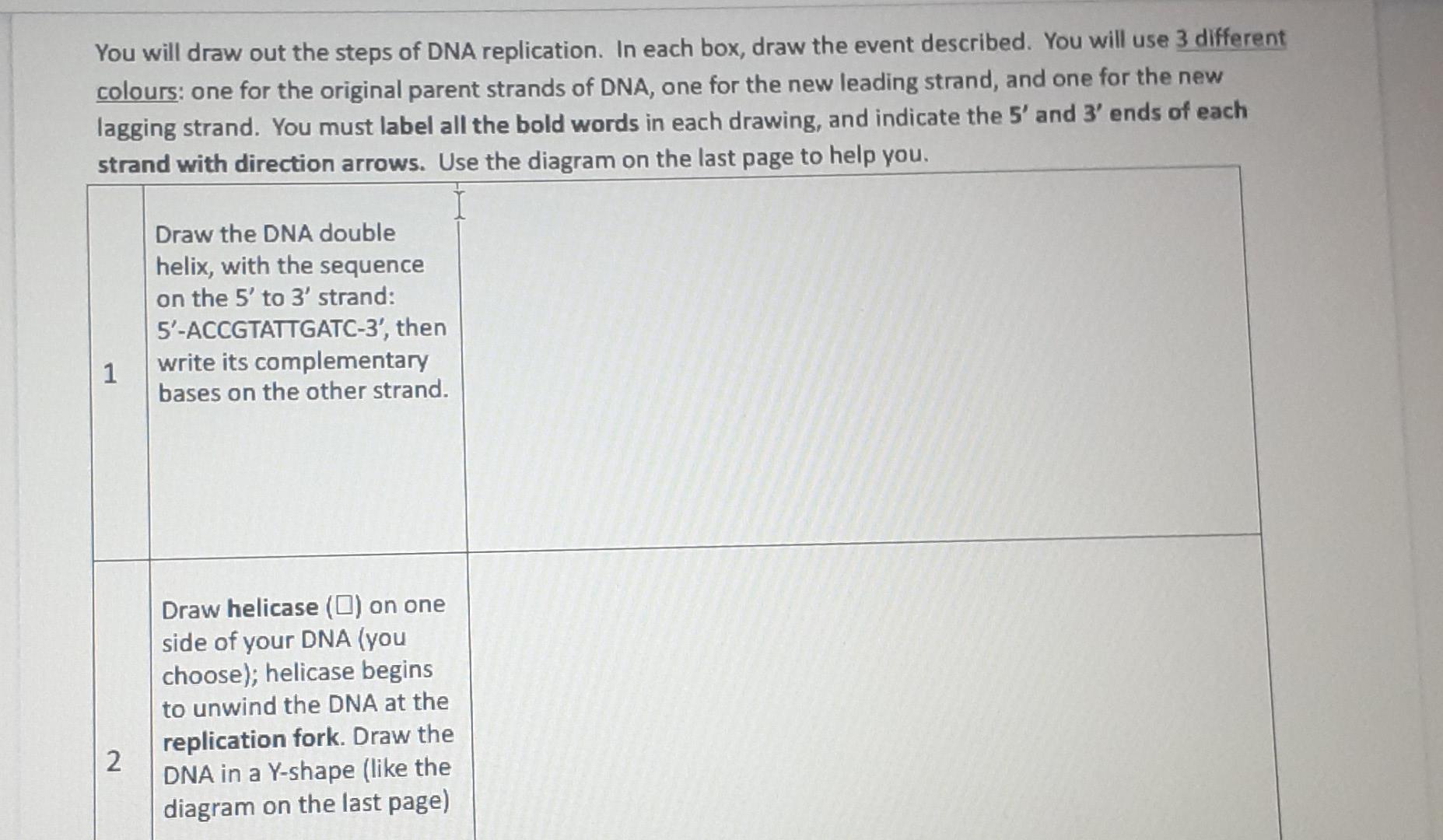
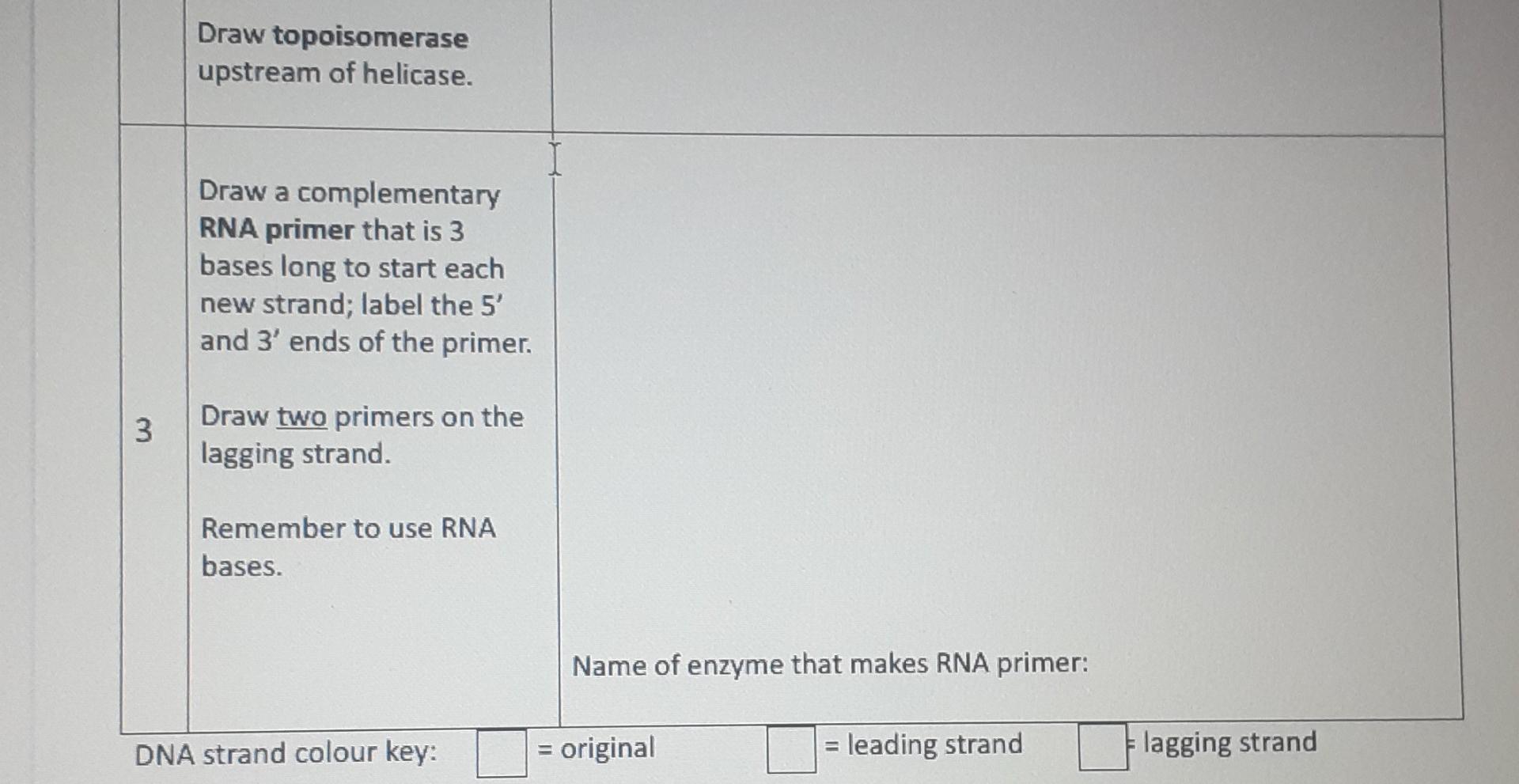
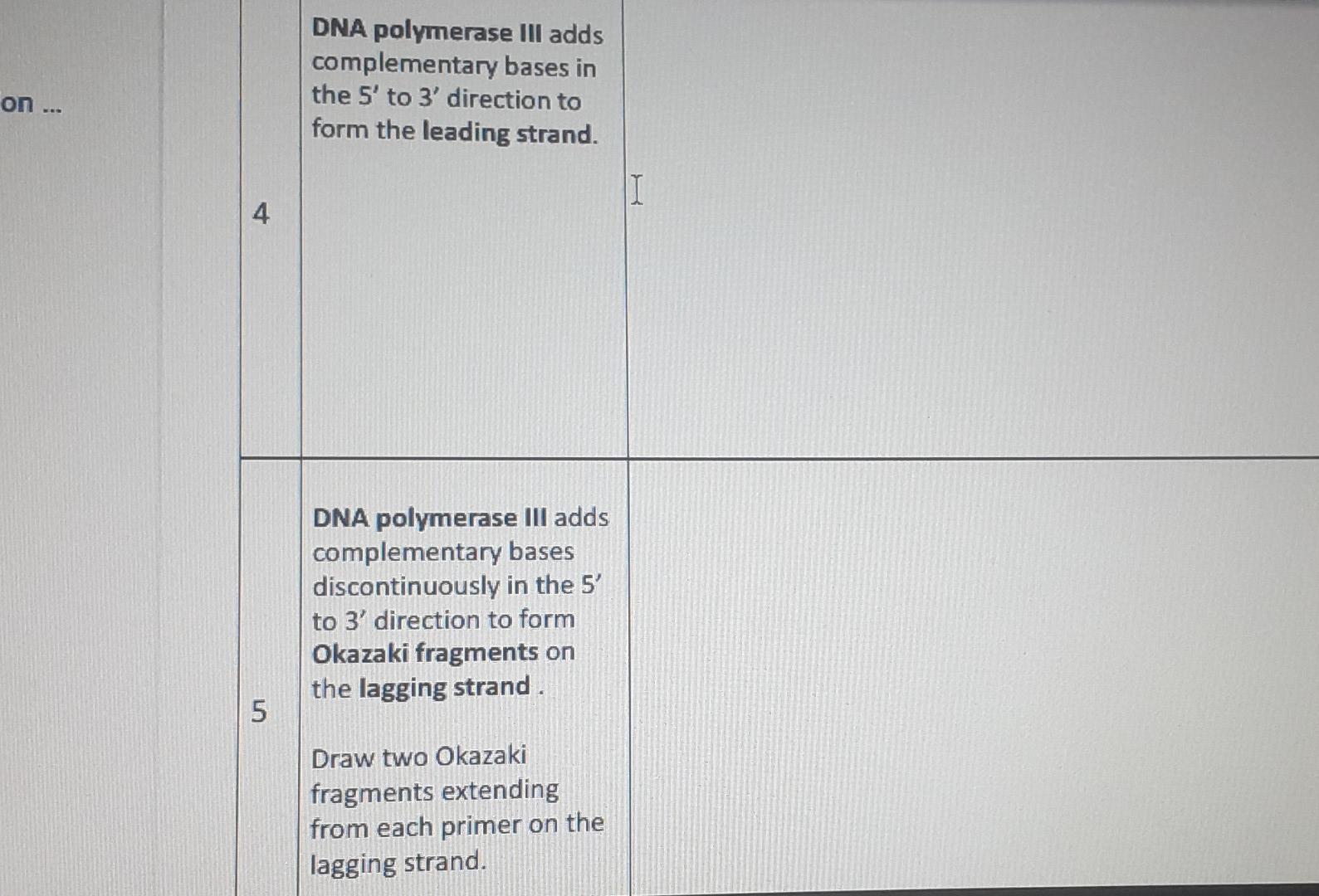

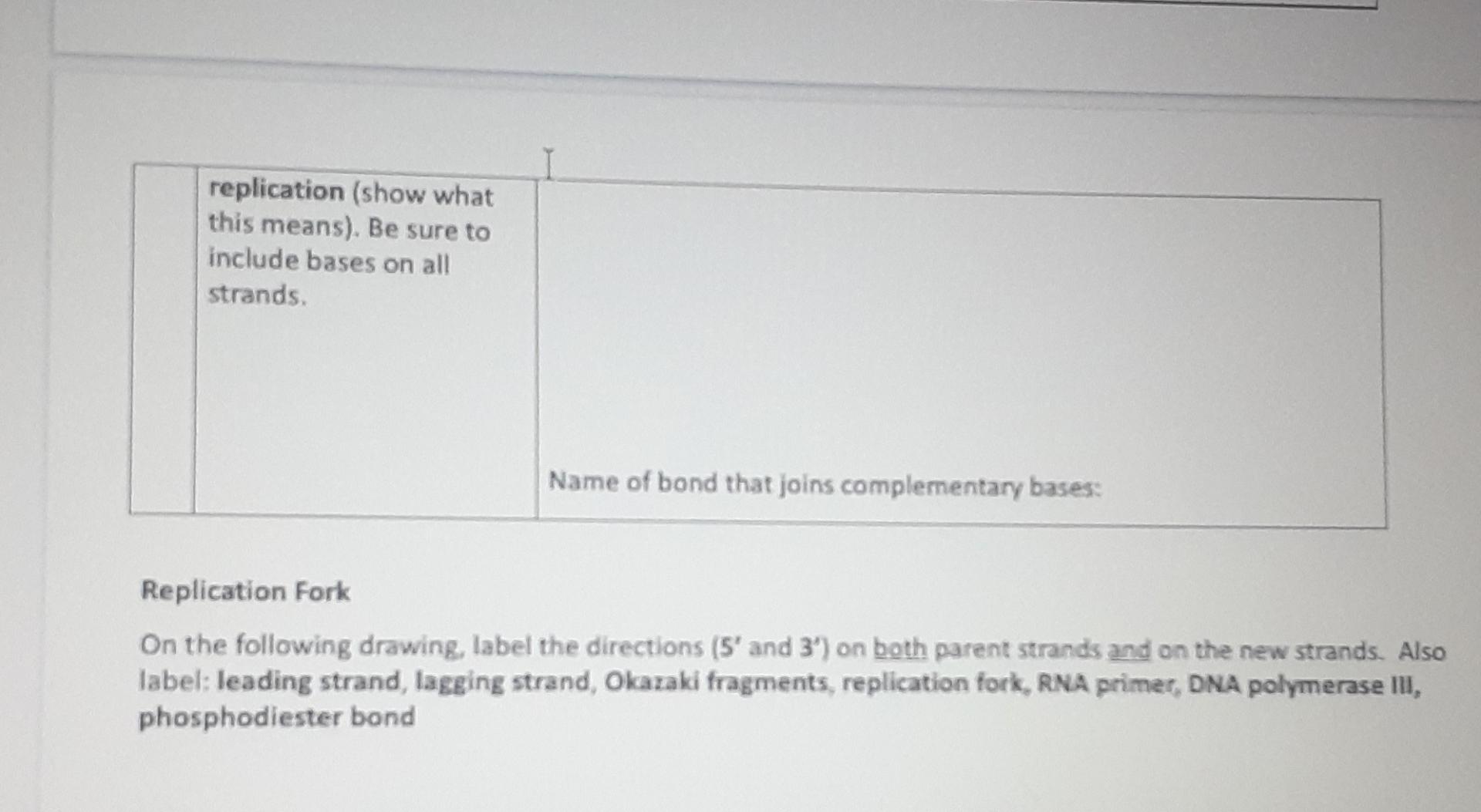
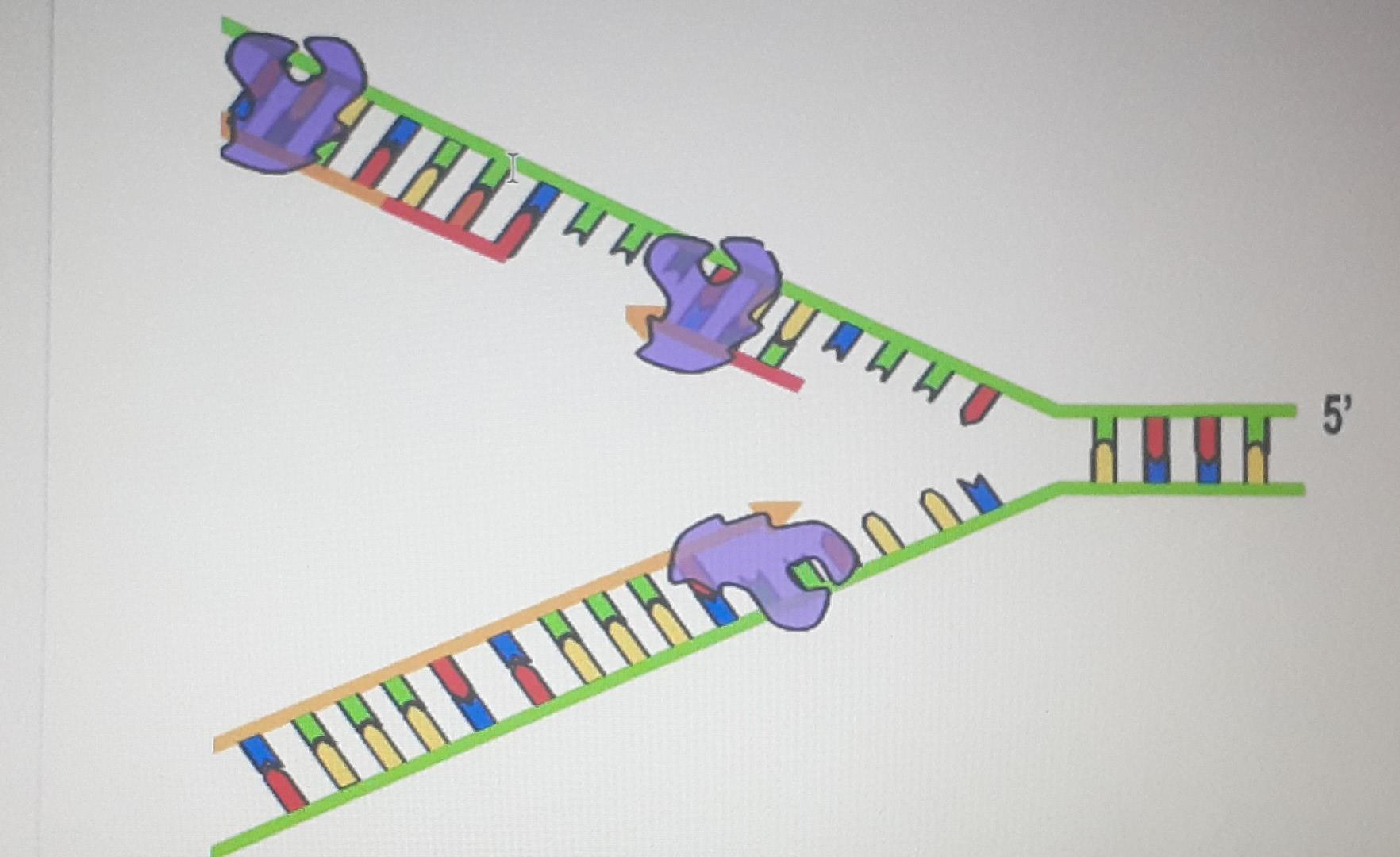
You will draw out the steps of DNA replication. In each box, draw the event described. You will use 3 different colours: one for the original parent strands of DNA, one for the new leading strand, and one for the new lagging strand. You must label all the bold words in each drawing, and indicate the 5' and 3' ends of each strand with direction arrows. Use the diagram on the last page to help you. 1 2 Draw the DNA double helix, with the sequence on the 5' to 3' strand: 5'-ACCGTATTGATC-3', then write its complementary bases on the other strand. Draw helicase (O) on one side of your DNA (you choose); helicase begins to unwind the DNA at the replication fork. Draw the DNA in a Y-shape (like the diagram on the last page) 3 Draw topoisomerase upstream of helicase. Draw a complementary RNA primer that is 3 bases long to start each new strand; label the 5' and 3' ends of the primer. Draw two primers on the lagging strand. Remember to use RNA bases. DNA strand colour key: Name of enzyme that makes RNA primer: = original = leading strand Flagging strand on ... 4 5 DNA polymerase III adds complementary bases in the 5' to 3' direction to form the leading strand. DNA polymerase III adds complementary bases discontinuously in the 5' to 3' direction to form Okazaki fragments on the lagging strand. Draw two Okazaki fragments extending from each primer on the lagging strand. I ication ... 6 7 DNA polymerase I removes the RNA primer and replaces it with DNA nucleotides. Okazaki framents are joined by DNA ligase. Two DNA double helices are formed, showing semiconservative H Name of bond created by DNA ligase: replication (show what this means). Be sure to include bases on all strands. Name of bond that joins complementary bases: Replication Fork On the following drawing, label the directions (5' and 3") on both parent strands and on the new strands. Also label: leading strand, lagging strand, Okazaki fragments, replication fork, RNA primer, DNA polymerase III, phosphodiester bond LEFT H 5' You will draw out the steps of DNA replication. In each box, draw the event described. You will use 3 different colours: one for the original parent strands of DNA, one for the new leading strand, and one for the new lagging strand. You must label all the bold words in each drawing, and indicate the 5' and 3' ends of each strand with direction arrows. Use the diagram on the last page to help you. 1 2 Draw the DNA double helix, with the sequence on the 5' to 3' strand: 5'-ACCGTATTGATC-3', then write its complementary bases on the other strand. Draw helicase (O) on one side of your DNA (you choose); helicase begins to unwind the DNA at the replication fork. Draw the DNA in a Y-shape (like the diagram on the last page) 3 Draw topoisomerase upstream of helicase. Draw a complementary RNA primer that is 3 bases long to start each new strand; label the 5' and 3' ends of the primer. Draw two primers on the lagging strand. Remember to use RNA bases. DNA strand colour key: Name of enzyme that makes RNA primer: = original = leading strand Flagging strand on ... 4 5 DNA polymerase III adds complementary bases in the 5' to 3' direction to form the leading strand. DNA polymerase III adds complementary bases discontinuously in the 5' to 3' direction to form Okazaki fragments on the lagging strand. Draw two Okazaki fragments extending from each primer on the lagging strand. I ication ... 6 7 DNA polymerase I removes the RNA primer and replaces it with DNA nucleotides. Okazaki framents are joined by DNA ligase. Two DNA double helices are formed, showing semiconservative H Name of bond created by DNA ligase: replication (show what this means). Be sure to include bases on all strands. Name of bond that joins complementary bases: Replication Fork On the following drawing, label the directions (5' and 3") on both parent strands and on the new strands. Also label: leading strand, lagging strand, Okazaki fragments, replication fork, RNA primer, DNA polymerase III, phosphodiester bond LEFT H 5' You will draw out the steps of DNA replication. In each box, draw the event described. You will use 3 different colours: one for the original parent strands of DNA, one for the new leading strand, and one for the new lagging strand. You must label all the bold words in each drawing, and indicate the 5' and 3' ends of each strand with direction arrows. Use the diagram on the last page to help you. 1 2 Draw the DNA double helix, with the sequence on the 5' to 3' strand: 5'-ACCGTATTGATC-3', then write its complementary bases on the other strand. Draw helicase (O) on one side of your DNA (you choose); helicase begins to unwind the DNA at the replication fork. Draw the DNA in a Y-shape (like the diagram on the last page) 3 Draw topoisomerase upstream of helicase. Draw a complementary RNA primer that is 3 bases long to start each new strand; label the 5' and 3' ends of the primer. Draw two primers on the lagging strand. Remember to use RNA bases. DNA strand colour key: Name of enzyme that makes RNA primer: = original = leading strand Flagging strand on ... 4 5 DNA polymerase III adds complementary bases in the 5' to 3' direction to form the leading strand. DNA polymerase III adds complementary bases discontinuously in the 5' to 3' direction to form Okazaki fragments on the lagging strand. Draw two Okazaki fragments extending from each primer on the lagging strand. I ication ... 6 7 DNA polymerase I removes the RNA primer and replaces it with DNA nucleotides. Okazaki framents are joined by DNA ligase. Two DNA double helices are formed, showing semiconservative H Name of bond created by DNA ligase: replication (show what this means). Be sure to include bases on all strands. Name of bond that joins complementary bases: Replication Fork On the following drawing, label the directions (5' and 3") on both parent strands and on the new strands. Also label: leading strand, lagging strand, Okazaki fragments, replication fork, RNA primer, DNA polymerase III, phosphodiester bond LEFT H 5'
Step by Step Solution
3.39 Rating (161 Votes )
There are 3 Steps involved in it
1 The structure of DNA is called a double helix stru... View full answer

Get step-by-step solutions from verified subject matter experts