Question: You will summarize given chapter and relate tips about what you learned and how you can implement what you have read about customer service into
You will summarize given chapter and relate tips about what you learned and how you can implement what you have read about customer service into your work or student life.
Step 1: Read your chapter, summarize the key points of the chapter.(1-2 paragraphs)
Step 2: After that summary what did you learn and how can you implement this concept into your life (at work or as a student)? (1 paragraph)
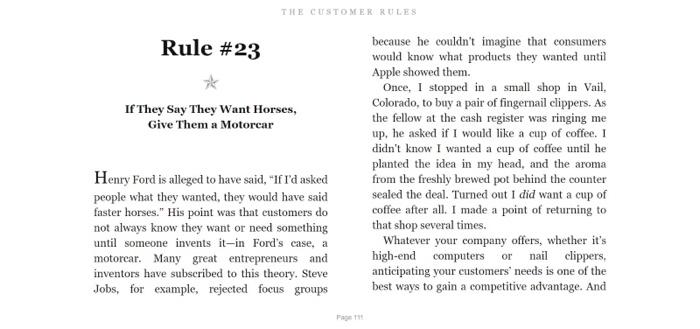
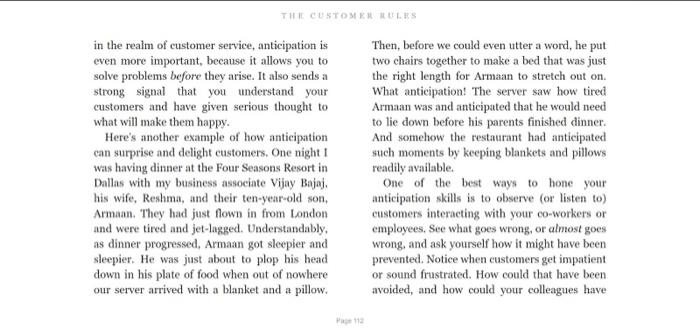
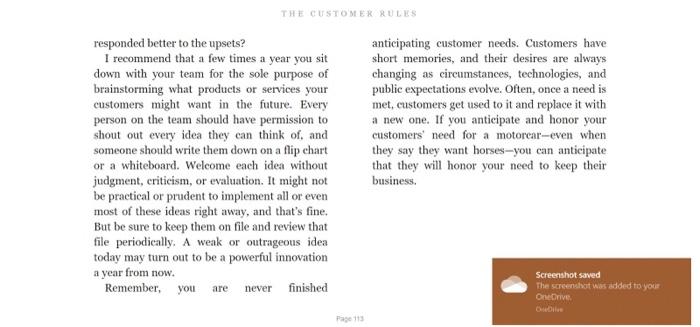
THE CUSTOMER RULES Rule #23 If They Say They Want Horses, Give them a Motorear because he couldn't imagine that consumers would know what products they wanted until Apple showed them. Once, I stopped in a small shop in Vail, Colorado, to buy a pair of fingernail clippers. As the fellow at the cash register was ringing me up, he asked if I would like a cup of coffee. I didn't know I wanted a cup of coffee until he planted the idea in my head, and the aroma from the freshly brewed pot behind the counter sealed the deal. Turned out I did want a cup of coffee after all. I made a point of returning to that shop several times. Whatever your company offers, whether it's high-end computers nail clippers, anticipating your customers' needs is one of the best ways to gain a competitive advantage. And Henry Ford is alleged to have said, "If I'd asked people what they wanted, they would have said faster horses." His point was that customers do not always know they want or need something until someone invents it-in Ford's case, a motorcar. Many great entrepreneurs and inventors have subscribed to this theory. Steve Jobs, for example, rejected focus groups or THE CUSTOMER RULES in the realm of customer service, anticipation is Then, before we could even utter a word, he put even more important, because it allows you to two chairs together to make a bed that was just solve problems before they arise. It also sends a the right length for Armaan to stretch out on strong signal that you understand your What anticipation! The server saw how tired customers and have given serious thought to Armaan was and anticipated that he would need what will make them happy. to lie down before his parents finished dinner. Here's another example of how anticipation And somehow the restaurant had anticipated can surprise and delight customers. One night such moments by keeping blankets and pillows was having dinner at the Four Seasons Resort in readily available Dallas with my business associate Vijay Bajaj, One of the best ways to hone your his wife, Reshma, and their ten-year-old son, anticipation skills is to observe (or listen to) Armaan. They had just flown in from London customers interacting with your co-workers or and were tired and jet-lagged. Understandably, employees. See what goes wrong, or almost goes as dinner progressed, Armaan got sleepler and wrong, and ask yourself how it might have been sleepier. He was just about to plop his head prevented. Notice when customers get impatient down in his plate of food when out of nowhere or sound frustrated. How could that have been our server arrived with a blanket and a pillow. avoided, and how could your colleagues have THE CUSTOMER RULES responded better to the upsets? I recommend that a few times a year you sit down with your team for the sole purpose of brainstorming what products or services your customers might want in the future. Every person on the team should have permission to shout out every idea they can think of, and someone should write them down on a flip chart or a whiteboard. Welcome each idea without judgment, criticism, or evaluation. It might not be practical or prudent to implement all or even most of these ideas right away, and that's fine. But be sure to keep them on file and review that file periodically. A weak or outrageous idea today may turn out to be a powerful innovation a year from now. Remember, you finished anticipating customer needs. Customers have short memories, and their desires are always changing as circumstances, technologies, and public expectations evolve. Often, once a need is met, customers get used to it and replace it with a new one. If you anticipate and honor your customers' need for a motorear-even when they say they want horses-you can anticipate that they will honor your need to keep their business. Screenshot saved The screenshot was added to your OneDrive are never Page 1









 Study Help