







Question: You will walk through an example of calibrating a model to use for recommending portfolio allocations. This process will familiarize you with one approach to
You will walk through an example of calibrating a model to use for recommending portfolio allocations. This process will familiarize you with one approach to the problem, and follows some of Chapter 4.
First, download some data. Go to Yahoo Finance and download levels for the assets in the allocation below. Use the monthly adjusted close values (so you can ignore the dividend information) for the period :
Start date: 3/1/2013
End date: 3/1/2023
(use the "max" time period to download and then trim to this range)
This will provide ten years of monthly returns (April 2013 - March 2023 -- 120 observations).
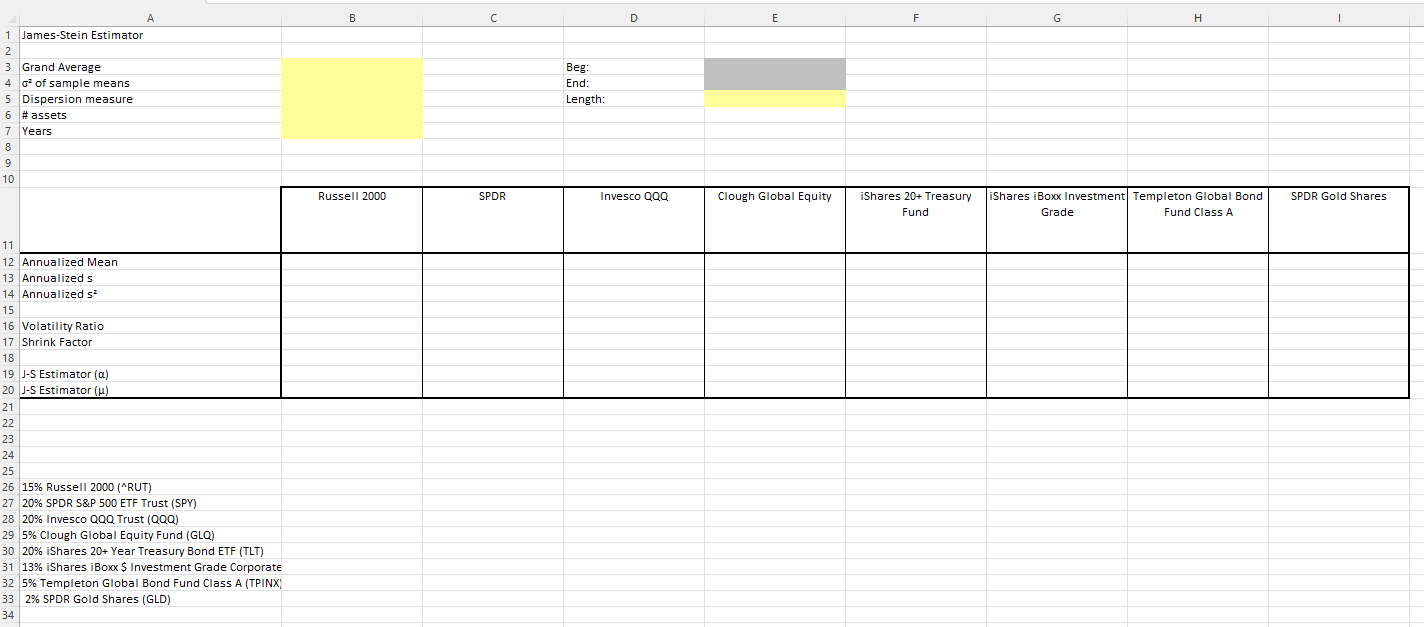
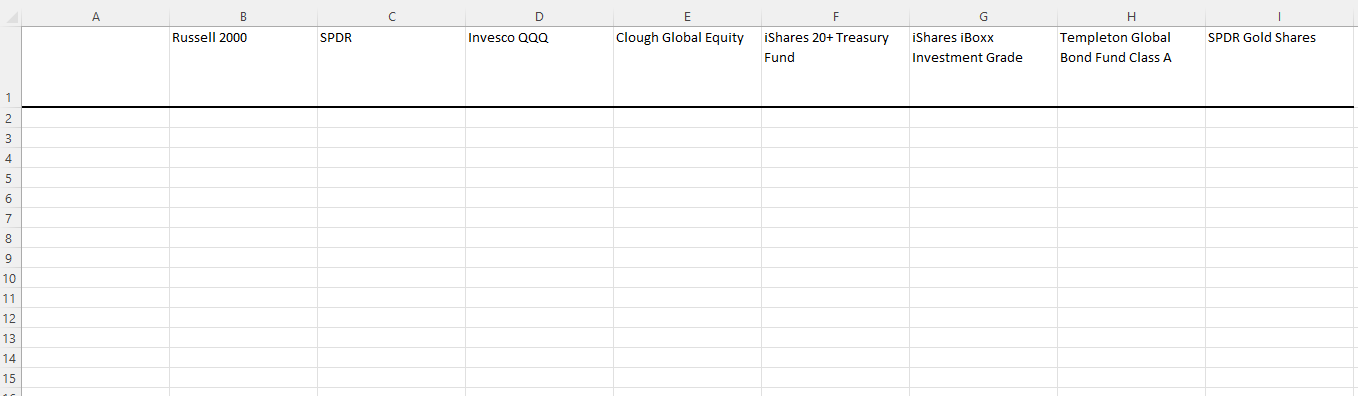
Calculate the log returns for these assets (30 points), and then follow the directions in the book for calculating the James-Stein Estimates for these assets (30 points). Refer to the text pages 70-73 for calculating the log returns.
Now, assume that some rational investor will have the following asset allocation:
15% Russell 2000 (^RUT)
15% SPDR S&P 500 ETF Trust (SPY)
20% Invesco QQQ Trust (QQQ)
7% Clough Global Equity Fund (GLQ)
20% iShares 20+ Year Treasury Bond ETF (TLT)
14% iShares iBoxx $ Investment Grade Corporate Bond ETF (LQD)
7% Templeton Global Bond Fund Class A (TPINX)
2% SPDR Gold Shares (GLD)
The Yahoo Finance ticker is in parentheses for each asset.
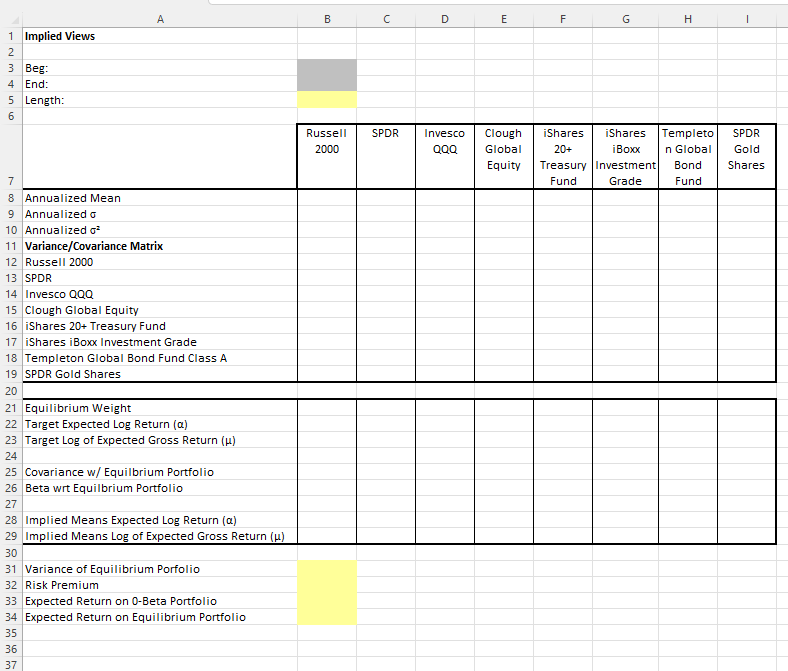
This means that some investor, who is solving the mean-variance problem, will own this portfolio, which in turn means it has to be on the efficient frontier. Use the methodology discussed in the book for Implied Estimates to find a set of inputs that will put this allocation on the efficient frontier defined by these assets (40 points). This means you need to "pin down" the returns for two assets so that you can derive a risk premium for calculating the zero-beta CAPM implied returns for the other assets. For this exercise, use the James-Stein estimates for Russell 2000 (^RUT) and iShares 20+ Year Treasury Bond ETF (TLT) in this role.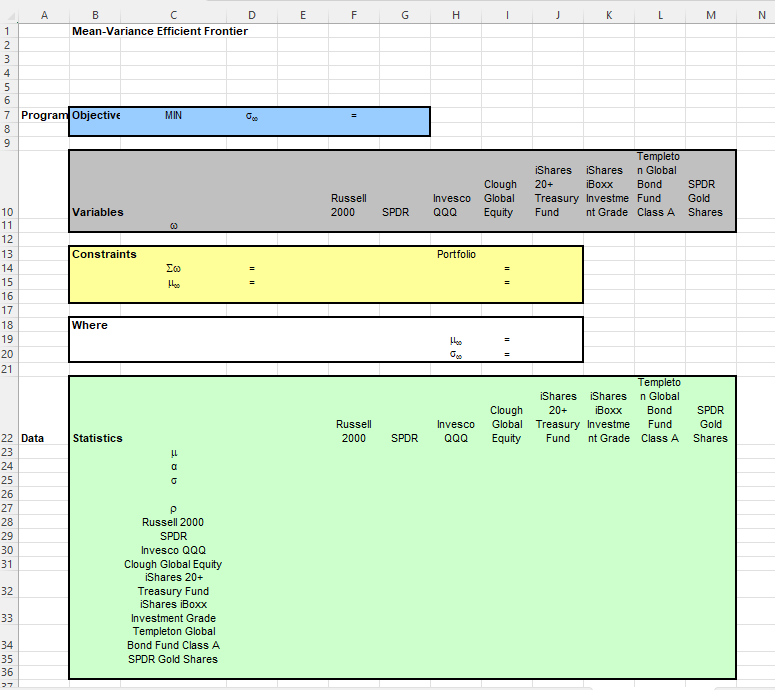
15% Russell 2000 (^RUT) 20\% SPDR S\&P 500 ETF Trust (SPY) 20% Invesco QQQ Trust (QQQ) 5% Clough Global Equity Fund (GLQ) 20% iShares 20+ Year Treasury Bond ETF (TLT) 13% iShares iBoxx \$ Investment Grade Corporate 5\% Templeton Global Bond Fund Class A (TPINX! 2% SPDR Gold Shares (GLD) 15% Russell 2000 (^RUT) 20\% SPDR S\&P 500 ETF Trust (SPY) 20% Invesco QQQ Trust (QQQ) 5% Clough Global Equity Fund (GLQ) 20% iShares 20+ Year Treasury Bond ETF (TLT) 13% iShares iBoxx \$ Investment Grade Corporate 5\% Templeton Global Bond Fund Class A (TPINX! 2% SPDR Gold Shares (GLD)
Step by Step Solution
There are 3 Steps involved in it

Get step-by-step solutions from verified subject matter experts
 Study Help