







Question: Young's Double Slit Experiment - A Virtual PhET Lab Lab Report The lab report must include the following: Title Introduction Experimental Details or Theoretical Analysis
Young's Double Slit Experiment - A Virtual PhET Lab
Lab Report
The lab report must include the following:
- Title
- Introduction
- Experimental Details or Theoretical Analysis
- Results
- Discussion
- Conclusions and Summary
- References - https://phet.colorado.edu/sims/html/wave-interference/latest/wave-interference_en.html
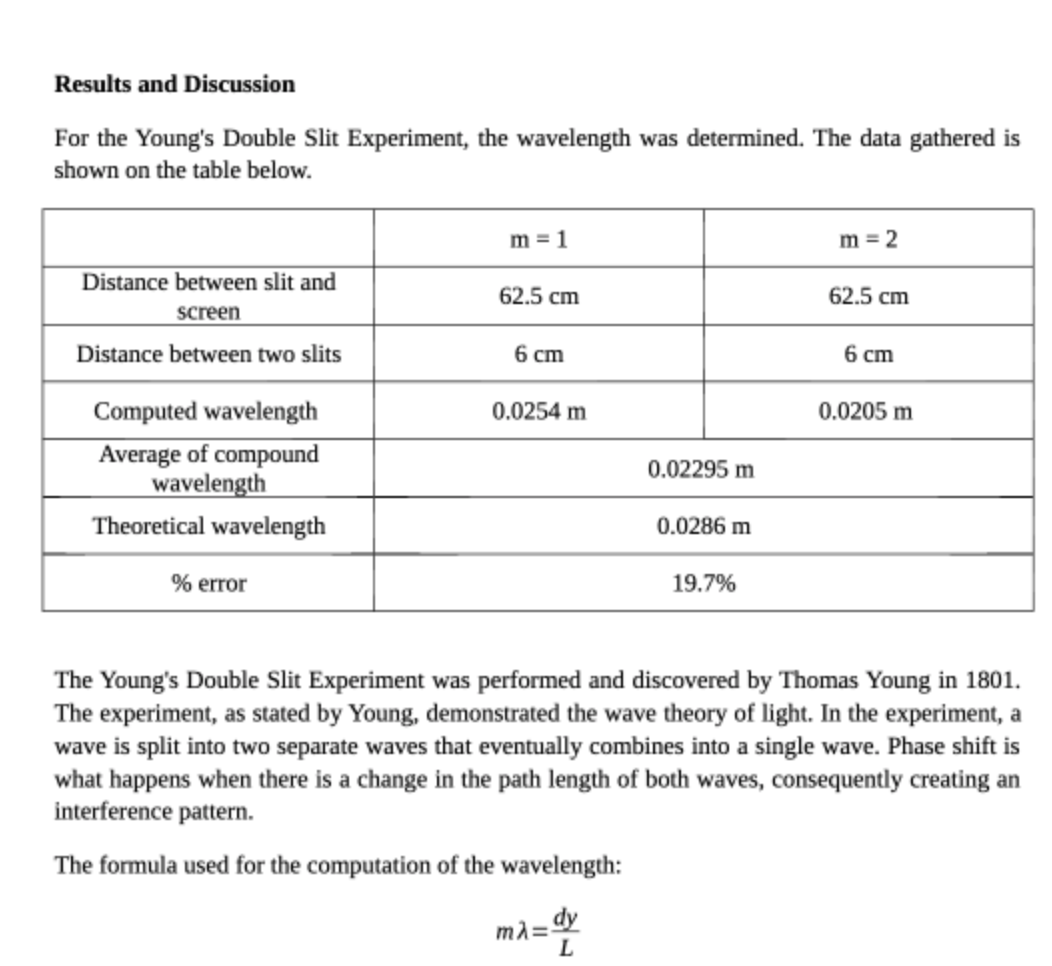
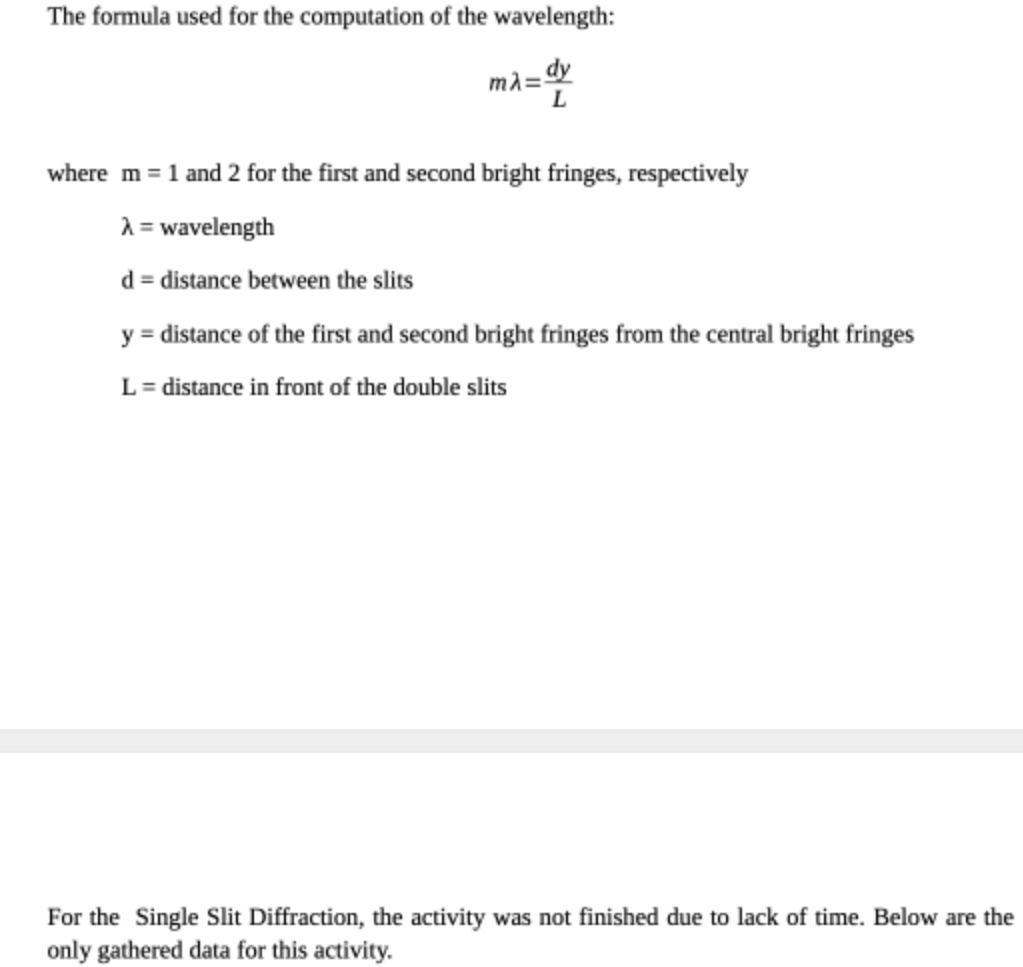
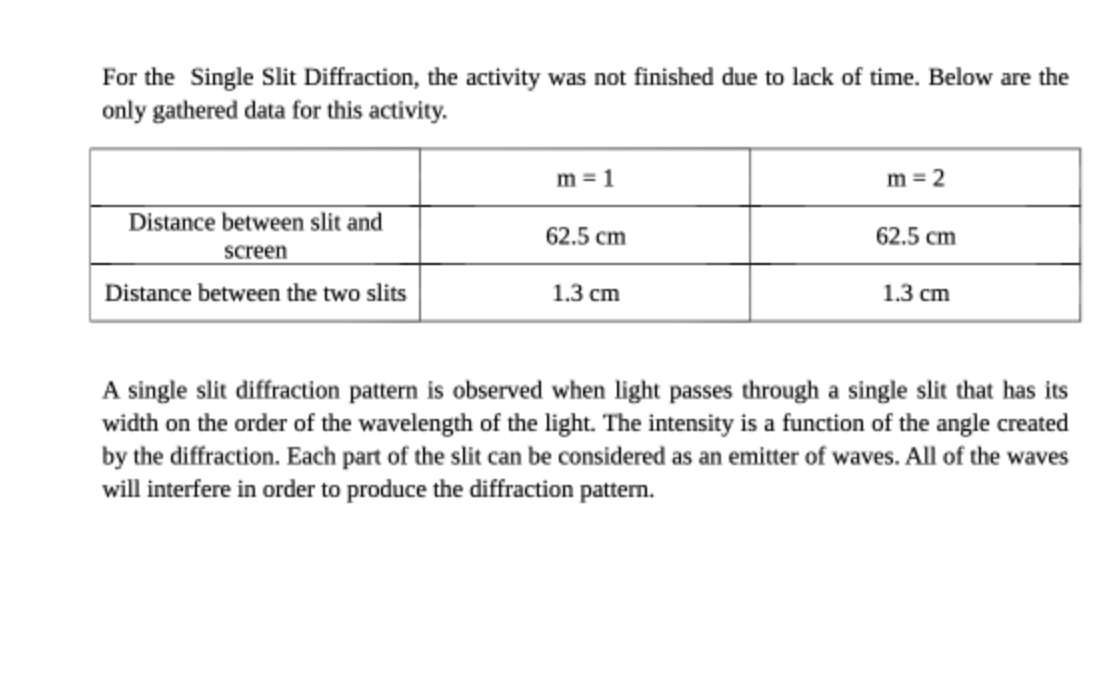
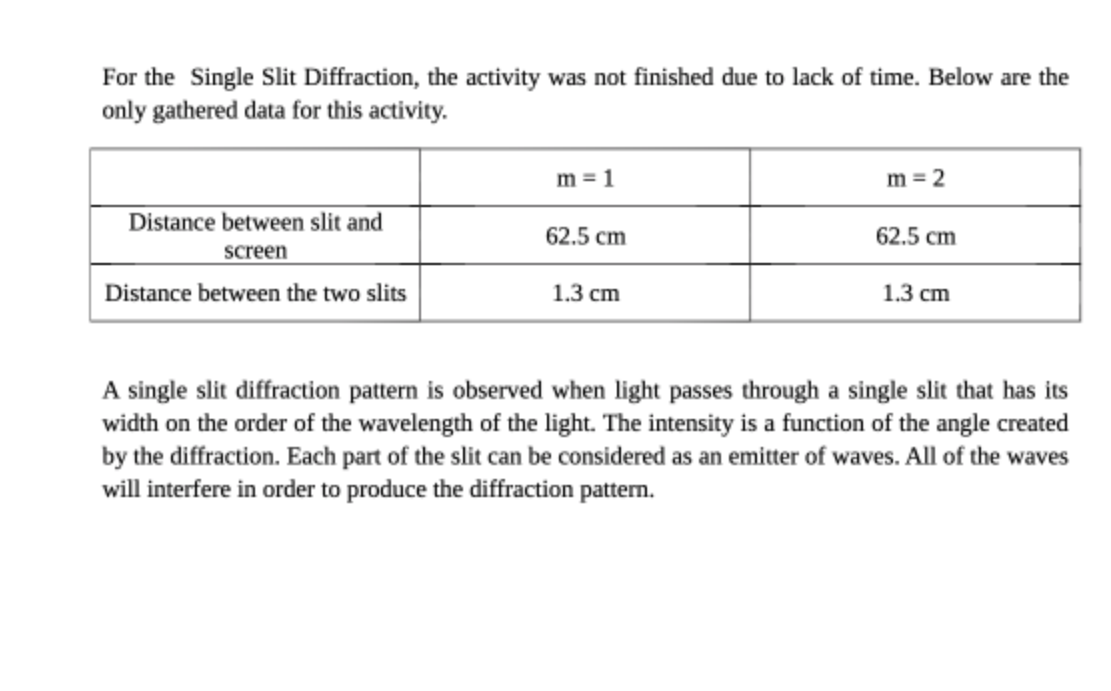
Results and Discussion For the Young's Double Slit Experiment, the wavelength was determined. The data gathered is shown on the table below. m = 1 m = 2 Distance between slit and 62.5 cm 62.5 cm screen Distance between two slits 6 cm 6 cm Computed wavelength 0.0254 m 0.0205 m Average of compound wavelength 0.02295 m Theoretical wavelength 0.0286 m % error 19.7% The Young's Double Slit Experiment was performed and discovered by Thomas Young in 1801. The experiment, as stated by Young, demonstrated the wave theory of light. In the experiment, a wave is split into two separate waves that eventually combines into a single wave. Phase shift is what happens when there is a change in the path length of both waves, consequently creating an interference pattern. The formula used for the computation of the wavelength: ma= dy LThe formula used for the computation of the wavelength: ma = dy L where m = 1 and 2 for the first and second bright fringes, respectively A = wavelength d = distance between the slits y = distance of the first and second bright fringes from the central bright fringes L = distance in front of the double slits For the Single Slit Diffraction, the activity was not finished due to lack of time. Below are the only gathered data for this activity.For the Single Slit Diffraction, the activity was not finished due to lack of time. Below are the only gathered data for this activity. m = 1 m = 2 Distance between slit and 62.5 cm 62.5 cm screen Distance between the two slits 1.3 cm 1.3 cm A single slit diffraction pattern is observed when light passes through a single slit that has its width on the order of the wavelength of the light. The intensity is a function of the angle created by the diffraction. Each part of the slit can be considered as an emitter of waves. All of the waves will interfere in order to produce the diffraction pattern
Step by Step Solution
There are 3 Steps involved in it

Get step-by-step solutions from verified subject matter experts
 Study Help