







Question: Your first assignment in your new position as assistant financial analyst at Caledonia Products is to evaluate two new capital-budgeting proposals. Because this is your

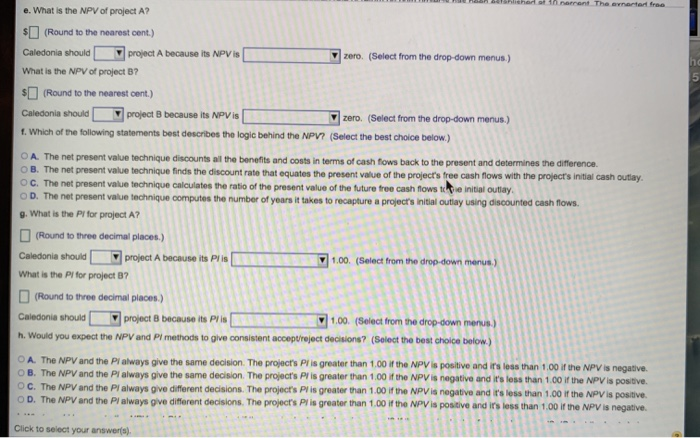
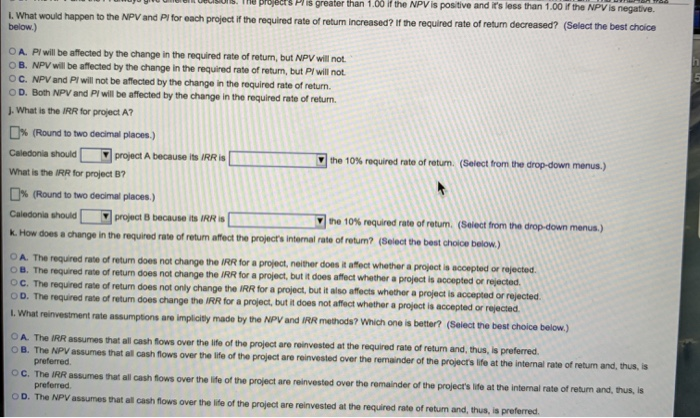
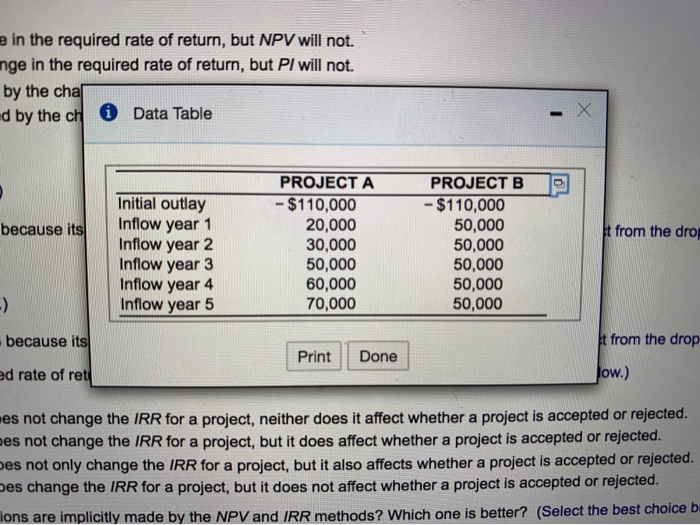
cash outlays at the beginning of a. The capital-budgeting process is so important because capital-budgeting decisions involve investments requiring rather the life of the project and commit the firm to a particular course of action over a relatively b. Why is it difmicult to find exceptionally profitable projects? (Select the best choice below.) tme horizon. (Select from the drop-down menus.) (Select from the drop-down menus.) time horizon. O A. The lack of effective investment criteria makes profitable projects hard to find. O B. There is no reliable method to accurately estimate a project's future cash lows O C. The existence of competition may drive price and profit down quickly. O D. The costs of implementing capital-budgeting decisions are extremely high G. What is the payback period on project A? years (Round to two decimal places.) r Caledonia imposes a 4-year maximum acceptable payback period, the firm shouldrject A because its payback period is maximum aoceptable payback period. (Select from the drop-down menus) What is the payback period on project 87 Y the years (Round to two decimal places) If Caledonie imposes a 4-year maximum accoptable payback period, the firm shouidproject 8 because its payback perlod is maximum aoceptable payback period. (Select from the drop-down menus.) d. What are the oriticisms of the payback period? (Select all that apply) r the OA. The selection of the maximum acceptable payback period is arbitrary DB. The method does not take into account the time value of money . It is consistent with the firm's goal of shareholder wealth maximization. D D. The method ignores cash flows occurring after the payback period e. What is the NPV of project A Round to the nearest cent.) Caledonia shouldproject A because its NPV is What is the NPV of project B? Click to select your answerls). zero. (Select from the drop-down menus) e. What is the NPV of project A? (Round to the nearest cent.) Caledonia sholdproject A because its NPV is What is the NPV of project B 7 zero. (Select from the drop-down menus) 5 (Round to the nearestcnt) Caledonia shouldproject B because its NPV is t. Which of the following statements best describes the logic behind the NPV? (Select the best choice below.) zero. (Select from the drop-down menus.) nts al the benefits and costs in terms of cash fows back to the present and determines the difference. value technique finds the discount rate that equates the present value of the projects tree cash flows with the project's initial cash outiay C The net present value technique calculates the ratio of the present value of the Mture tee h flows t initial outlay oD. The net present value technique computes the number of years it takes to recapture a project's initial outlay using discounted cash tows g, what is Pr project A? (Round to three decimal places.) Caledonia should project A because its Pl is What is the PI for project 87 Rand to three decimal places ) aledonie shouls project B because its Pl is h. Would you expect the NPV and Pi methods to give consistent acceptireject decisions? (Solect the best ohoice below A. The NPV and the Pi always give the same decision. The project's Pt is greater than 1,00 if the NPV is positive and irs less than 1.00 if the NPVs 1.00 (Select from the drop-down menuS) 1.00 (Select from the drop-down menus) B. The NPV and the Pl always give the same decision. The project's Pl is greater than 1,00 it the NPV is negative and irs less than 1.00 if the NPV s positve. o c. The NPV and the Pi always give different decisions. o D. The NPV and the Pl always ove aiferent decisions. The projectrs Pl ia greater than 1 0o rihe NPVia postive and ir' less than 1,00 if ne NPV is negatve. The project's Pl is greater than 1.00 if the NPV is negative and irs less than 1.00 if the NPV is positive Click to select your answerfs) s. The projecrs Pl is greater than 1.00 if the NPV is positive and its less than 1.00 if the NPV is negative. each project if the required rate of return increased? If the required rate of return decreased? (Select the best choice NPV and Pl for i. What would happen to the below.) OA. P, will be affected by the change in the required rate of return, but NPVwill not. o B. NPV will be affected by the change in the required rate of return, but Pl will not o C. NPV and PI will not be affected by the change in the required rate of return OD. Both NPV and Pl will be affected by the change in the required rate of return. .What is the IRR for project A? % (Round to two decimal places.,) Caledonia should project A because its IRR is What is the IRR for project B? the 10% required rate of return. (Selectfrom the dropdown menus.) % (Round to two decimal places) M re 10% required rate of return. (Select from rhe drop-down menus.) Caledonia should project B because its IRR is project's internal rate of rotum? (Sele, the best does a change in the required rate of return affect rate of return does not change the IRR for a project, neither does i affect whether a project is accepted or of return does not change the IRR for a project, but it does affect whether a project is accepted or rejected project, but it also affects whether a project is acceptad or rejected O C. The required rate of return does not only change the IRR for a oD. The required rate L. What reinvestment rate assumptions are by the O A. The IRR assumes that all cash fows over the life of the project are reinvested at the of return does change the IRR for a project, but it does not affect whether a project is accepted or rejected are implicity made by the NPV and IRR methods? which one is better? (Select the best choice below) required rate of return and, thus, is preferrec. are reinvested over the remainder of the projects life at the internal rate of return and, thus, is remainder of the projecr's lite at the internal rate of return and, thus, is B. The NPV assumes that all cash flows over the life of the project preferred. OC. The IRR assumes that all cash flows over the life of the project are reinvested over OD. The NPV assumes that all cash flows over the life of the project are reinvested at the required rate of retum and, thus, is preferred. the preferred. e in the required rate of return, but NPV will not. nge in the required rate of return, but PI will not. by the cha d by the ch Data Table PROJECT A PROJECTB P -$110,000 50,000 50,000 50,000 50,000 50,000 Initial outlay because its Inflow year 1 -$110,000 20,000 30,000 50,000 60,000 70,000 t from the dro Inflow year 2 Inflow year 3 Inflow year 4 Inflow year 5 t from the drop because its Print Done ow.) d rate of ret es not change the IRR for a project, neither does it affect whether a project is accepted or rejected. es not change the IRR for a project, but it does affect whether a project is accepted or rejected es not only change the IRR for a project, but it also affects whether a project is accepted or rejected. es change the IRR for a project, but it does not affect whether a project is accepted or rejected ons are implicitly made by the NPV and IRR methods? Which one is better? (Select the best choice b
Step by Step Solution
There are 3 Steps involved in it

Get step-by-step solutions from verified subject matter experts
 Study Help