The Pickwick Papers
Authors:
Charles Dickens


In Stock: 2 Left
Shipment time
Expected shipping within 2 - 3 DaysPopular items with books
Total Price:
$0
Book details
ISBN: 1973531550, 978-1973531555
Book publisher: Independently published
Book Price $0 : The Pickwick Papers Was Charles Dickens's First Novel. He Was Asked To Contribute To The Project As An Up-and-coming Writer Following The Success Of Sketches By Boz, Published In 1836 (most Of Dickens' Novels Were Issued In Shilling Instalments Before Being Published As Complete Volumes). Dickens (still Writing Under The Pseudonym Of Boz) Increasingly Took Over The Unsuccessful Monthly Publication After The Original Illustrator Robert Seymour Had Committed Suicide. With The Introduction Of Sam Weller In Chapter 10, The Book Became The First Real Publishing Phenomenon, With Bootleg Copies, Theatrical Performances, Sam Weller Joke Books, And Other Merchandise. After The Publication, The Widow Of Robert Seymour Claimed That The Idea For The Novel Was Originally Her Husband's; However, In His Preface To The 1867 Edition, Dickens Strenuously Denied Any Specific Input, Writing That "Mr Seymour Never Originated Or Suggested An Incident, A Phrase, Or A Word, To Be Found In The Book." Written For Publication As A Serial, The Pickwick Papers Is A Sequence Of Loosely Related Adventures. The Action Is Given As Occurring 1827–8, Though Critics Have Noted Some Seeming Anachronisms. It Has Been Stated That Dickens Satirized The Case Of George Norton Suing Lord Melbourne In The Pickwick Papers. The Novel's Main Character, Samuel Pickwick, Esquire, Is A Kind And Wealthy Old Gentleman, The Founder And Perpetual President Of The Pickwick Club. To Extend His Researches Into The Quaint And Curious Phenomena Of Life, He Suggests That He And Three Other "Pickwickians" (Mr Nathaniel Winkle, Mr Augustus Snodgrass, And Mr Tracy Tupman) Should Make Journeys To Places Remote From London And Report On Their Findings To The Other Members Of The Club. Their Travels Throughout The English Countryside By Coach Provide The Chief Theme Of The Novel. A Distinctive And Valuable Feature Of The Work Is The Generally Accurate Description Of The Old Coaching Inns Of England. (One Of The Main Families Running The Bristol To Bath Coaches At The Time Was Started By Eleazer Pickwick). Author Charles John Huffam Dickens (7 February 1812 – 9 June 1870) Was An English Writer And Social Critic. He Created Some Of The World's Best-known Fictional Characters And Is Regarded By Many As The Greatest Novelist Of The Victorian Era. His Works Enjoyed Unprecedented Popularity During His Lifetime, And By The 20th Century Critics And Scholars Had Recognised Him As A Literary Genius. His Novels And Short Stories Enjoy Lasting Popularity. Born In Portsmouth, Dickens Left School To Work In A Factory When His Father Was Incarcerated In A Debtors' Prison. Despite His Lack Of Formal Education, He Edited A Weekly Journal For 20 Years, Wrote 15 Novels, Five Novellas, Hundreds Of Short Stories And Non-fiction Articles, Lectured And Performed Extensively, Was An Indefatigable Letter Writer, And Campaigned Vigorously For Children's Rights, Education, And Other Social Reforms. Dickens's Literary Success Began With The 1836 Serial Publication Of The Pickwick Papers. Within A Few Years He Had Become An International Literary Celebrity, Famous For His Humour, Satire, And Keen Observation Of Character And Society. His Novels, Most Published In Monthly Or Weekly Instalments, Pioneered The Serial Publication Of Narrative Fiction, Which Became The Dominant Victorian Mode For Novel Publication. Cliffhanger Endings In His Serial Publications Kept Readers In Suspense. The Instalment Format Allowed Dickens To Evaluate His Audience's Reaction, And He Often Modified His Plot And Character Development Based On Such Feedback. For Example, When His Wife's Chiropodist Expressed Distress At The Way Miss Mowcher In David Copperfield Seemed To Reflect Her Disabilities, Dickens Improved The Character With Positive Features. His Plots Were Carefully Constructed, And He Often Wove Elements From Topical Events Into His Narratives.
Customers also bought these books (16)


College Physics - 7th Edition
Raymond A. Serway
ISBN: 9780534997236, 495113697, 534997236, 978-0495113690
$0 $14.89
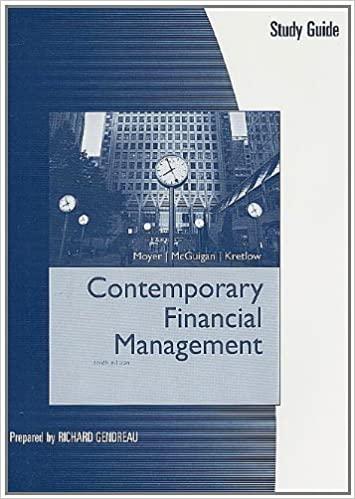
Contemporary Financial Management - 10th Edition
James R Mcguigan
ISBN: 978-0324289114, 0324289111
$0 $13.00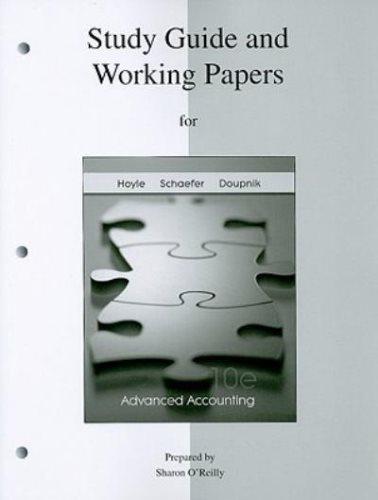
Study Guide And Working Papers For Advanced Accounting - 10th Edition
Joe Ben Hoyle
ISBN: 0077268040, 9780077268046
$90.99 $129.99
Study Guide Working Papers For College Accounting, Chapters 1-9 - 23rd Edition
James A. Heintz
ISBN: 0357474740, 9780357474747
$0 $30.49
The Classical Groups And K Theory - 1st Edition
Alexander J Hahn
ISBN: 3642057373, 978-3642057373
$74.89 $106.99

I Pooped Bathroom Guest Book Classy Bathroom Guestbook And Housewarming White Elephant Perfect House Warming Gift 8 25 X 6 Size 110 Pages -
Abdul Publishing
ISBN: 979-8794102994
$0 $5.00

I Pooped Bathroom Guest Book Classy Bathroom Guestbook And Housewarming White Elephant Perfect House Warming Gift 8 25 X 6 Size 110 Pages -
Abdul Publishing
ISBN: 979-8794102963
$0 $5.00
Brain Games To Go Crossword Puzzles Spiral Bound A August 31 2023 - 1st Edition
Brain Games
ISBN: 1639383441, 978-1639383443
$0 $6.17

The Curious Zombies Guide To Entropy The Strange Property That May Hold The Key To The Ultimate Fate Of The Universe - 1st Edition
Gordon Webster
ISBN: B0CM5FHVGS, 979-8865946182
$0 $9.99

Strategic Management In The Hospitality Industry - 3rd Edition
Michael D Olsen
ISBN: 129202741X, 978-1292027418
$60.19 $85.99

Behavior Change In The Human Services - 6th Edition
Sundel
ISBN: 0761988696, 9780761988694
$0 $39.00

Tourism Case Studies Asia Pacific Region - 1st Edition
Dr Taufik Abdullah
ISBN: 1800628668, 978-1800628663
$0 $68.42

Group Theory Applied To Chemistry - 1st Edition
Arnout Jozef Ceulemans
ISBN: 9402406131, 978-9402406139
$0 $66.99
Popular Among Students (17)
Refractories Handbook - 1st Edition
Charles Schacht
ISBN: 0824756541, 978-0824756543
$157.47 $224.95
Turbomachinery Design And Theory - 1st Edition
Rama S.R. Gorla
ISBN: 0824709802, 978-0824709808
$240.38 $343.40

Intermediate Heat Transfer - 1st Edition
Kau-Fui Vincent Wong
ISBN: 0824742362, 978-0824742362
$140 $200.00

A Beginners View Of Our Electric Universe - 1st Edition
Tom Findlay
ISBN: 1781481415, 978-1781481417
$0 $25.50


A Tale Of Cities By Charles Dickens - 1st Edition
Charles Dickens
ISBN: B0BV4714ZC, 979-8376602157
$0 $10.62
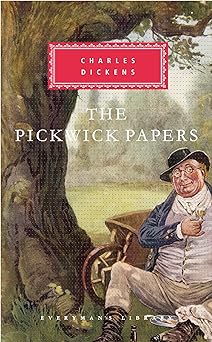
The Pickwick Papers Introduction By Peter Washington - 1st Edition
Charles Dickens
ISBN: 0375405488, 978-0375405488
$0 $12.50


Flachwitze Eine Schatzkiste Voller Flachwitze Flachwitze Laaaaaaaaaaaden Bitte Warten -
Collette Potter
ISBN: 979-8866649235
$0 $7.99
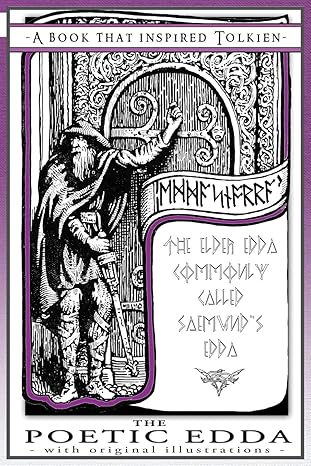
The Poetic Edda A Book That Inspired Tolkien With Original Illustrations -
Olive Bray
ISBN: 1925110044, 978-1925110043
$0 $34.00