







Question: Using this chapter's heuristic, design materials to support two differing audiences in learning about using new technologies. First, use the heuristic to help design materials
Using this chapter's heuristic, design materials to support two differing audiences in learning about using new technologies. First, use the heuristic to help design materials for people in retirement communities so that they can better use their computers and other digital devices available to them to stay in touch with their families and their health-care providers; do not assume that such an audience does not know how to use computers and mobile devices. Second, use the heuristic to help people in middle schools become better researchers: design materials that will help them understand why it is useful to research the sources behind scientific, political, or other claims and then help them learn how to find and evaluate those sources.
Heuristic From This Chapter:
Rhetoric is a method for understanding how any communication does what it does. Rhetoric is for analyzing texts, to help you name and consider the strategies used in a text and whether you wish to be persuaded by it. Rhetoric is also a method for helping those who compose texts consider the audiences for whom a text is made, the contexts in which the text and audiences circulate, and the purposes for which the text is designed; with such understandings, technical communicators can decide what strategies to use in shaping any text.
Figure 17.1 diagrams a rhetorical understanding of a technical composing process; the quoted words come from the U.S. Department of Labor's description of what technical communicators do ("What's the Difference" 2oog). I use this diagram to provide a three-part framework for the questions I am about to offer, questions technical communicators can ask while working with new media; I use it also to support the claims I have been making that working with new media is not simply about learning any new software but is, in addition, being alert to how new communication technologies shift relations among technical communicators, the documents and other texts they produce, and their audiences. Keep in mind that the questions I offer here supplement the questions and heuristics offered in this book's other chapters; for example, questions about ethical considerations in working with new media should be supplemented by the questions in the chapter on ethics
Figure 17.1:
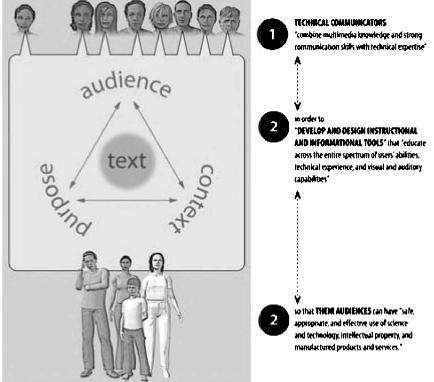
Note, too, that the design process sketched in this figure may look linear and imply that questions are asked once; instead, composers move back and forth among the process's stages, using information gained at one stage to rethink what they learned at other stages. As you move through the questions below, you might note that some questions repeat concerns from other areas; this redundancy is intended, to keep you from fixing too early on approaches that will benefit from further consideration.
20020299 audience purpose text (3) context TECHNICAL COMMUNICATORS 1 combine mudaknowledge and strong communication skin with tednical expertise 2 2 in order 10 "DEVELOP AND DESIGN INSTRUCTIONAL AND INFORMATIONAL TOOLS that educate across the entire spectrum of users abilities technical experience, and visual and auditory capables so that THE AUDIENCES can have appropriate and effective use of science and technology intellectual property and manufactured products and services.
Step by Step Solution
3.37 Rating (156 Votes )
There are 3 Steps involved in it
In applying the provided heuristic to design educational materials for the two different audiences it is crucial to consider the unique characteristics of each group their existing knowledge base need... View full answer

Get step-by-step solutions from verified subject matter experts
 Study Help