



Question: Prove Theorem 4.2 for a local maximum: If f has a local maximum value at the point c and f'(c) exists, then f'(c) = 0.
Prove Theorem 4.2 for a local maximum: If f has a local maximum value at the point c and f'(c) exists, then f'(c) = 0. Use the following steps.
a. Suppose f has a local maximum at c. What is the sign of f(x) - f(c) if x is near c and x > c? What is the sign of f(x) - f(c) if x is near c and x < c?
b. If f'(c) exists, then it is defined by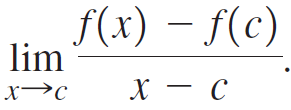 Examine this limit as x → c+ and conclude that f'(c) ≤ 0.
c. Examine the limit in part (b) as x → c- and conclude that f'(c) ≥ 0.
d. Combine parts (b) and (c) to conclude that f'(c) = 0.
f(x) f(c) lim
Step by Step Solution
3.47 Rating (173 Votes )
There are 3 Steps involved in it
a If fc is a local maximum then when x is near c but not equal to c fc fx so fx fc 0 b When x is nea... View full answer

Get step-by-step solutions from verified subject matter experts