New Semester
Started
Get
50% OFF
Study Help!
--h --m --s
Claim Now
Question Answers
Textbooks
Find textbooks, questions and answers
Oops, something went wrong!
Change your search query and then try again
S
Books
FREE
Study Help
Expert Questions
Accounting
General Management
Mathematics
Finance
Organizational Behaviour
Law
Physics
Operating System
Management Leadership
Sociology
Programming
Marketing
Database
Computer Network
Economics
Textbooks Solutions
Accounting
Managerial Accounting
Management Leadership
Cost Accounting
Statistics
Business Law
Corporate Finance
Finance
Economics
Auditing
Tutors
Online Tutors
Find a Tutor
Hire a Tutor
Become a Tutor
AI Tutor
AI Study Planner
NEW
Sell Books
Search
Search
Sign In
Register
study help
computer science
database design using entity relationship diagrams
Database Design Using Entity Relationship Diagrams 3rd Edition Sikha Saha Bagui, Richard Walsh Earp - Solutions
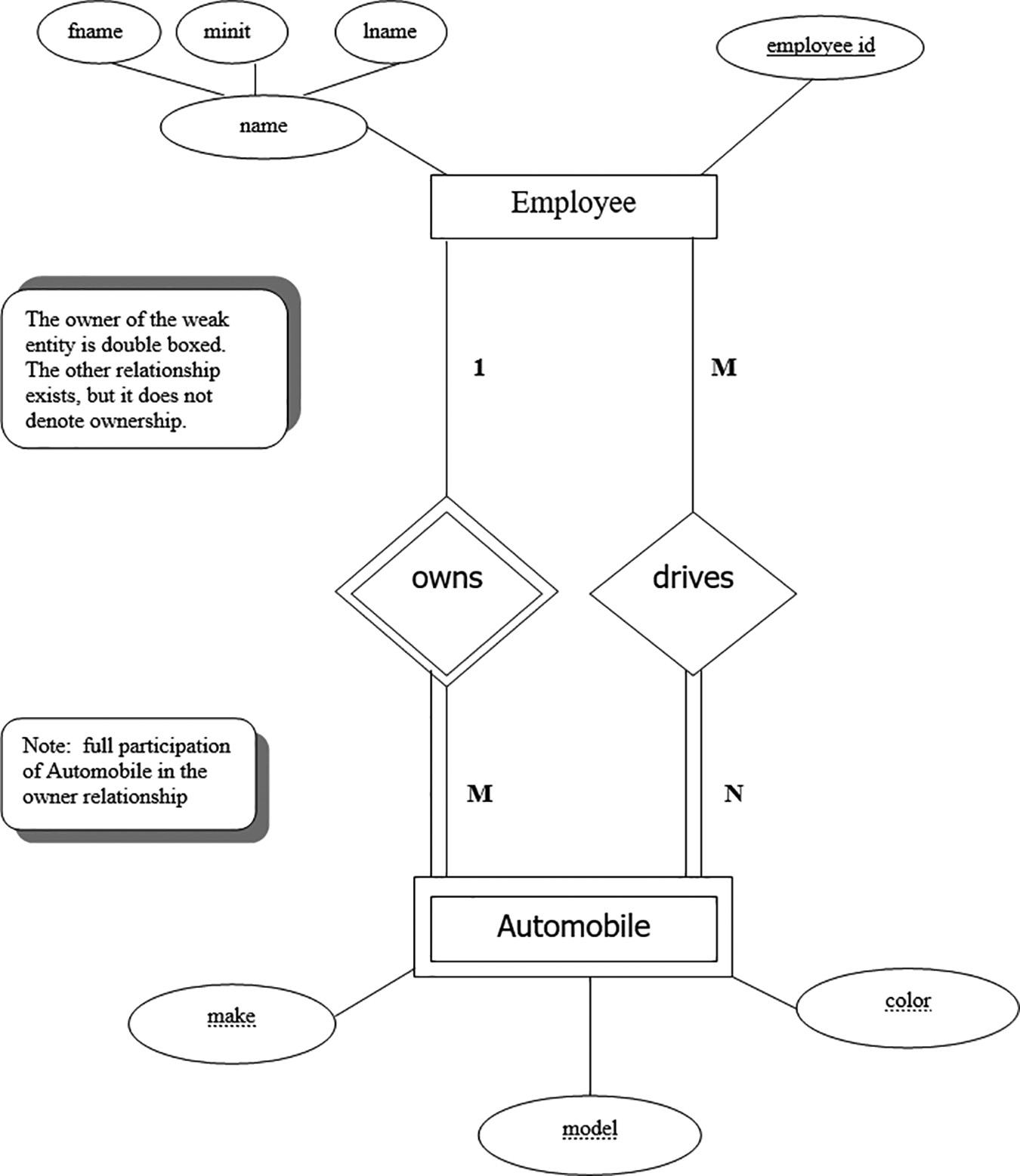
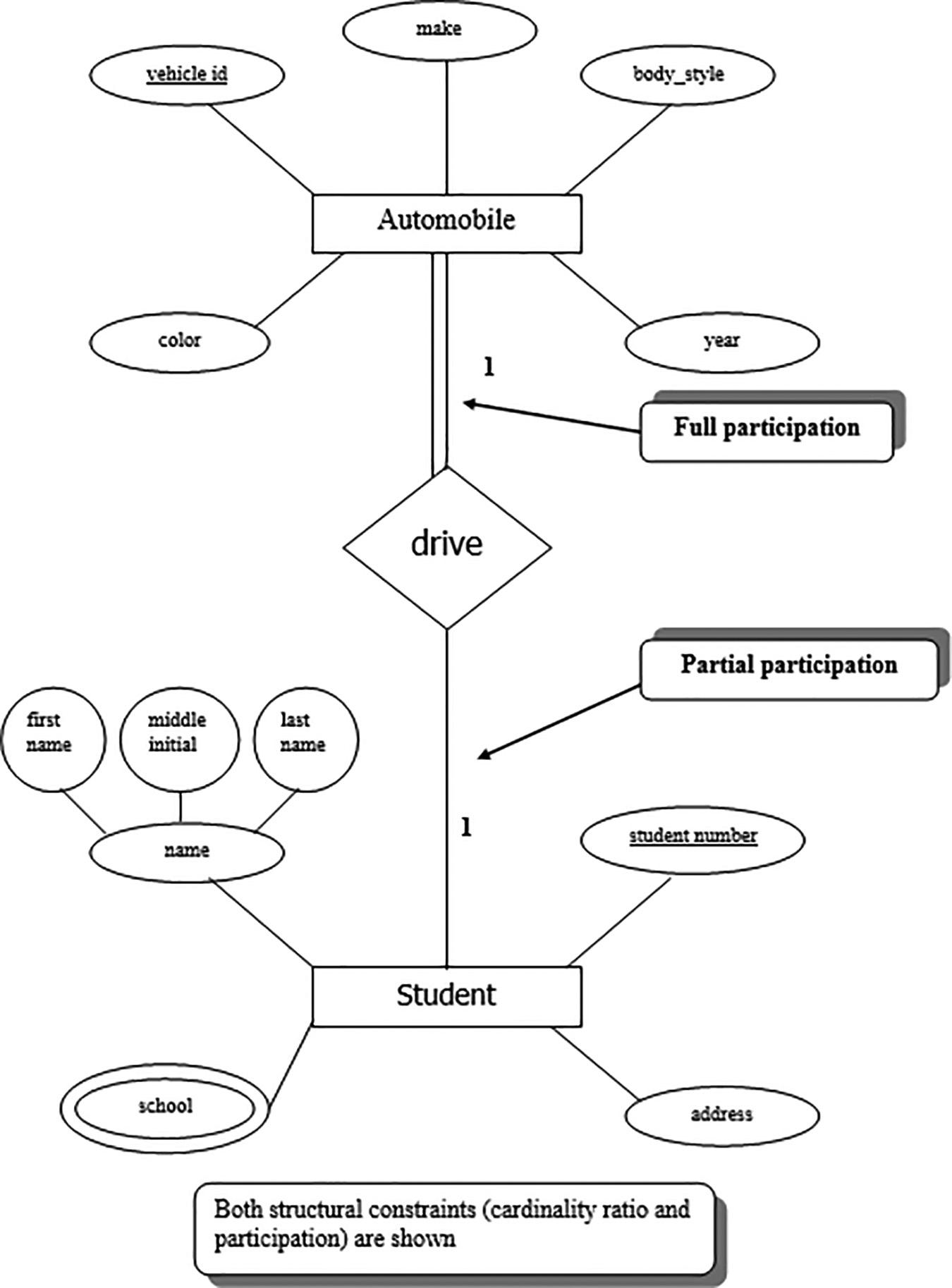
Refer to Figure 6.18. Complete the diagram by adding a precise English description of each attribute. Map Figure 6.18 to a relational database.FIGURE 6.18
What is the cardinality of the following?a. Each student must own a car and can own only one car. A car may be owned by only one student.b. Each student may drive a car and can drive more than one car. A car can be driven by one student and can only be driven by one student.c. Each student may rent
What is a weak entity?
How would you identify a strong entity?
How would you identify a weak entity?
What kind of a relationship line (single or double) would be leading up to the weak entity in a Chen-like diagram?
What is a partial key?
What would the structural constraints of a weak entity generally be?
What would the cardinality of a weak entity generally be?
Can a weak entity be dependent on another weak entity?
Can a weak entity have a relationship that is not “weak” with the identifying entity?
Can a weak entity be related to more than one entity (strong or weak)?
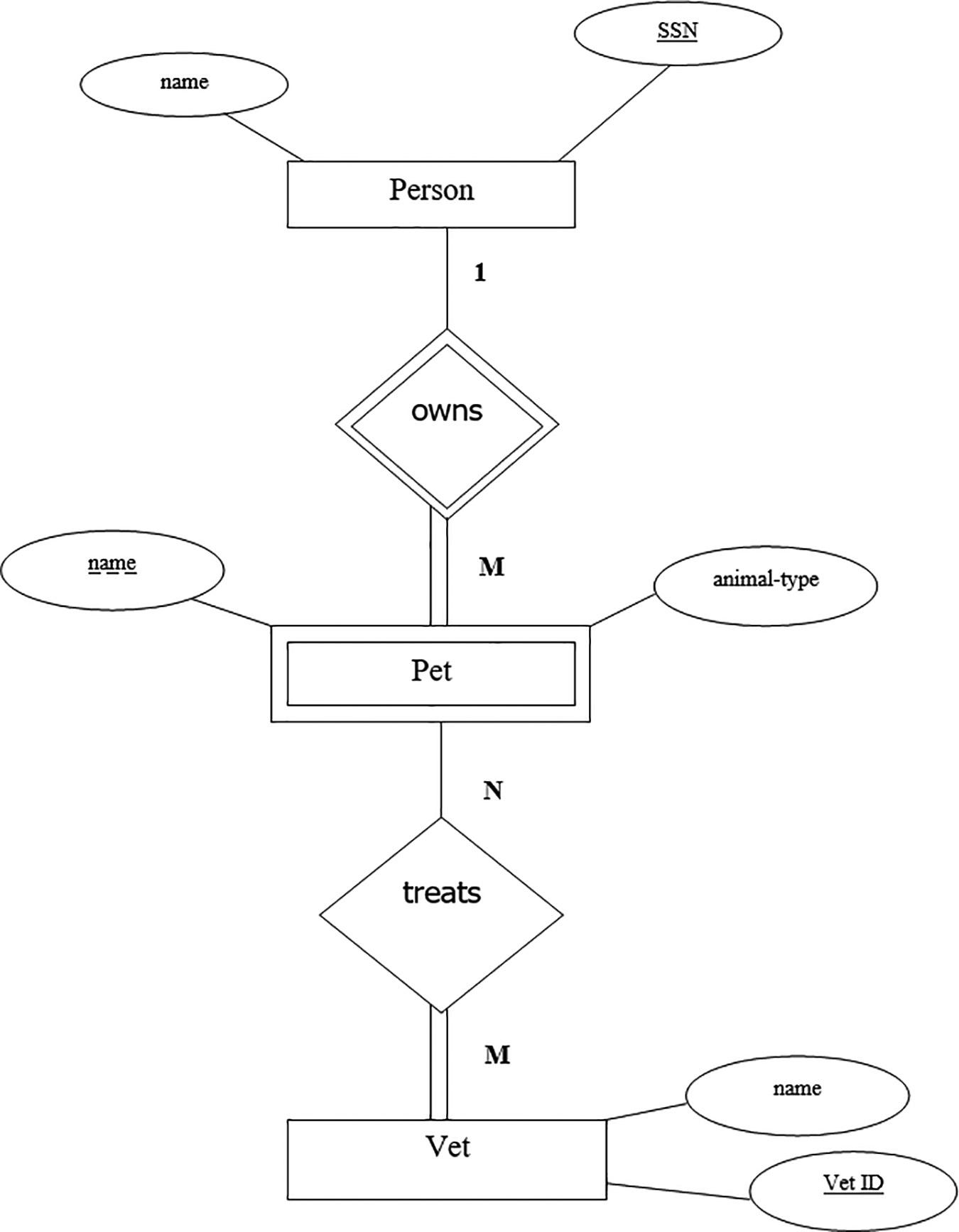
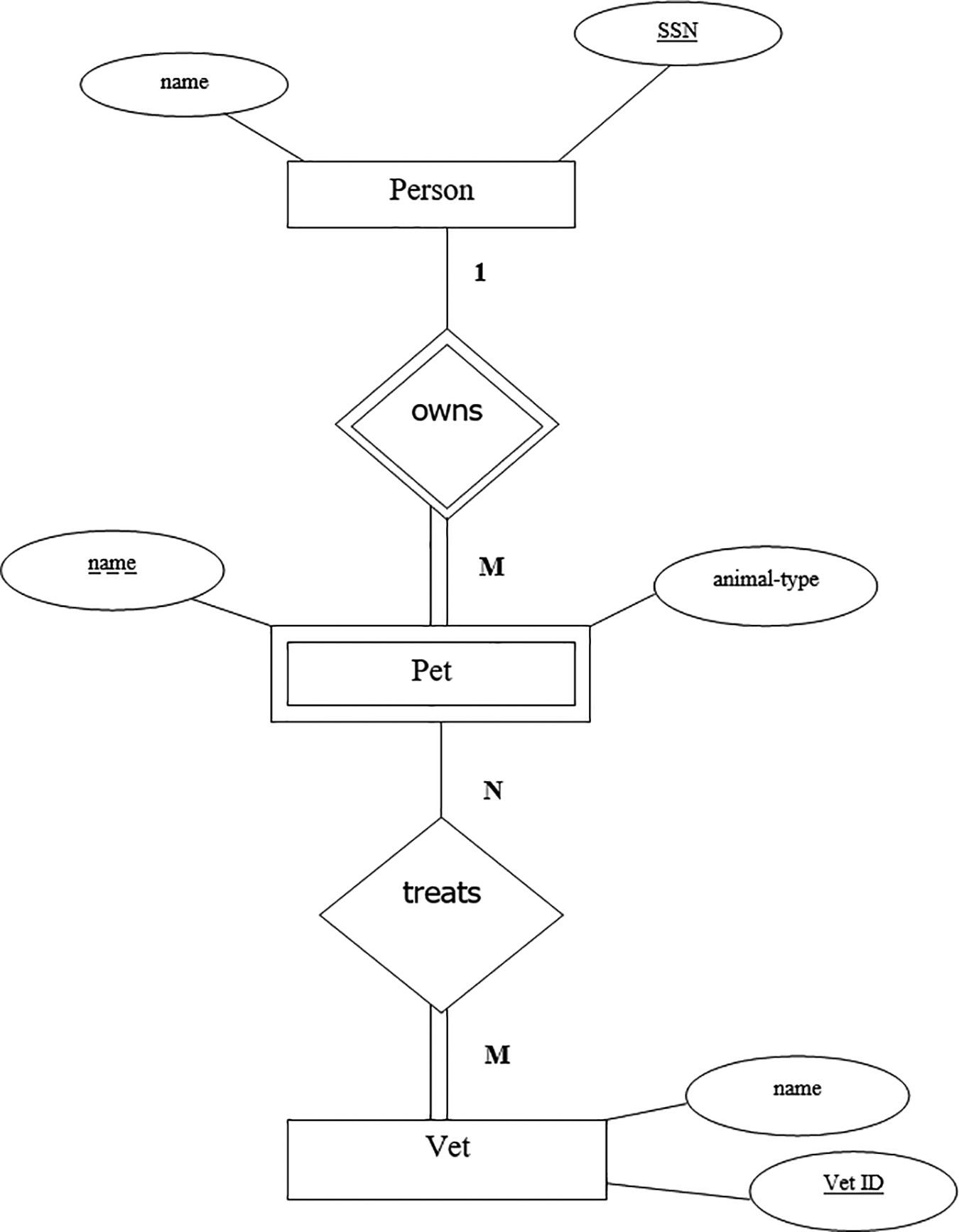
What are the rules for mapping weak entities? Map Figure 7.5 and show some sample data.FIGURE 7.5
When mapping weak entities, what becomes their new primary key?
How would you map multivalued attributes in a weak entity? Explain with an example.
How are weak entities generally identified?
Construct an ER diagram (a Chen-like model) for a database to contain employee name, employee number, employee address, skill(s). An employee may have more than one skill. Ten, enhance the diagram to include level of skill, the date you became skill certified (if certified), date you began using
Construct an ER diagram for sports and players. Attributes of SPORT are sport name, type of sport, timed or untimed. Attributes of PLAYERS are name, person ID, date of birth. Players may play multiple sports. Which entity/entities would you consider weak? Write out the grammar for the ER diagram.
What mapping rules would be used to map Figure 7.4? Map Figure 7.4 to a relational database and show some sample data.
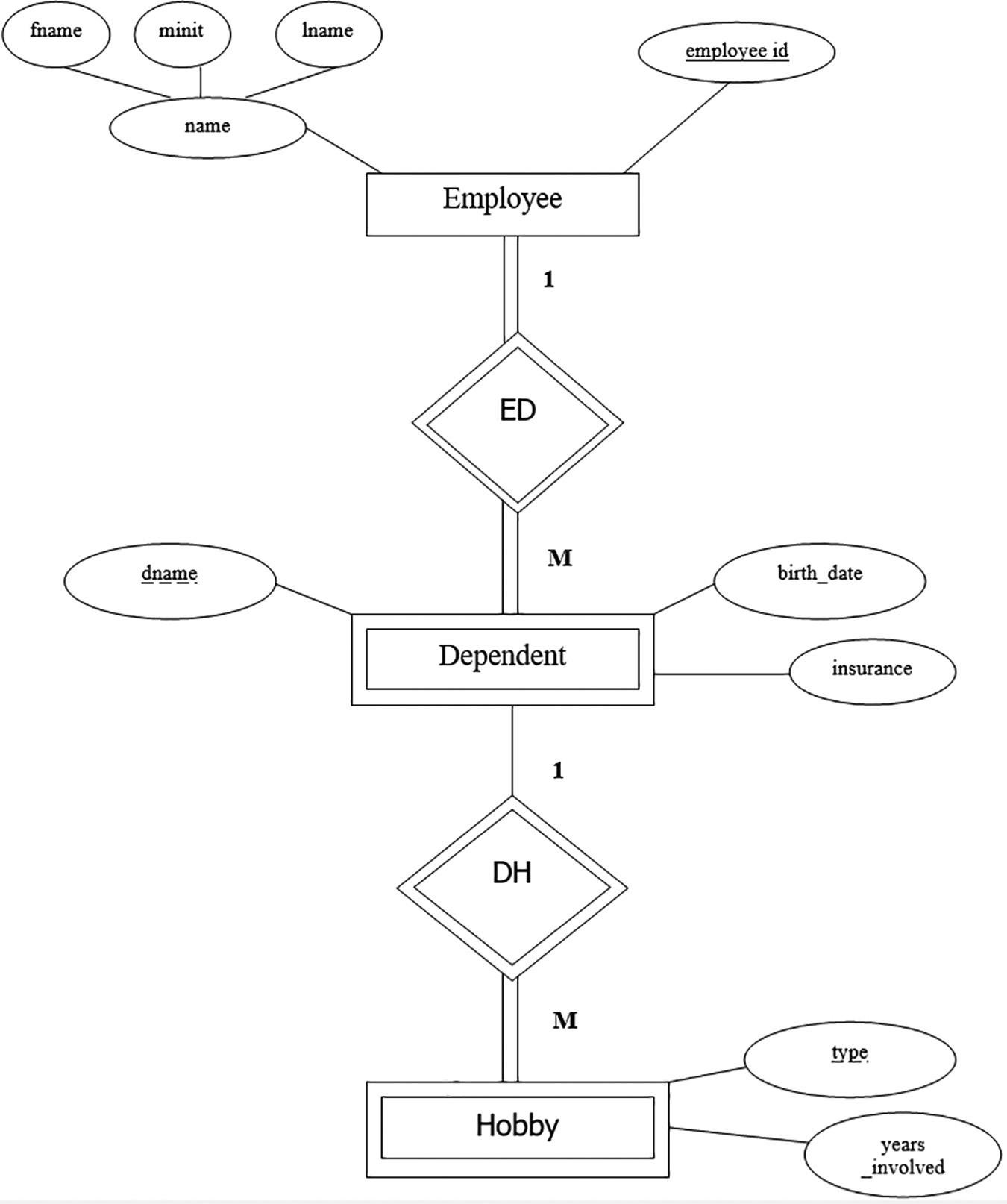
Map Figure 7.6 to a relational database (Note: make sure you show the keys). I do not need to see sample data here, just the tables and attributes, for example: TABLE1(attribute1, attribute2, attribute3).
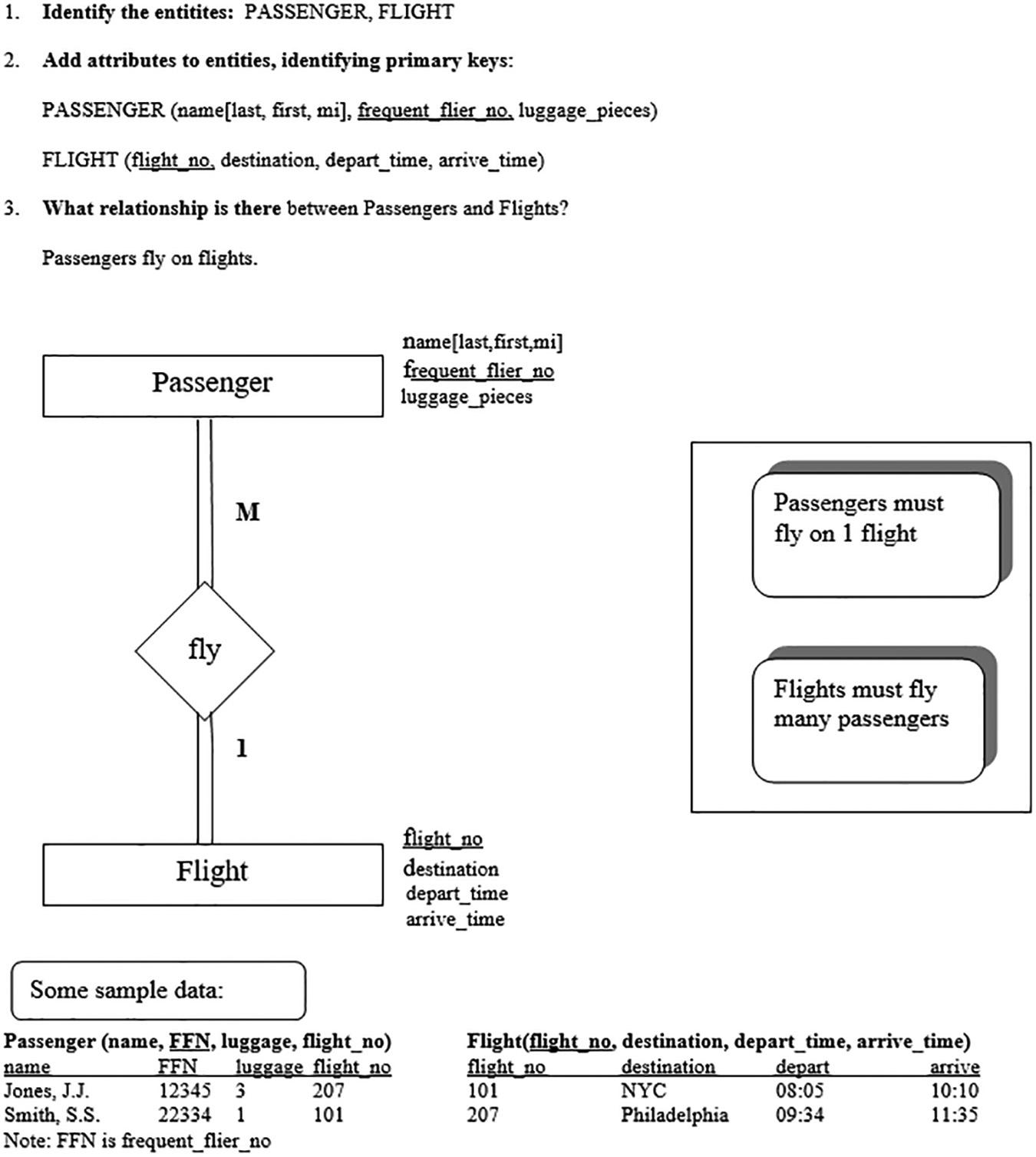
“Write out” the cardinality and the participation for Figures 6.3 and 7.5 Make sure that the cardinality and participation ratios are written out from both sides.FIGURE 6.3FIGURE 7.5
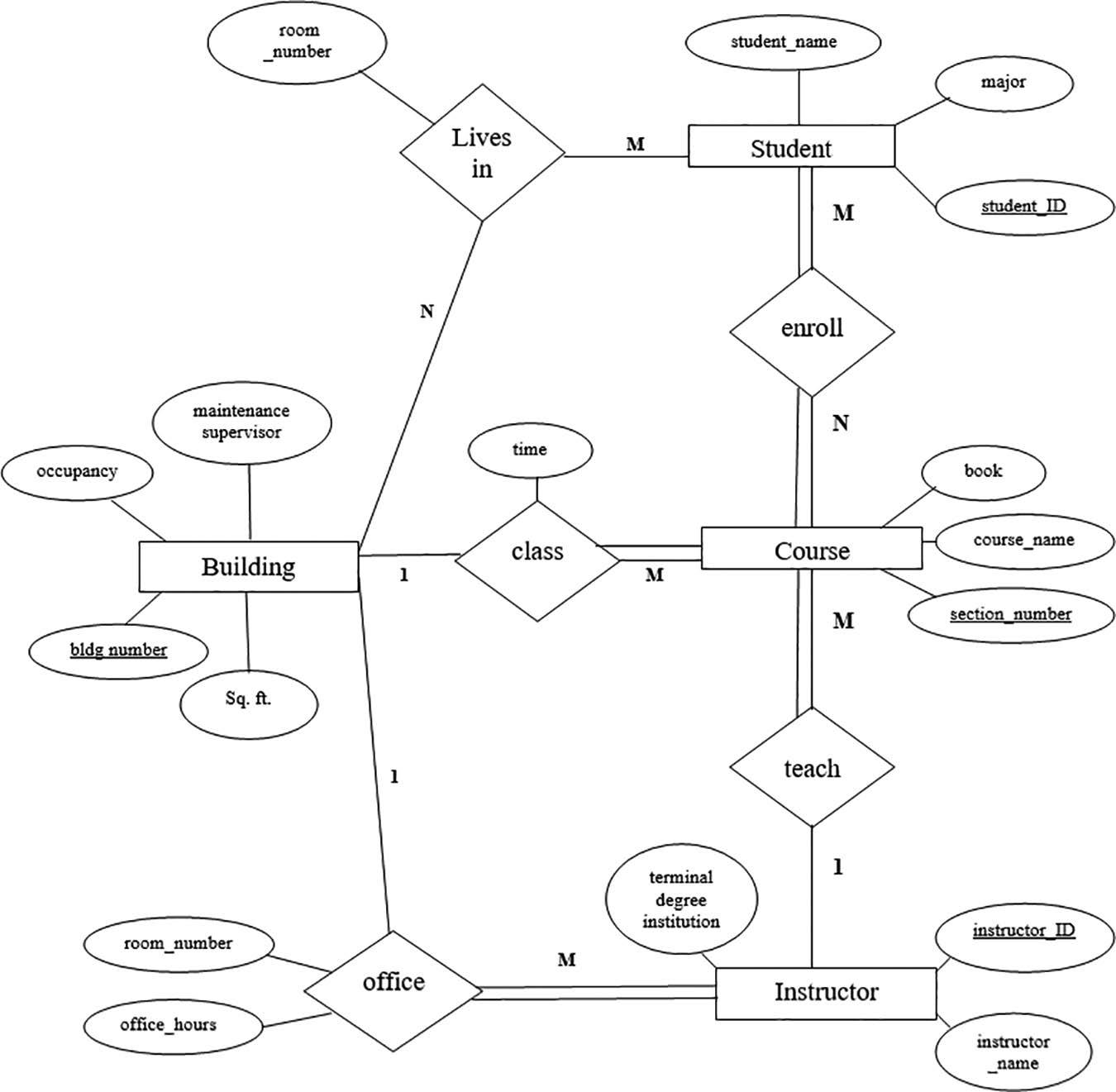
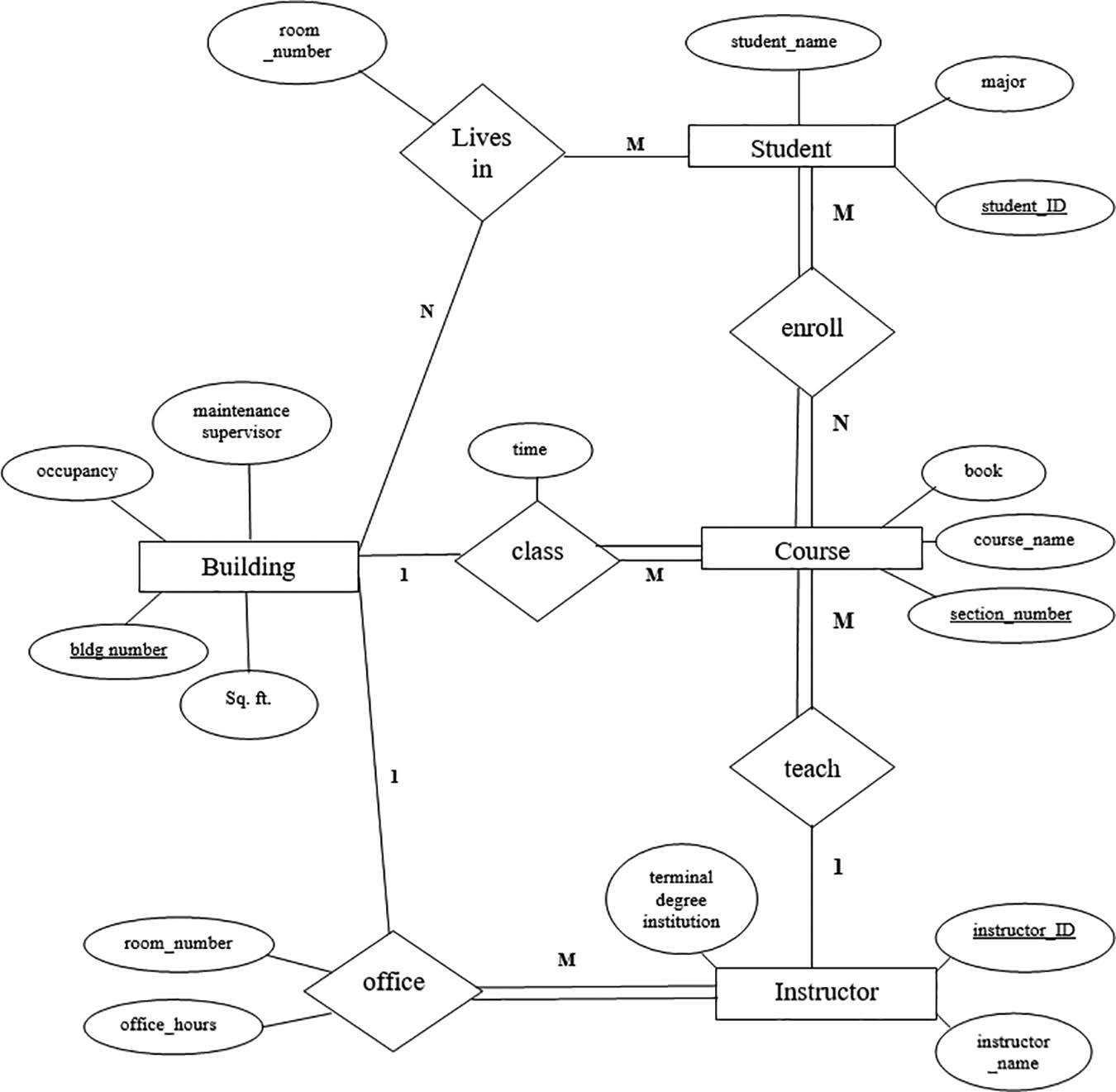
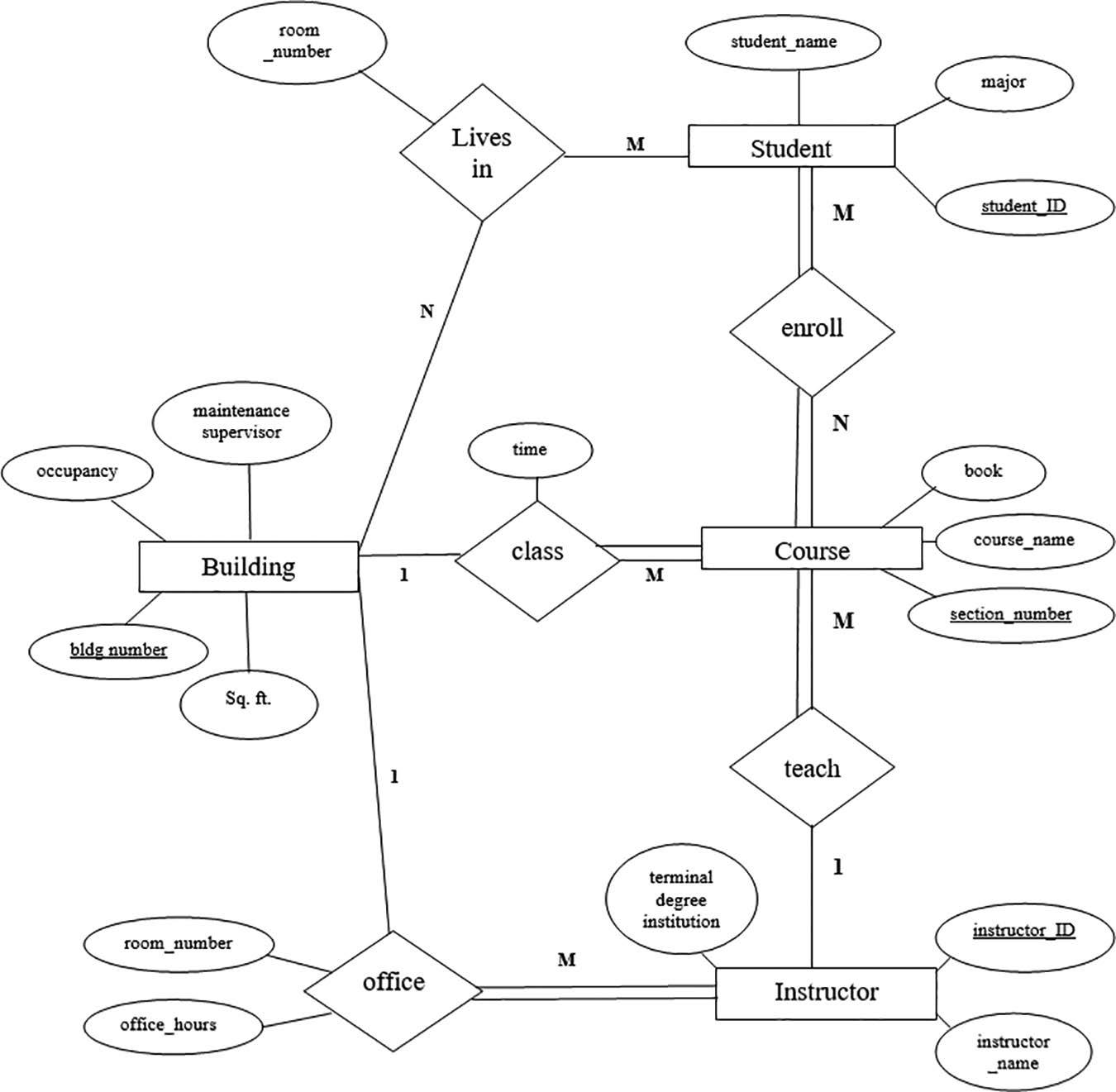
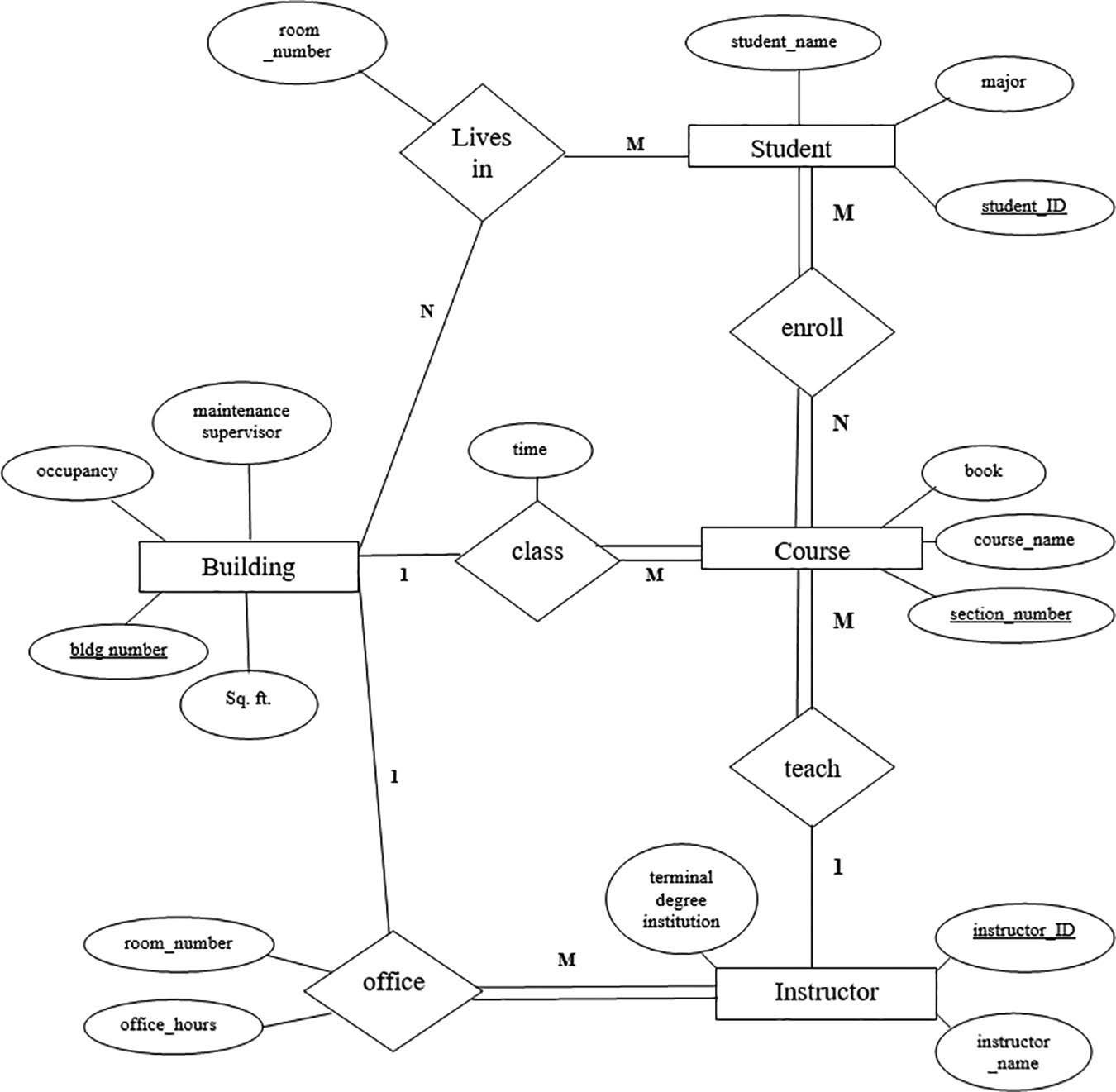
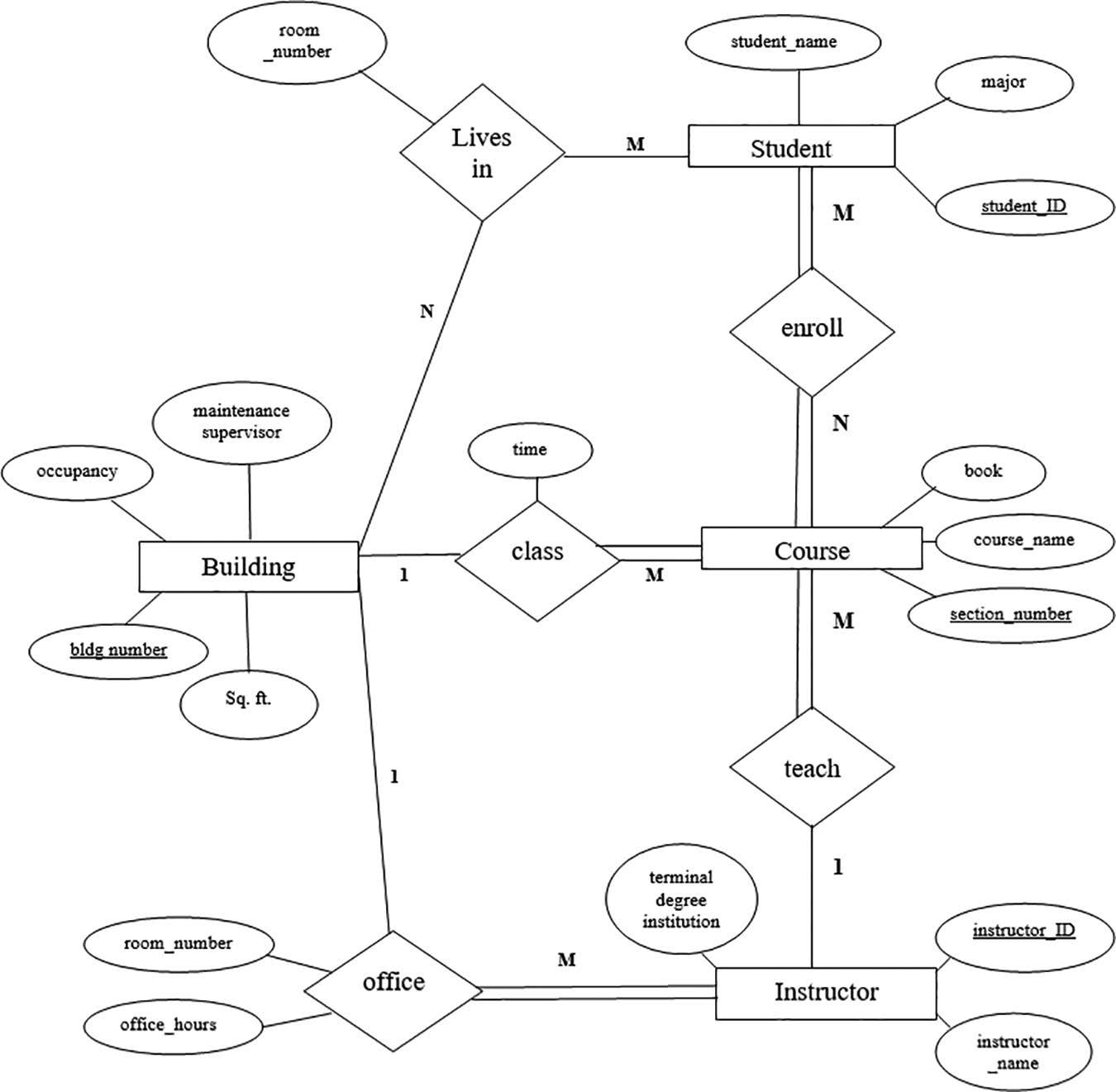
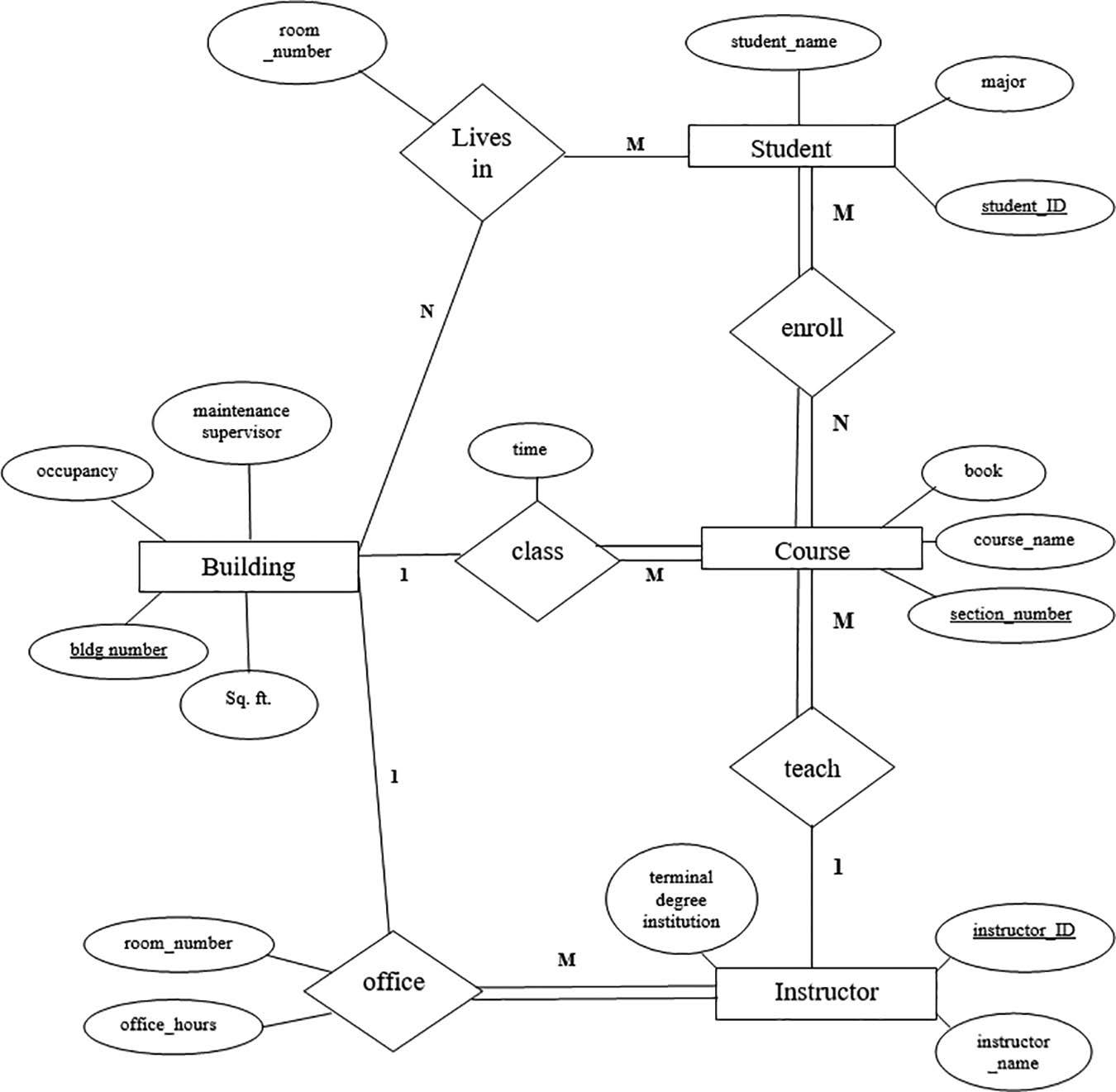
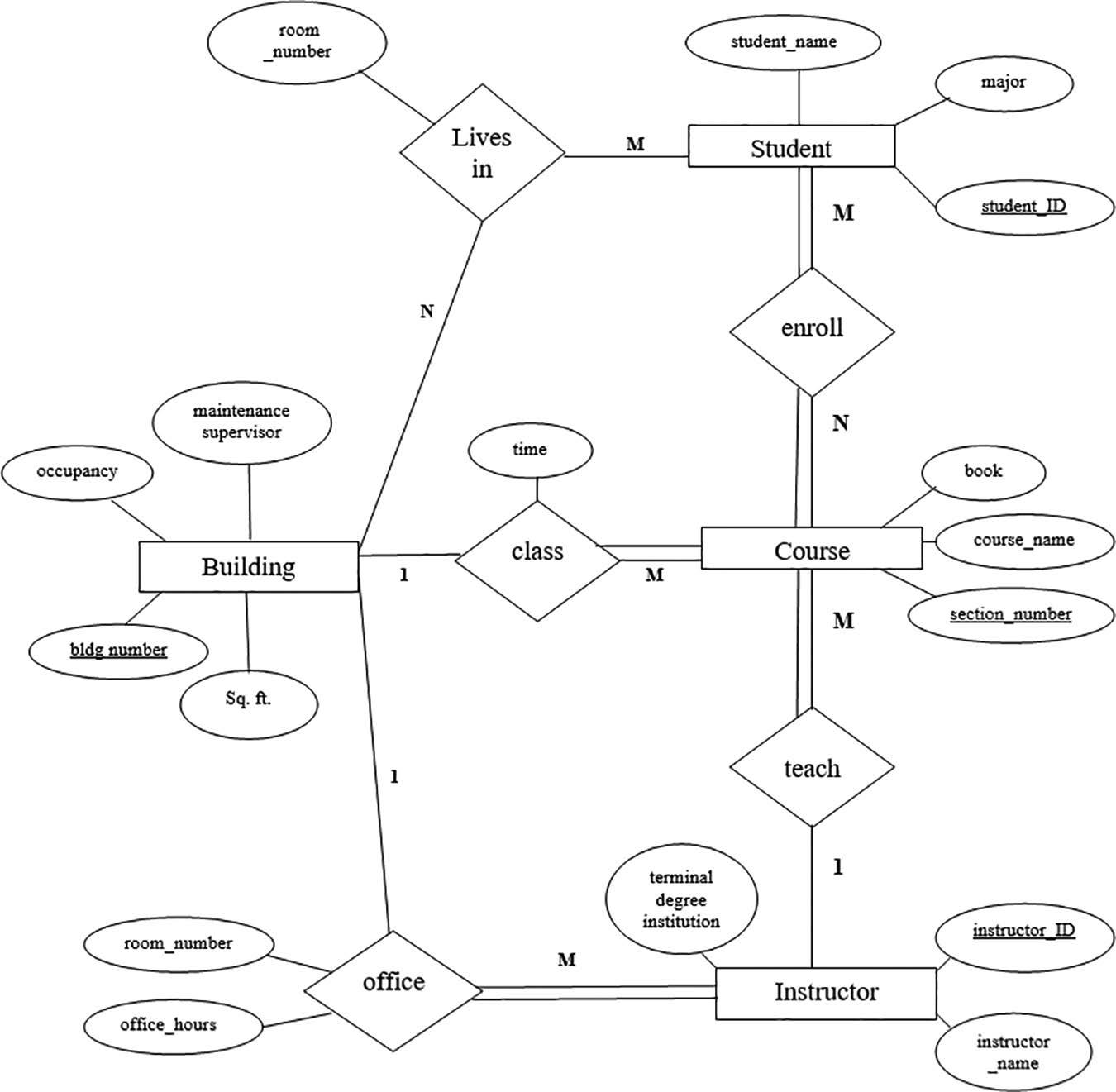
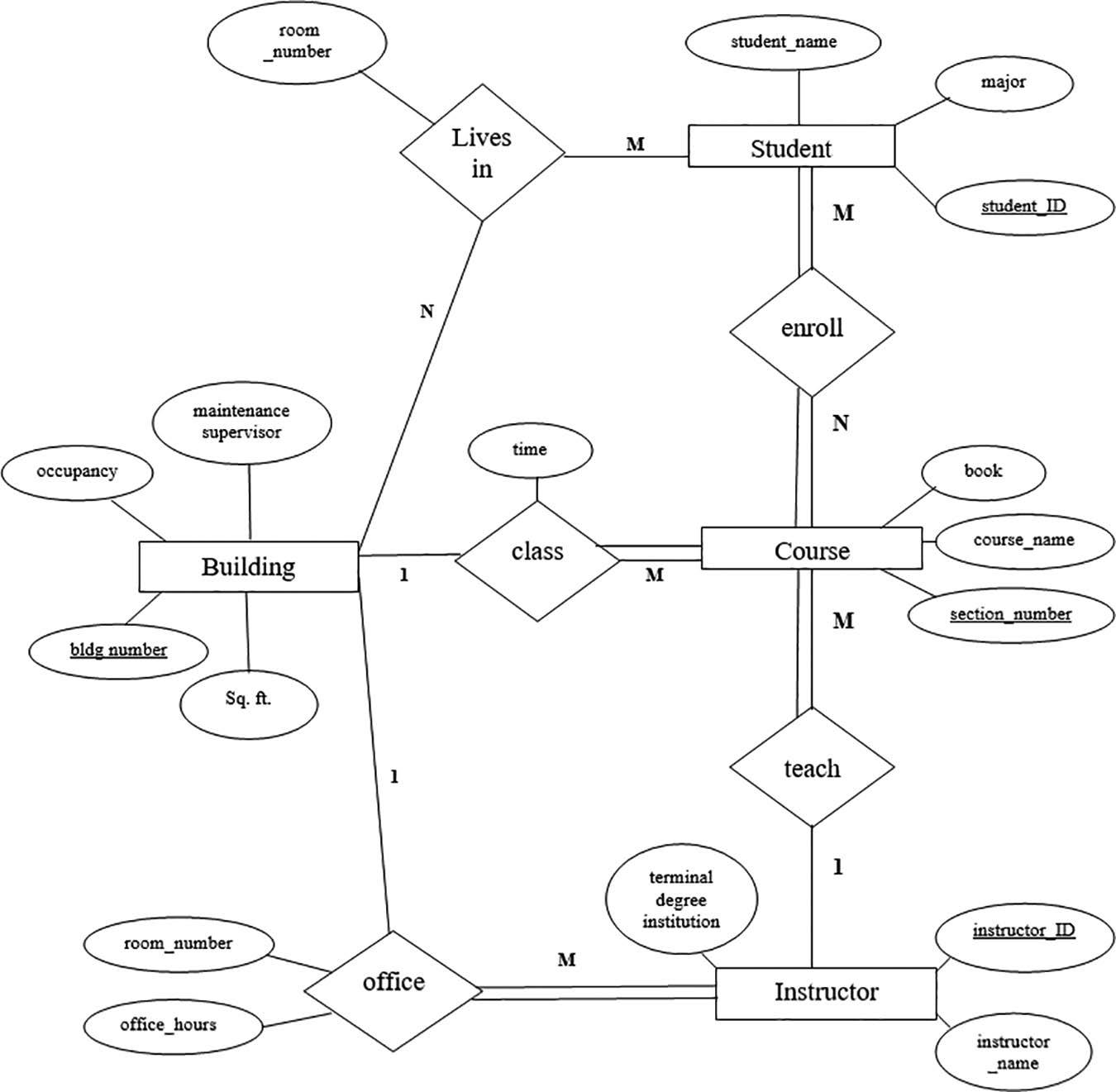
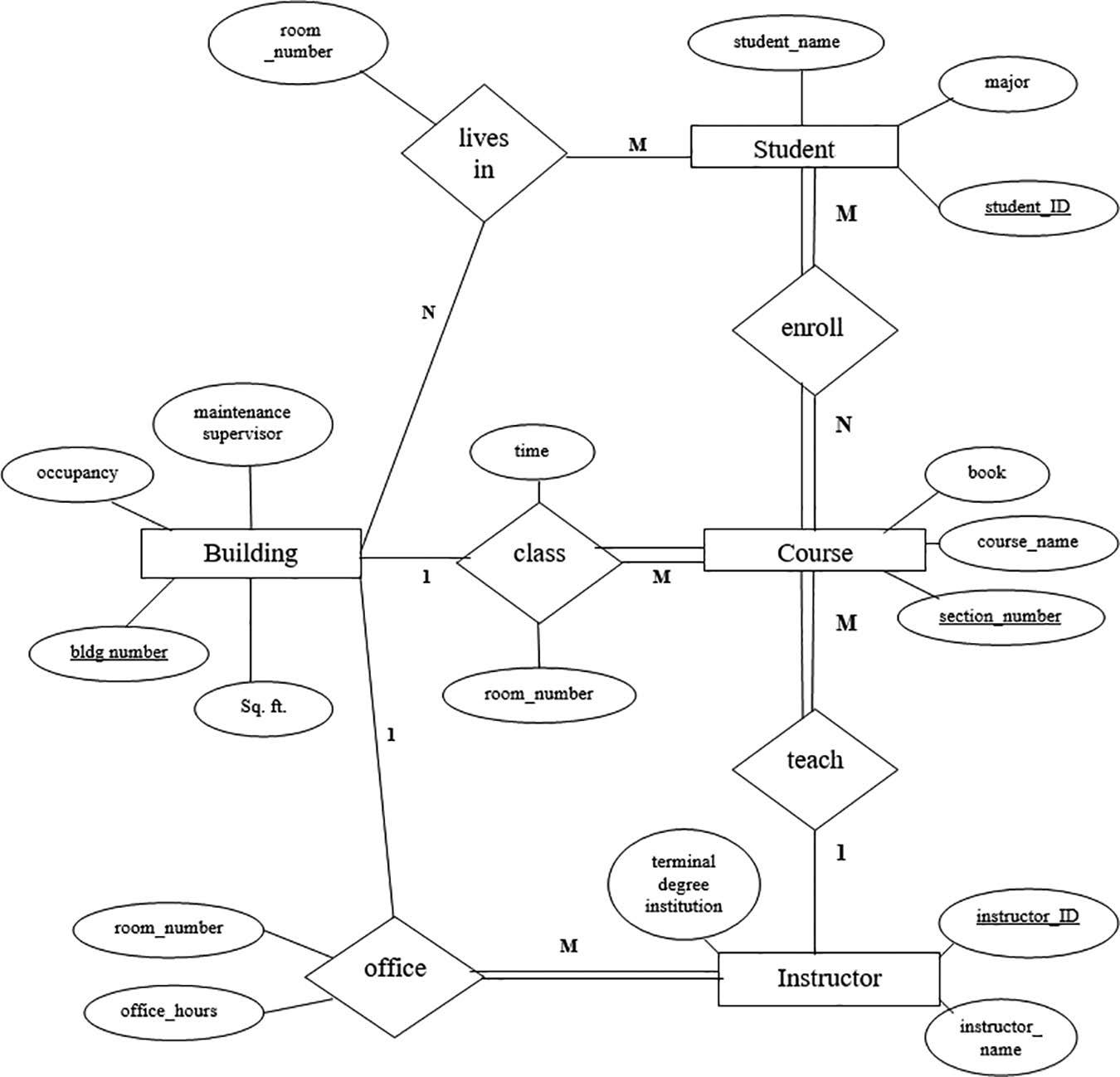
In Figure 8.6, why is BUILDING an entity and not an attribute of another entity?
Why is the room_number attribute attached to the lives_in relationship rather than the STUDENT entity?
What will make you decide whether an attribute should be connected to ENTITYA or ENTITYB or on the relationship connecting ENTITYA and ENTITYB?
Why are all the lines leaving BUILDING (on Figure 8.6) single lines (partial participation)?
According to Figure 8.6, does a student have to enroll in a course?
According to Figure 8.6, how many courses can an instructor teach?
According to Figure 8.6, does an instructor have to teach a course?
According to Figure 8.6, does a course have to be taught by an instructor?
According to Figure 8.6, a course can be taught by how many instructors?
What is a recursive relationship?
What would you look for if you are trying to see if a relationship is recursive?
What kinds of structural constraints can recursive relationships have?
Can recursive relationships have full participation? Why or why not?
How is the recursive relationship denoted diagrammatically in the Chen-like ER model?
Can the same two entities have more than one relationship?
How would you determine if a relationship is redundant?
What lower bound of cardinality does full participation imply?
What does a min/max ratio of (1, 1) between two entities imply?
What kind of participation ratio (full participation or partial participation) does a min/max ratio of (0, 1) imply?
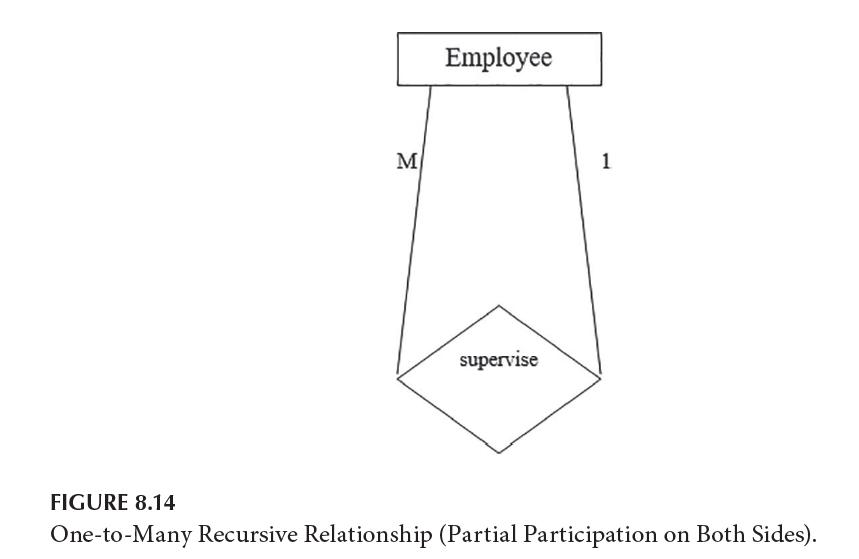
Map the recursive relationship shown in Figure 8.14 to a relational database and show some sample data.
If Figure 8.14 was an M:N relationship, how would you map this recursive relationship to a relational database? Show the mapping with some sample data.
Define and state in precise terms the cardinality and participation in Figure 8.6, the student/course/instructor/building database. Discuss the structural constraints of Figure 8.6. What are the participations? What are the cardinalities? Under which circumstances would the ones depicted be correct
Consider the following data: horse name, race, owner, odds at post, post position, date of race, order of finish, year to date earnings, owner name and address. Construct an ER diagram and use structured grammar to rationalize your constraints.
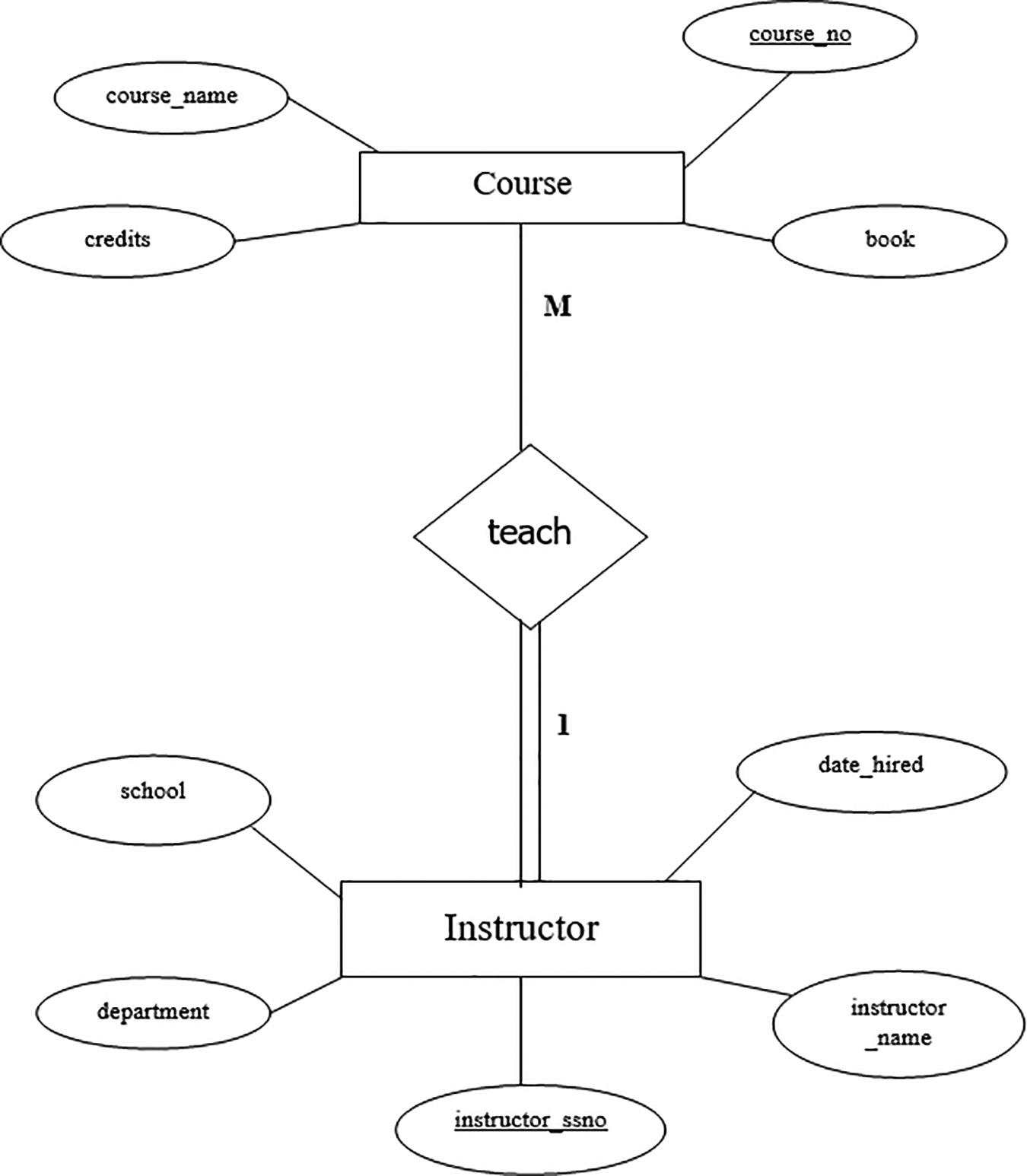
In the chapter, we described a database with two entities, COURSE and INSTRUCTOR (refer to Figure 8.10). Book was left as an attribute of COURSE Extend the database to include BOOK as an entity. Attributes of BOOK might include Book title, author, price, edition, publisher.FIGURE 8.10
Refer to Figure 8.7. Change Figure 8.7 to include the following information: One building can have a maximum of 99 students living in it. A student has to enroll in at least one class and can enroll in a maximum of five classes. A class has to enroll at least 5 students and can enroll a maximum of
What is a ternary relationship?
What is an n -ary relationship?
What are higher-order relationships?
Using the three entities presented (PRODUCT, SUPPLIER and CUSTOMER), draw an ER diagram that depicts the following: A customer must buy one and only one product from a supplier at a particular price on a particular date.
Using the three entities presented (PRODUCT, SUPPLIER and CUSTOMER), draw an ER diagram depicting the following: A supplier must supply many products to many customers at different prices on different dates.
Think of some more intersection attributes for the PRODUCT, SUPPLIER and CUSTOMER ternary example presented in Figure 9.3.
What situations might create each of the following structural constraints?a. PRODUCT:SUPPLIER:CUSTOMER ::1:1:1 partial participation on all sidesb. PRODUCT:SUPPLIER:CUSTOMER ::1:M:N partial participation on all sidesc. PRODUCT:SUPPLIER:CUSTOMER ::1:1:1 full participation on all sides
Can all ternary relationships be expressed in the form of binary relationships? Explain.
Come up with some attributes and entities of a relationship you think could be a ternary relationship. Can this relationship be expressed in the form of a binary relationship?
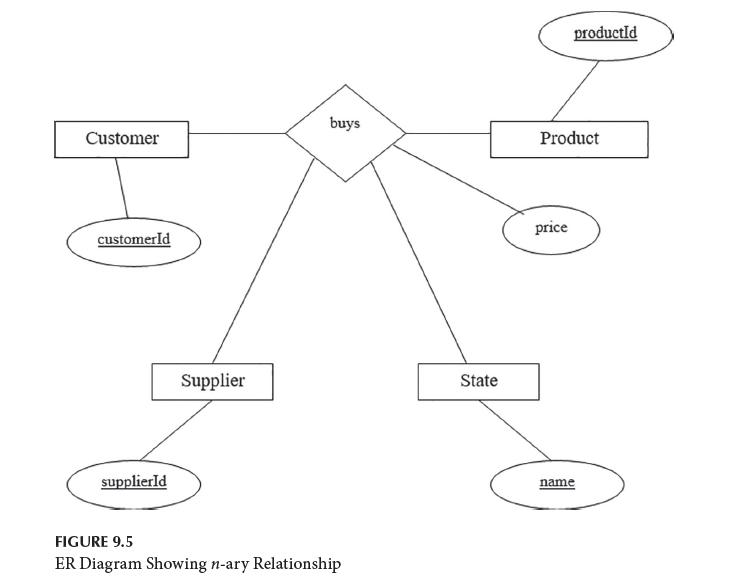
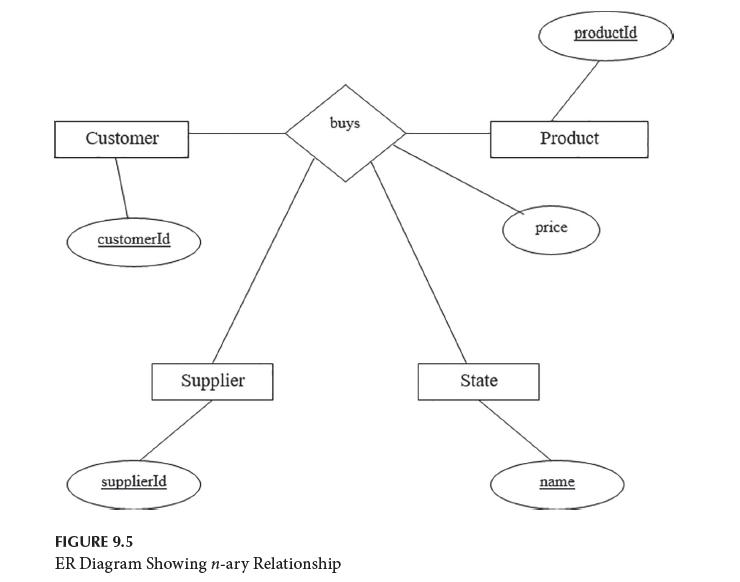
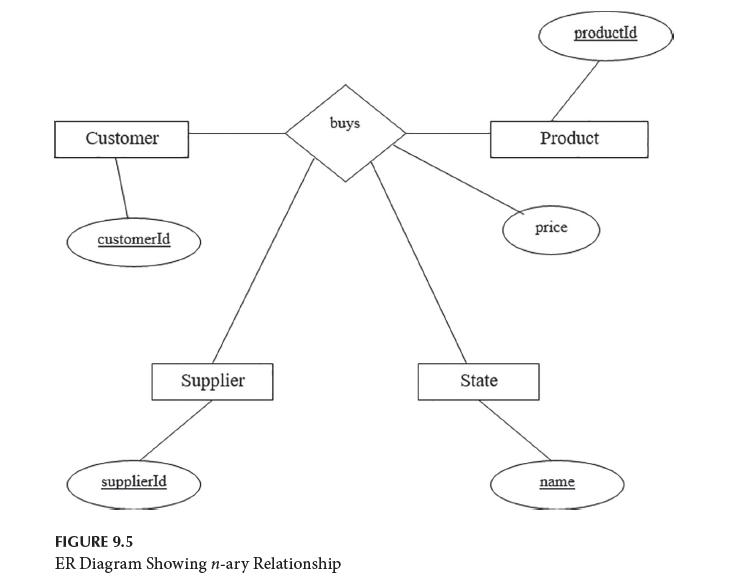
Could Figure 9.5 be described in the form of binary relationships? Discuss.
What mapping rules would you follow to map Figure 9.5?
Map Figure 9.5 to a relational database and show some sample data.
In Chapter 8, we described a database with two entities, COURSE and INSTRUCTOR. “Book” was left as an attribute of COURSE. Extend the database to include book as an entity. Attributes of book might include book title, author, price, edition, and publisher. Explore the relationships that might
Construct an ER diagram for a broker, a security, and a buyer. Include in the diagram the price of the security, the commission paid, the broker name and address, the buyer name and address, and the security exchange, symbol, and price. Include in the diagram the number of shares of the security
Using three entities—INSTRUCTOR, CLASS, and ROOM_ draw an ER diagram to depict the following: Each CLASS in a ROOM has one INSTRUCTOR, but each INSTRUCTOR in a ROOM may have many CLASSes and each INSTRUCTOR of a CLASS occupy many ROOMs. Include the cardinalities in the diagram.
Come up with an ER diagram with a ternary relationship. Draw the ER diagram and write out it’s cardinalities. Can this ER diagram also be drawn out as binary relationships? Why or why not?
What is a specialization? Give an example of a specialization.
What is a generalization? Give an example of a generalization.
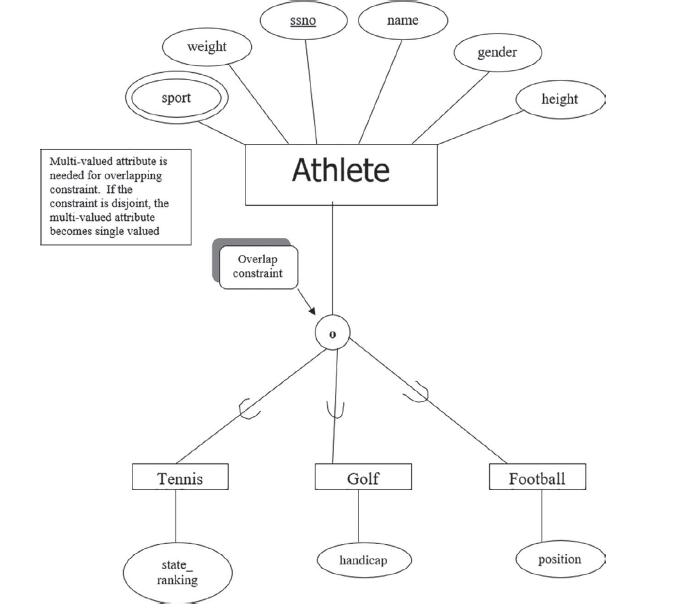
What is a disjoint constraint? What symbol shows the disjoint constraint in EER diagrams?
What is an overlapping constraint? What symbol shows the overlapping constraint in EER diagrams?
What does the subclass symbol signify?
Why would you create a generalization/specialization relationship rather than creating a “weak entity”?
How does “inheritance” play into the superclass/subclass relationship? Discuss.
What is the difference between a generalization entity and regular entity as described in the previous chapters?
How are the mapping rules for generalizations/specializations different from the mapping rules for weak entities?
Would it be wise to map Figure 10.3 using mapping rule 17? Why or why not?
Which mapping rules are good to use if there are too many attributes on the subclasses?
Which mapping rule or rules will not work well for overlapping subclasses?
When would you create an overlapping relationship?
When would you create a disjoint relationship?
Does mapping rule 15 create relations in 3NF? Discuss.
Does mapping rule 16 create relations in 3NF? Discuss.
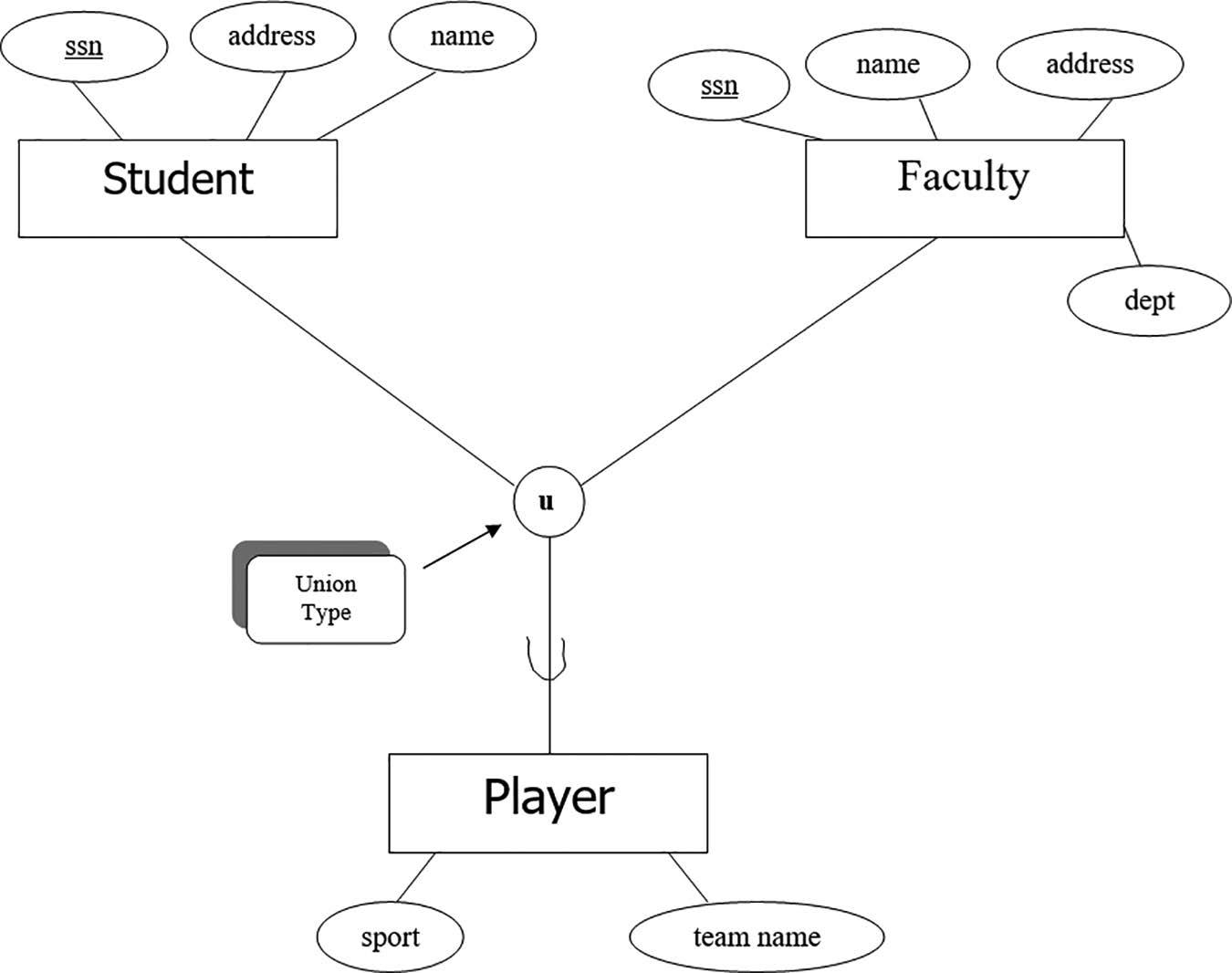
Figure 10.7A says, “A player may be a student or a faculty.” We show this as a union. Could we have shown this as a disjoint relationship? Discuss.
What is the difference between a disjoint relationship and a union?
How would you map a category or union type with the same keys on the superclasses?
How would you map a category or union type with different keys on the superclasses?
When would you create a generalization/specialization relationship, and when would you create a category or union type? Explain with examples.
A shared subclass inherits attributes from ________________?
A category or union type inherits attributes from __________?
What is the difference between a shared subclass and category or union type?
Draw an ER diagram for a library for an entity called library holdings. Include as attributes the call number, name of book, author(s), location in library. Add a defining predicate of holding type and draw in the disjoint, partial specializations of journals and reference books, with journals
Draw an ER diagram for computers at a school. Each computer is identifed by an ID number, make, model, date acquired, and location. Each computer is categorized as a student computer or a staf computer. If it is a student computer, an attribute is hours available. If it is a staf computer, an
Present an EER diagram that has a union type, a disjoint relationship, and an overlapping relationship. Also include shared subclasses with dif erent keys. Include primary keys and a minimal set of attributes and finally map this to a relational database. Write out the structured English to explain
What is the first mapping rule?
Why is it good to frst map strong entities and then map the weak entities?
What would you map after you map the weak entities?
How would you map weak entities of weak entities?
While mapping a binary 1:N relationship when the N side has full participation, why do we include the key of the 1 side of the table in the N side of the table? What would be wrong if we included the key of the N side of the table in the 1 side of the table?
Why would it be reasonable to map a 1:N binary relationship with partial participation on the N side like an M:N relationship?
What hints would you look for to determine if a relationship is ternary?
What hints would you look for when you are trying to determine whether tables have weak entities and multivalued attributes included in them?
What hints would you look for to determine if there is a generalization/specialization relationship?
What hints would help you determine if a shared subclass exists?
What hints would help you determine if a category or union type of relationship exists?
Showing 100 - 200
of 219
1
2
3
Step by Step Answers

 Get 50% OFF
Claim Now
Get 50% OFF
Claim Now