New Semester
Started
Get
50% OFF
Study Help!
--h --m --s
Claim Now
Question Answers
Textbooks
Find textbooks, questions and answers
Oops, something went wrong!
Change your search query and then try again
S
Books
FREE
Study Help
Expert Questions
Accounting
General Management
Mathematics
Finance
Organizational Behaviour
Law
Physics
Operating System
Management Leadership
Sociology
Programming
Marketing
Database
Computer Network
Economics
Textbooks Solutions
Accounting
Managerial Accounting
Management Leadership
Cost Accounting
Statistics
Business Law
Corporate Finance
Finance
Economics
Auditing
Tutors
Online Tutors
Find a Tutor
Hire a Tutor
Become a Tutor
AI Tutor
AI Study Planner
NEW
Sell Books
Search
Search
Sign In
Register
study help
computer science
systems analysis and design 12th
Essentials Of Systems Analysis And Design 5th Edition Joseph Valacich, Joey F George - Solutions
Match each of the key terms listed with the definition that best fits it.___________ That part of a decision table that lists the actions that result for a given set of conditions.Here are the key terms from the chapter. The page where each term is first explained is in parentheses after the
In order to determine the requirements for the new Customer Tracking System, several JAD sessions, interviews, and observations were conducted. Resulting information from these requirements determination methods was useful in the preparation of the Customer Tracking System’s data-flow
Concisely define each of the following key data-modeling terms: conceptual data model, entity-relationship diagram, entity type, entity instance, attribute, candidate key, multivalued attribute, relationship, degree, cardinality, and associative entity.
Match each of the key terms with the definition that best fits it.___________ A graphical representation of the entities, associations, and data for an organization or business area; it is a model of entities, the associations among those entities, and the attributes of both the entities and their
What characteristics of data are represented in an E-R diagram?
Ask the right kinds of questions to determine data requirements for an information system.
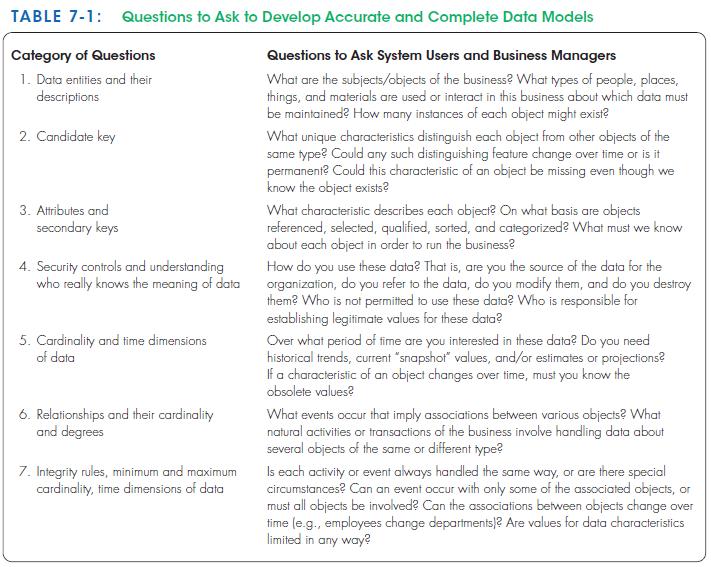
Using Table 7-1 as a guide, develop a script of at least ten questions you would ask during an interview of the customer-order processing department manager at Pine Valley Furniture. Assume the focus is on analyzing the requirements for a new order-entry system. The purpose of the interview is to
Match each of the key terms with the definition that best fits it.___________ A single occurrence of an entity type.Here are the key terms from the chapter. The page where each term is first explained is in parentheses after the term.1. Associative entity2. Attribute3. Binary relationship4.
A performance venue hosts many concert series a year. Performers have a name and perform several times in a concert series (each constituting a performance with a different date). Concert series have one or more performers and have a name and a specified seating arrangement. A concert series is
Match each of the key terms with the definition that best fits it.___________ An attribute that may take on more than one value for each entity instance.Here are the key terms from the chapter. The page where each term is first explained is in parentheses after the term.1. Associative entity2.
A restaurant chain has several store locations in a city (with a name and zip code stored for each), and each is managed by one manager. Managers manage only one store. Each restaurant location has its own unique set of menus. Most have more than one menu (e.g., lunch and dinner menus). Each menu
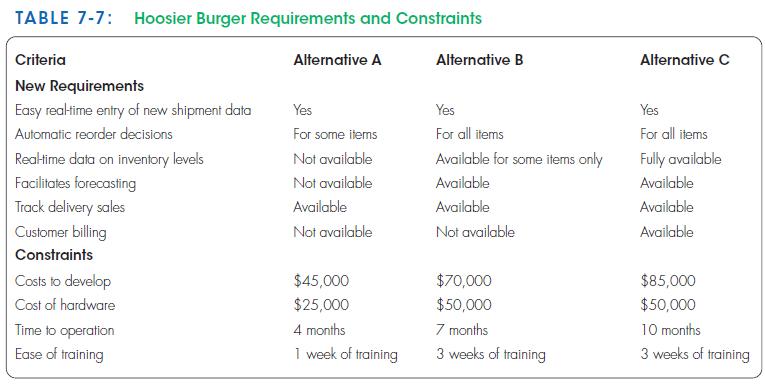
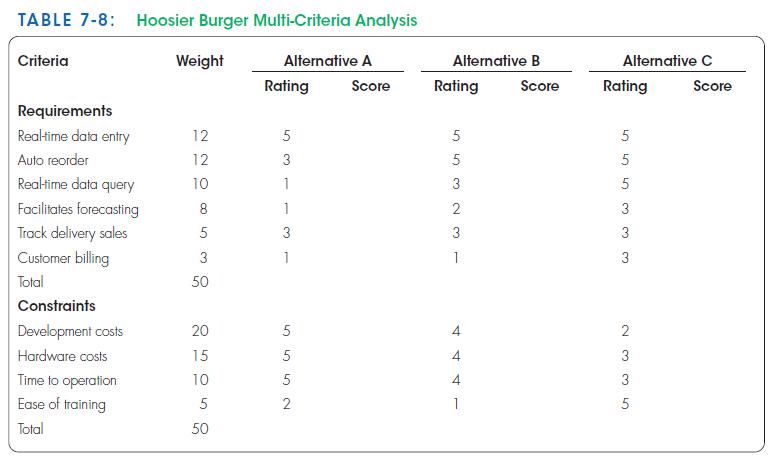
As the lead analyst on the Hoosier Burger project, you have been busy collecting, structuring, and evaluating the new system’s requirements. During a Monday morning meeting with Bob and Thelma, the three of you review the system requirements, system constraints, and alternative design strategies.
Consider the E-R diagram in Figure 7-7.a. What is the identifier for the CERTIFICATE associative entity?b. Now, assume that the same employee may take the same course multiple times, on different dates. Does this change your answer to part a? Why or why not?c. Now, assume we do know the instructor
Match each of the key terms with the definition that best fits it.___________ A simultaneous relationship among instances of three entity types.Here are the key terms from the chapter. The page where each term is first explained is in parentheses after the term.1. Associative entity2. Attribute3.
Talk to MIS professionals at a variety of organizations and determine the extent to which CASE tools are used in the creation and editing of entity-relationship diagrams. Try to determine whether they use CASE tools for this purpose; which CASE tools are used; and why, when, and how they are used.
Distinguish between unary, binary, and ternary relationships and give an example of each.
Match each of the key terms with the definition that best fits it.___________ A collection of entities that share common properties or characteristics.Here are the key terms from the chapter. The page where each term is first explained is in parentheses after the term.1. Associative entity2.
Distinguish between a relationship and an associative entity, and use associative entities in a data model when appropriate.
Which of the following types of relationships can have attributes associated with them: one-to-one, one-to-many, many-to-many?
Match each of the key terms with the definition that best fits it.___________ A relationship between instances of two entity types.Here are the key terms from the chapter. The page where each term is first explained is in parentheses after the term.1. Associative entity2. Attribute3. Binary
A car rental is an association between a customer, sales agent, and a car. Select a few pertinent attributes for each of these entity types and represent a rental in an E-R diagram.
Consider the purchase of a new PC to be used by you at your work (or by you at a job that you would like to have). Describe in detail three alternatives for this new PC that represent the low, middle, and high points of a continuum of potential solutions. Be sure that the low-end PC meets at least
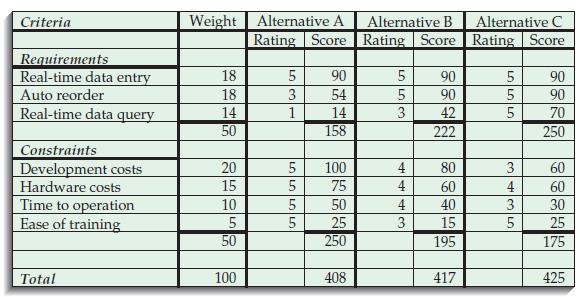
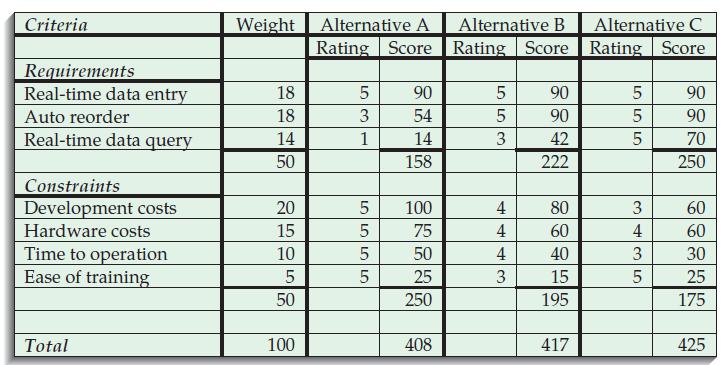
For the new PC described in Question 6, develop ranked lists of your requirements and constraints as displayed in Figure 7-19. Display the requirements and constraints, along with the three alternatives, as done in Figure 7-19, and note how each alternative is rated on each requirement and
Relate data modeling to process and logic modeling as different ways of describing an information system.
Match each of the key terms with the definition that best fits it.___________ An entity type that associates the instances of one or more entity types and contains attributes that are peculiar to the relationship between those entity instances.Here are the key terms from the chapter. The page where
Generate at least three alternative design strategies for an information system.
Match each of the key terms with the definition that best fits it.___________ A named property or characteristic of an entity that is of interest to the organization.Here are the key terms from the chapter. The page where each term is first explained is in parentheses after the term.1. Associative
Select the best design strategy using both qualitative and quantitative methods.
Match each of the key terms with the definition that best fits it.___________ The number of instances of entity B that can (or must) be associated with each instance of entity A.Here are the key terms from the chapter. The page where each term is first explained is in parentheses after the term.1.
A company database contains an entity called EMPLOYEE. Among other information, the company records information about any degrees each employee has earned, along with the graduation date for the degree.a. Represent the EMPLOYEE entity and its degree attributes using the notation for multivalued
Match each of the key terms with the definition that best fits it.___________ A candidate key that has been selected as the unique, identifying characteristic for an entity type.Here are the key terms from the chapter. The page where each term is first explained is in parentheses after the term.1.
Match each of the key terms with the definition that best fits it.___________ An association between the instances of one or more entity types that is of interest to the organization.Here are the key terms from the chapter. The page where each term is first explained is in parentheses after the
List the four types of E-R diagrams produced and analyzed during conceptual data modeling.
Draw an E-R diagram for each of the following situations:a. A laboratory has several chemists who work on one or more projects. Chemists also may use certain kinds of equipment on each project. Attributes of CHEMIST include Employee_ID (identifier), Name, and Phone_No. Attributes of PROJECT include
Match each of the key terms with the definition that best fits it.___________ An attribute (or combination of attributes) that uniquely identifies each instance of an entity type.Here are the key terms from the chapter. The page where each term is first explained is in parentheses after the term.1.
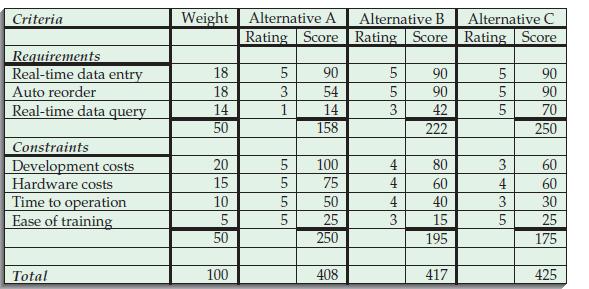
Recreate the spreadsheet in Figure 7-19 in your spreadsheet package. Change the weights and compare the outcome to Figure 7-19. Change the rankings. Add criteria. What additional information does this “what if ” analysis provide for you as a decision maker? What insight do you gain into the
What notation is used on an E-R diagram to show the minimum and maximum cardinalities on a one-to-many relationship?
Match each of the key terms with the definition that best fits it.___________ The number of entity types that participate in a relationship.Here are the key terms from the chapter. The page where each term is first explained is in parentheses after the term.1. Associative entity2. Attribute3.
The method for evaluating alternatives used in Figure 7-19 is called weighting and scoring. This method implies that the total utility of an alternative is the sum of the products of the weights and ratings of each criterion for the alternative. What assumptions are characteristic of this method
Explain the difference between a candidate key and the identifier of an entity type.
Match each of the key terms with the definition that best fits it.___________ A relationship between the instances of one entity type.Here are the key terms from the chapter. The page where each term is first explained is in parentheses after the term.1. Associative entity2. Attribute3. Binary
Weighting and scoring (see Problem and Exercise 13) is only one method for comparing alternative solutions to a problem. Go to the library, find a book or articles on qualitative and quantitative decision making and voting methods, and outline two other methods for evaluating alternative solutions
What distinguishes a repeating group from a simple multivalued attribute?
Match each of the key terms with the definition that best fits it.___________ A detailed model that shows the overall structure of organizational data but is independent of any database management system or other implementation considerations.Here are the key terms from the chapter. The page where
Prepare an agenda for a meeting at which you would present the findings of the analysis phase of the SDLC to Bob Mellankamp concerning his request for a new inventory control system. Use information provided in Chapters 5 through 7 as background in preparing this agenda. Concentrate on which topics
Match each of the key terms with the definition that best fits it.___________ A set of two or more multivalued attributes that are logically related.Here are the key terms from the chapter. The page where each term is first explained is in parentheses after the term.1. Associative entity2.
How do managers decide which alternative design strategy to develop?
The owner of two pizza parlors located in adjacent towns wants to computerize and integrate sales transactions and inventory management within and between both stores. The point-of-sale component must be easy to use and flexible enough to accommodate a variety of pricing strategies and coupons. The
Compare the alternative systems from Problem and Exercise 16 using the weighted approach demonstrated in Figure 7-19. Which system would you recommend? Why? Was the approach taken in this and Problem and Exercise 16 useful even for this relatively small system? Why or why not?Data from Problem and
Match each of the key terms with the definition that best fits it.___________ A person, place, object, event, or concept in the user environment about which the organization wishes to maintain data.Here are the key terms from the chapter. The page where each term is first explained is in
Match each of the key terms with the definition that best fits it.___________ A particular approach to developing an information system. It includes statements on the system’s functionality, hardware and system software platform, and method for acquisition.Here are the key terms from the chapter.
Suppose that an analysis team did not generate alternative design strategies for consideration by a project steering committee or client. What might the consequences be of having only one design strategy? What might happen during the oral presentation of project progress if only one design strategy
Assume you are designing a database for a local used car dealership. Attributes for a car include the vehicle identification number, stock number, make, model, year, and trim. What would you use for the primary key in this entity? What attributes are likely to be foreign keys associated with other
Is business process reengineering a business fad or is there more to it? Explain and justify your answer.
What are the general guidelines for conducting interviews?
Match each of the key terms with the definition that best fits it.____________ The way a system actually works.Here are the key terms from the chapter. The page where each term is first explained is in parentheses after the term.1. Business process reengineering (BPR)2. Closed-ended questions3.
Use prototyping during requirements determination.
The Clothing Shack is an online retailer of men’s, women’s, and children’s clothing. The company has been in business for four years and makes a modest profit from its online sales. However, in an effort to compete successfully against online retailing heavyweights, the Clothing
Describe three traditional techniques for collecting information during analysis. When might one be better than another?
Match each of the key terms with the definition that best fits it.____________ Technologies that enable the breaking of long-held business rules that inhibit organizations from making radical business changes.Here are the key terms from the chapter. The page where each term is first explained is in
Participate in and help plan a joint application design session.
Juan Rodriquez has assigned you the task of requirements determination for the Hoosier Burger project. You are looking forward to this opportunity because it will allow you to meet and interact with Hoosier Burger employees. Besides interviewing Bob and Thelma Mellankamp, you decide to collect
Some of the key problems with information systems that show up later in the systems development life cycle can be traced back to inadequate work during requirements determination. How might this issue be avoided?
What are some useful character traits for an analyst involved in requirements determination?
Match each of the key terms with the definition that best fits it.____________ The person who makes detailed notes of the happenings at a joint application design session.Here are the key terms from the chapter. The page where each term is first explained is in parentheses after the term.1.
Describe options for designing and conducting interviews and develop a plan for conducting an interview to determine system requirements.
Explain the advantages and pitfalls of observing workers and analyzing business documents to determine system requirements.
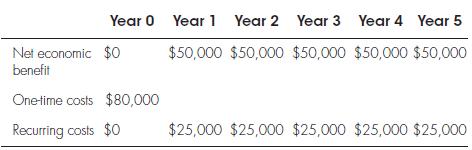
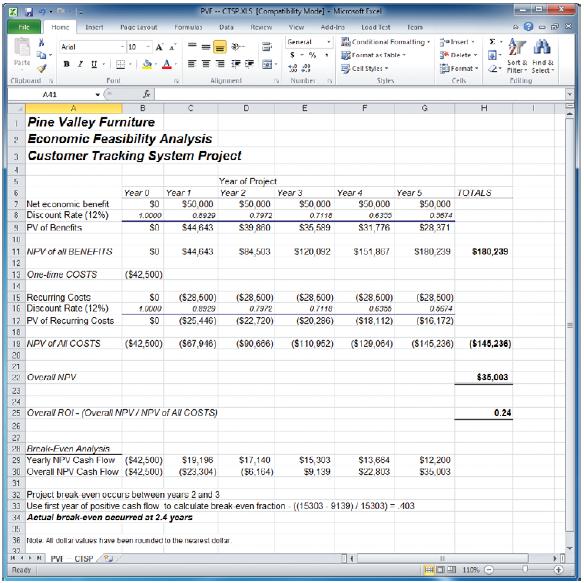
Jackie Judson, vice president of marketing, and Jim Woo, a senior systems analyst, have been involved with Pine Valley Furniture’s Customer Tracking System since the beginning of the project. After receiving project approval from the Systems Priority Board, Jim and his project development team
The methods of data collection discussed in this chapter take a lot of time. What are some ways analysts can still collect the information they need for systems analysis but also save time? What methods can you think of that would improve upon both traditional and newer techniques?
Match each of the key terms with the definition that best fits it.____________ The search for, and implementation of, radical change in business processes to achieve breakthrough improvements in products and services.Here are the key terms from the chapter. The page where each term is first
Select the appropriate methods to elicit system requirements.
Imagine you are a member of the project approval committee. An ambitious young manager in the marketing department is well connected with the top management team in your company. He catches you in the hall and mentions that he is frustrated with how long it takes to get a simple system enhancement
Describe the steps involved when identifying and selecting projects and initiating and planning projects.
Match each of the key terms with the definition that best fits it.____________ The process of evaluating how key stakeholders within the organization view the proposed system.Here are the key terms from the chapter. The page where each term is first explained is in parentheses after the term.1.
American Labs provides lab testing services for a variety of clients, mostly doctors’ offices and other small medical businesses throughout the Midwest. Clients send test vials containing blood samples or other test requests to American Labs’ testing center, where the requested tests are
Explain the need for and the contents of a project scope statement and a baseline project plan.
Match each of the key terms with the definition that best fits it.____________ A document prepared for the customer that describes what the project will deliver and outlines generally at a high level all work required to complete the project.Here are the key terms from the chapter. The page where
List and describe various methods for assessing project feasibility.
Match each of the key terms with the definition that best fits it.____________ A written report that outlines the justification for an information system. This report highlights economic benefits and costs and the technical and organizational feasibility of the proposed system.Here are the key
Of the six methods for assessing project feasibility, which is the most important? In which situation is each method more or less important?
Describe the differences between tangible and intangible benefits and costs, and the differences between one-time and recurring costs.
Match each of the key terms with the definition that best fits it.____________ A process of identifying the financial benefits and costs associated with a development project.Here are the key terms from the chapter. The page where each term is first explained is in parentheses after the term.1.
Perform cost-benefit analysis and describe what is meant by the time value of money, present value, discount rate, net present value, return on investment, and break-even analysis.
Match each of the key terms with the definition that best fits it.____________ A strategy in systems analysis and design in which the project is reviewed after each phase, and continuation of the project is rejustified in each of these reviews.Here are the key terms from the chapter. The page where
Describe the activities and participant roles within a structured walkthrough.
Match each of the key terms with the definition that best fits it.____________ A cost resulting from the ongoing evolution and use of the system.Here are the key terms from the chapter. The page where each term is first explained is in parentheses after the term.1. Baseline project plan (BPP)2.
Match each of the key terms with the definition that best fits it.____________ The interest rate used to compute the present value of future cash flows.Here are the key terms from the chapter. The page where each term is first explained is in parentheses after the term.1. Baseline project plan
Match each of the key terms with the definition that best fits it.____________ A benefit derived from the creation of an information system, that cannot be easily measured in dollars or with certainty.Here are the key terms from the chapter. The page where each term is first explained is in
Match each of the key terms with the definition that best fits it.____________ A network of interconnected individual networks that use a common protocol to communicate with each other; a global computing network to support business-to-consumer electronic commerce.Here are the key terms from the
Match each of the key terms with the definition that best fits it.____________ The process of assessing the degree to which the potential time frame and completion dates for all major activities within a project meet organizational deadlines and constraints for affecting change.Here are the key
Match each of the key terms with the definition that best fits it.____________ A cost associated with an information system, that can be easily measured in dollars and with certainty.Here are the key terms from the chapter. The page where each term is first explained is in parentheses after the
Match each of the key terms with the definition that best fits it.____________ Internet-based communication and other technologies that support day-to-day business activities.Here are the key terms from the chapter. The page where each term is first explained is in parentheses after the term.1.
Match each of the key terms with the definition that best fits it.____________ A peer group review of any product created during the systems development process.Here are the key terms from the chapter. The page where each term is first explained is in parentheses after the term.1. Baseline project
Match each of the key terms with the definition that best fits it.____________ A process of assessing the development organization’s ability to construct a proposed system.Here are the key terms from the chapter. The page where each term is first explained is in parentheses after the term.1.
Match each of the key terms with the definition that best fits it.____________ A cost associated with project initiation and development, or system start-up.Here are the key terms from the chapter. The page where each term is first explained is in parentheses after the term.1. Baseline project plan
Match each of the key terms with the definition that best fits it.____________ The current value of a future cash flow.Here are the key terms from the chapter. The page where each term is first explained is in parentheses after the term.1. Baseline project plan (BPP)2. Break-even analysis3.
Match each of the key terms with the definition that best fits it.____________ Internet-based communication to support business activities within a single organization.Here are the key terms from the chapter. The page where each term is first explained is in parentheses after the term.1. Baseline
Match each of the key terms with the definition that best fits it.____________ A benefit derived from the creation of an information system, that can be measured in dollars and with certainty.Here are the key terms from the chapter. The page where each term is first explained is in parentheses
Match each of the key terms with the definition that best fits it.____________ The process of assessing potential legal and contractual ramifications due to the construction of a system.Here are the key terms from the chapter. The page where each term is first explained is in parentheses after the
Match each of the key terms with the definition that best fits it.____________ A cost associated with an information system, that cannot be easily measured in terms of dollars or with certainty.Here are the key terms from the chapter. The page where each term is first explained is in parentheses
Showing 4300 - 4400
of 4723
First
34
35
36
37
38
39
40
41
42
43
44
45
46
47
48
Step by Step Answers

 Get 50% OFF
Claim Now
Get 50% OFF
Claim Now