







Question: Using the correlation coefficient results from Problem 27, determine the statistical significance of the relationship. Can the null hypothesis be rejected? In other words, does
Using the correlation coefficient results from Problem 27, determine the statistical significance of the relationship. Can the null hypothesis be rejected? In other words, does this relationship hold true for the population?
Data From Problem 27
A sociologist researching the link between race and inequality believes that younger people generally have more tolerant views. To test this hypothesis, the sociologist gathers a random sample of 10 Caucasians ranging in age from teenager to elderly and asks them for their beliefs about African-Americans on a 10-point scale (1 representing acceptance of negative beliefs, 10 representing acceptance of positive beliefs). Check to see if his idea about the relationship between age and racial stereotyping is correct by calculating and interpreting the strength and direction of Pearson’s correlation coefficient.
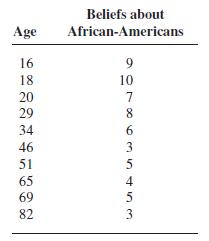
Age 16 18 20 29 34 46 51 65 69 82 Beliefs about African-Americans 9 10 7 8 6 3 5453
Step by Step Solution
3.37 Rating (166 Votes )
There are 3 Steps involved in it
Solution The null hypothesis entails that there is not a s... View full answer

Get step-by-step solutions from verified subject matter experts
 Study Help