







Question: 170 Deferred tax allowance study. A study was conducted to identify accounting choice variables that influence a managers decision to change the level of the
170 Deferred tax allowance study. A study was conducted to identify accounting choice variables that influence a manager’s decision to change the level of the deferred tax asset allowance at a firm ( The Engineering Economist , Jan./Feb. 2004). Data were collected on a sample of 329 firms that reported deferred tax assets.
The dependent variable of interest (DTVA) is measured as the change in the deferred tax asset valuation allowance divided by the deferred tax asset. The independent variables used as predictors of DTVA are as follows:
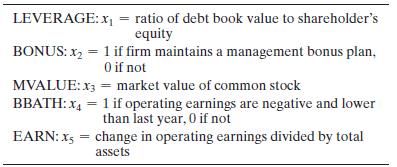
A first-order model was fitted to the data with the following results ( p -values are in parantheses):

a. Interpret the estimate of the b -coefficient for x4.
b. The “Big Bath” theory proposed by the researchers states that the mean DTVA for firms with negative earnings and earnings lower than last year will exceed the mean DTVA of other firms. Is there evidence to support this theory? Test, using a = .05.
c. Interpret the value of Ra 2 .
LEVERAGE: x = ratio of debt book value to shareholder's equity BONUS: x2 = 1 if firm maintains a management bonus plan. 0 if not MVALUE: x3 = market value of common stock BBATH:x=1 if operating earnings are negative and lower than last year, 0 if not EARN: x5 = change in operating earnings divided by total assets
Step by Step Solution
There are 3 Steps involved in it

Get step-by-step solutions from verified subject matter experts
 Study Help