







Question: Reconsider the previous exercise and the CatJumping data file. a. Determine the predicted takeoff velocity for a cat with a mass of 5,000 grams (which
Reconsider the previous exercise and the CatJumping data file.
a. Determine the predicted takeoff velocity for a cat with a mass of 5,000 grams (which is about 11 pounds).
b. Determine the predicted takeoff velocity for a cat with a mass of 10,000 grams. Also explain why it€™s not advisable to have much confidence in this prediction.
c. Determine the predicted takeoff velocity and the residual value for the cat with the largest mass. Also interpret what this residual value means.
Data from previous exercise
Harris and Steudel (2002) studied factors that might be associated with the jumping performance of domestic cats. They studied 18 cats, using takeoff velocity (in centimeters per second) as the response variable. They used body mass (in grams), hind limb length (in centimeters), muscle mass (in grams), and percent body fat in addition to sex as potential explanatory variables. Th e data can be found in the CatJumping data file. A scatterplot of takeoff velocity vs. body mass is shown in the figure for Exercise 10.3.15.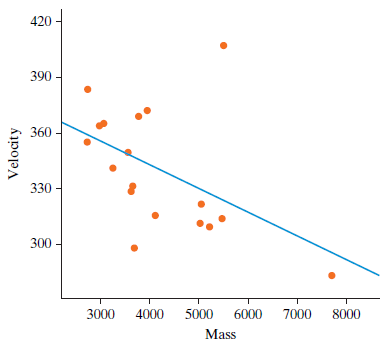
420 390 360 330 300 3000 4000 5000 6000 7000 8000 Mass Velocity
Step by Step Solution
3.38 Rating (160 Votes )
There are 3 Steps involved in it
a 33347 cmsec b 27247 cmsec A 10000gram cat is beyond the range of ... View full answer

Get step-by-step solutions from verified subject matter experts
 Study Help