New Semester
Started
Get
50% OFF
Study Help!
--h --m --s
Claim Now
Question Answers
Textbooks
Find textbooks, questions and answers
Oops, something went wrong!
Change your search query and then try again
S
Books
FREE
Study Help
Expert Questions
Accounting
General Management
Mathematics
Finance
Organizational Behaviour
Law
Physics
Operating System
Management Leadership
Sociology
Programming
Marketing
Database
Computer Network
Economics
Textbooks Solutions
Accounting
Managerial Accounting
Management Leadership
Cost Accounting
Statistics
Business Law
Corporate Finance
Finance
Economics
Auditing
Tutors
Online Tutors
Find a Tutor
Hire a Tutor
Become a Tutor
AI Tutor
AI Study Planner
NEW
Sell Books
Search
Search
Sign In
Register
study help
mathematics
applied numerical methods
Applied Numerical Methods With MATLAB For Engineers And Scientists 3rd Edition Steven C. Chapra - Solutions
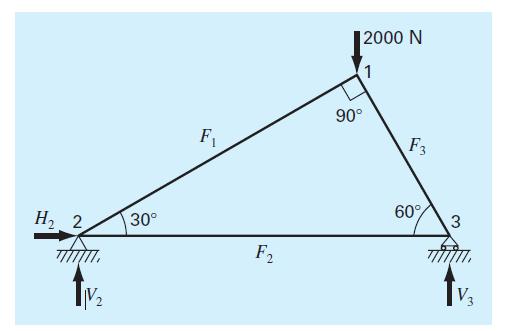
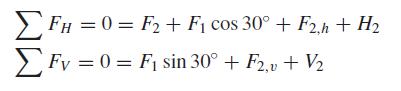
An important problem in structural engineering is that of finding the forces in a statically determinate truss (Fig. P8.10). This type of structure can be described as a system of coupled linear algebraic equations derived from force balances. The sum of the forces in both horizontal and vertical
Consider the following function:f(x) = 2x + 3 / xPerform 10 iterations of parabolic interpolation to locate the minimum. Comment on the convergence of your results (x1 = 0.1, x2 = 0.5, x3 = 5)
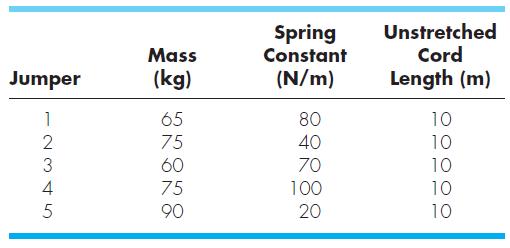
Perform the same computation as in Example 8.2, but use five jumpers with the following characteristics:Example 8.2 Jumper 12345 2 5 Mass (kg) 65 75 60 75 90 Spring Constant (N/m) 80 40 70 100 20 Unstretched Cord Length (m) 10 10 10 10 10
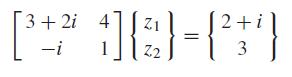
Solve the following system with MATLAB: 2+i 09-(²³) Z2 3 3+2i 4 Z1 -i
A object with a mass of 90 kg is projected upward from the surface of the earth at a velocity of 60 m/s. If the object is subject to linear drag (c = 15 kg/s), use the goldensection search to determine the maximum height the object attains.
Use the fminsearch function to determine the minimum off(x, y) = 2y2 − 2.25xy − 1.75y + 1.5x2
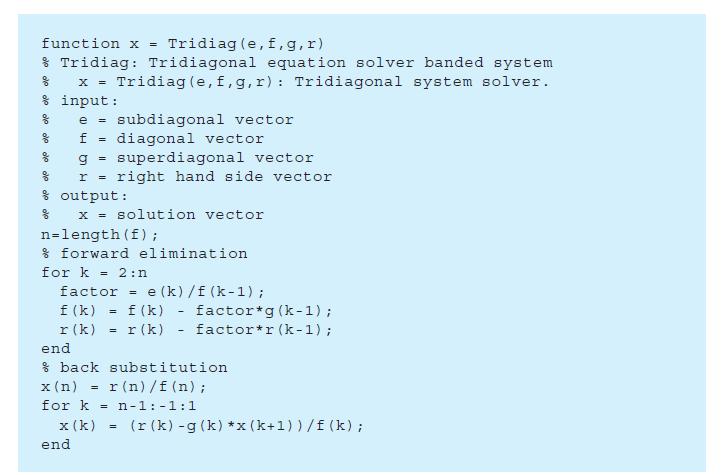
Determine the number of total flops as a function of the number of equations n for the tridiagonal algorithm (Fig. 9.6). function x = Tridiag (e, f, g, r) Tridiag: Tridiagonal equation solver banded system x = Tridiag(e, f, g, r): Tridiagonal system solver. 응 % input: 응 e = f = end % 응 %
Use the f min search function to determine the maximum off(x, y) = 4x + 2y + x2 − 2x4 + 2xy − 3y2
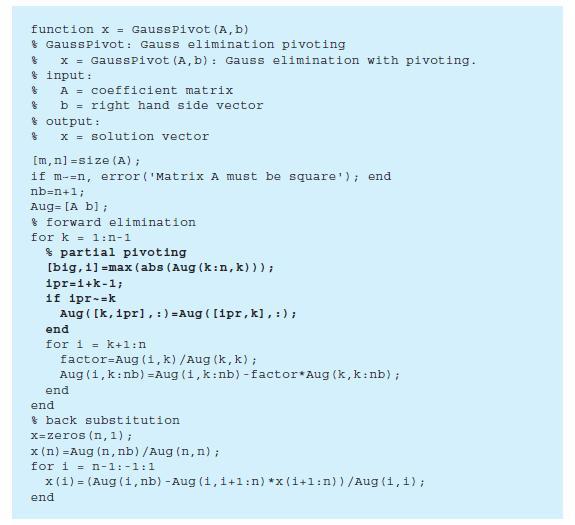
Develop an M-file function based on Fig. 9.5 to implement Gauss elimination with partial pivoting. Modify the function so that it computes and returns the determinant (with the correct sign), and detects whether the system is singular based on a near-zero determinant. For the latter, define
Use the graphical method to solve2x1 − 6x2 = −18−x1 + 8x2 = 40Check your results by substituting them back into the equations.
Given the system of equations0.77x1 + x2 = 14.251.2x1 + 1.7x2 = 20(a) Solve graphically and check your results by substituting them back into the equations.(b) On the basis of the graphical solution, what do you expect regarding the condition of the system?(c) Compute the determinant.
Given the equations10x1 + 2x2 − x3 = 27− 3x1 − 5x2 + 2x3 = −61.5x1 + x2 + 6x3 = −21.5(a) Solve by naive Gauss elimination. Show all steps of the computation.(b) Substitute your results into the original equations to check your answers.
Showing 200 - 300
of 212
1
2
3
Step by Step Answers

 Get 50% OFF
Claim Now
Get 50% OFF
Claim Now