New Semester
Started
Get
50% OFF
Study Help!
--h --m --s
Claim Now
Question Answers
Textbooks
Find textbooks, questions and answers
Oops, something went wrong!
Change your search query and then try again
S
Books
FREE
Study Help
Expert Questions
Accounting
General Management
Mathematics
Finance
Organizational Behaviour
Law
Physics
Operating System
Management Leadership
Sociology
Programming
Marketing
Database
Computer Network
Economics
Textbooks Solutions
Accounting
Managerial Accounting
Management Leadership
Cost Accounting
Statistics
Business Law
Corporate Finance
Finance
Economics
Auditing
Tutors
Online Tutors
Find a Tutor
Hire a Tutor
Become a Tutor
AI Tutor
AI Study Planner
NEW
Sell Books
Search
Search
Sign In
Register
study help
mathematics
calculus 6th edition
Calculus 6th Edition James Stewart - Solutions
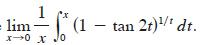
Evaluate - lim 1 f* (1 – tan 2t)¹/¹ dt. - x0 x Jo
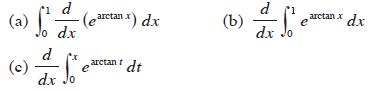
Evaluate: (a) O 1 d Jo dx ·$· d x arctan. ^x) dx dx Jo - 15. ,arctan t e dt (b) dx Jo , arctanx dx
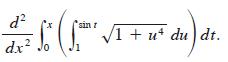
Find d² dx² - S² (1 "sin f √1 + ut du dt.
Evaluate lim 1 √n√√√n+1 + 1 √√√√√n + 2 + + 1 [n√n+n
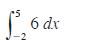
Evaluate the integral. 5 ₂6 dx
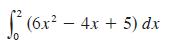
Evaluate the integral. 2² (6x² - 4x + 5) dx
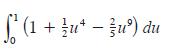
Evaluate the integral. J (1 + u* -u³) du
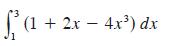
Evaluate the integral. ²³ (1 + 2x - 4x³) dx
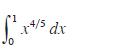
Evaluate the integral. So x4/5 dx
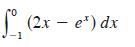
Evaluate the integral. ro L₁ (2x - e¹) dx
Use Newton’s method to approximate the indicated root of the equation correct to six decimal places.The root of 2.2x5 – 4.4x3 + 1.3x2 – 0.9x – 4.0 = 0 in the interval [–2, –1]
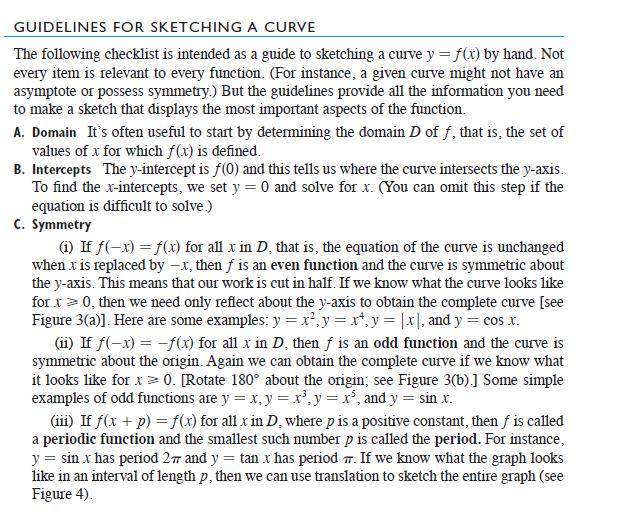
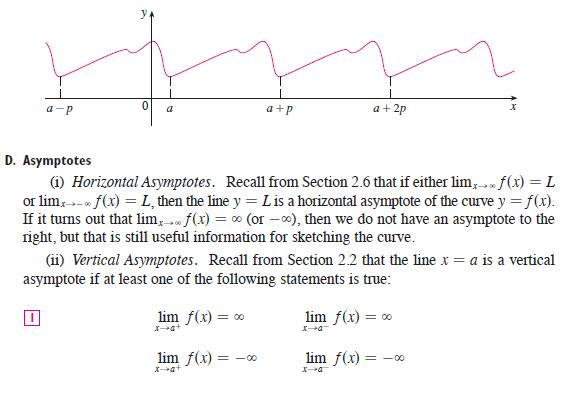
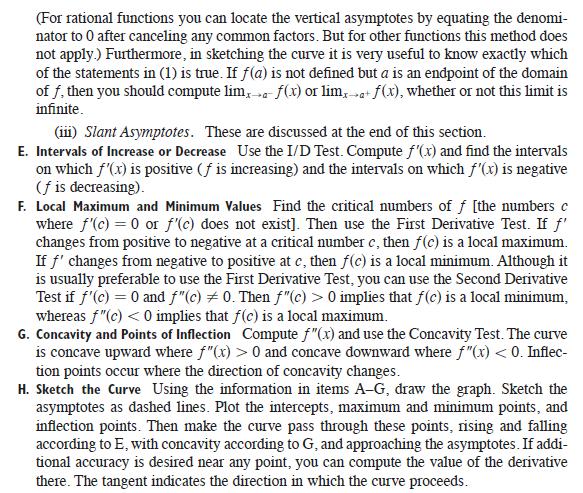
Use the guidelines of this section to sketch the curve.y = 2√x – xData from section 4.5 GUIDELINES FOR SKETCHING A CURVE The following checklist is intended as a guide to sketching a curve y = f(x) by hand. Not every item is relevant to every function. (For instance, a given curve might not
Use the guidelines of this section to sketch the curve.y = √x2 + x – 2Data from section 4.5 GUIDELINES FOR SKETCHING A CURVE The following checklist is intended as a guide to sketching a curve y = f(x) by hand. Not every item is relevant to every function. (For instance, a given curve might not
Use the guidelines of this section to sketch the curve.y = x/√x2 + 1Data from section 4.5 GUIDELINES FOR SKETCHING A CURVE The following checklist is intended as a guide to sketching a curve y = f(x) by hand. Not every item is relevant to every function. (For instance, a given curve might not
Use Newton’s method to find all the roots of the equation correct to eight decimal places. Start by drawing a graph to find initial approximations.x6 – x5 – 6x4 – x2 + x + 10 = 0
Use the guidelines of Section 4.5 to sketch the curve.y = x2/(x + 8)Data from section 4.5 GUIDELINES FOR SKETCHING A CURVE The following checklist is intended as a guide to sketching a curve y = f(x) by hand. Not every item is relevant to every function. (For instance, a given curve might not have
Use the guidelines of this section to sketch the curve.y = x/√x2 – 1Data from section 4.5 GUIDELINES FOR SKETCHING A CURVE The following checklist is intended as a guide to sketching a curve y = f(x) by hand. Not every item is relevant to every function. (For instance, a given curve might not
Find f.f"(x) = 6x + 12x2
Use the guidelines of this section to sketch the curve.y = x – 3x1/3Data from section 4.5 GUIDELINES FOR SKETCHING A CURVE The following checklist is intended as a guide to sketching a curve y = f(x) by hand. Not every item is relevant to every function. (For instance, a given curve might not
Find f.f"(x) = 2 + x3 + x6
Use the guidelines of Section 4.5 to sketch the curve.y = 3√x2 + 1Data from section 4.5 GUIDELINES FOR SKETCHING A CURVE The following checklist is intended as a guide to sketching a curve y = f(x) by hand. Not every item is relevant to every function. (For instance, a given curve might not have
Find f.f"(x) = 2/3x2/3
Use the guidelines of Section 4.5 to sketch the curve.y = sin2x – 2 cos xData from section 4.5 GUIDELINES FOR SKETCHING A CURVE The following checklist is intended as a guide to sketching a curve y = f(x) by hand. Not every item is relevant to every function. (For instance, a given curve might
Find f.f"(x) = 6x + sin x
Use the guidelines of Section 4.5 to sketch the curve.y = x√2 + xData from section 4.5 GUIDELINES FOR SKETCHING A CURVE The following checklist is intended as a guide to sketching a curve y = f(x) by hand. Not every item is relevant to every function. (For instance, a given curve might not have
Use the guidelines of this section to sketch the curve.y = 3 sin x – sin3xData from section 4.5 GUIDELINES FOR SKETCHING A CURVE The following checklist is intended as a guide to sketching a curve y = f(x) by hand. Not every item is relevant to every function. (For instance, a given curve might
Use Newton’s method to find all the roots of the equation correct to eight decimal places. Start by drawing a graph to find initial approximations.4e–x2 sin x = x2 – x + 1
Find f.f'"(t) = et
Use Newton’s method to find all the roots of the equation correct to eight decimal places. Start by drawing a graph to find initial approximations.earctan x = √x3 + 1
Use the guidelines of Section 4.5 to sketch the curve.y = xe–2x Data from section 4.5 GUIDELINES FOR SKETCHING A CURVE The following checklist is intended as a guide to sketching a curve y = f(x) by hand. Not every item is relevant to every function. (For instance, a given curve might not have
Find f.f'"(t) = t – √t
Use the guidelines of this section to sketch the curve.y = 1/2 x – sin x, 0 Data from section 4.5 GUIDELINES FOR SKETCHING A CURVE The following checklist is intended as a guide to sketching a curve y = f(x) by hand. Not every item is relevant to every function. (For instance, a given curve might
Find f.f'(x) = 1 – 6x, f(0) = 8
Find f.f'(x) = 8x3 + 12x + 3, f(1) = 6
Find f.f'(x) = √x (6 + 5x), f(1) = 10
Find f.f'(x) = 2x – 3/x4, x > 0, f(1) = 3
Find f.f'(t) = 2 cos t + sec2t, –π/2 < t < π/2, f(π/3) = 4
Find f.f'(x) = (x2 – 1)/x, f(1) = 1/2 f(–1) = 0
Use the guidelines of this section to sketch the curve.y= sin x/1 + cos xData from section 4.5 GUIDELINES FOR SKETCHING A CURVE The following checklist is intended as a guide to sketching a curve y = f(x) by hand. Not every item is relevant to every function. (For instance, a given curve might not
Find f.f'(x) = x–1/3, f(1) = 1, f(–1) = –1
Find f.f'(x) = 4/√1 – x2, f(1/2) = 1
Use the guidelines of this section to sketch the curve.y = esin xData from section 4.5 GUIDELINES FOR SKETCHING A CURVE The following checklist is intended as a guide to sketching a curve y = f(x) by hand. Not every item is relevant to every function. (For instance, a given curve might not have
Find f.f"(x) = 24x2 + 2x + 10. f(1) = 5, f'(1) = –3
Find f.f"(x) = 4 – 6x – 40x3, f(0) = 2, f'(0) = 1
Find f.f"(t) = 3/√t, f(4) = 20, f'(4) = 7
Find f.f"(x) = 2 – 12x, f(0) = 9, f(2) = 15
Find f.f"(x) = 20x3 + 12x2 + 4, f(0) = 8, f(1) = 5
Find the most general antiderivative of the function. (Check your answer by differentiation.)f(x) = 3ex + 7 sec2x
Use Newton’s method to approximate the indicated root of the equation correct to six decimal places.The positive root of sin x = x2
Find the most general antiderivative of the function. (Check your answer by differentiation.)g(θ) = cos θ – 5 sin θ
Use the guidelines of this section to sketch the curve.y = x – 1/x2
Find the most general antiderivative of the function. (Check your answer by differentiation.)f(t) = sin t + 2 sinh t
Use the guidelines of this section to sketch the curve.y = 1 + 1/x + 1/x2
Use Newton’s method to find all roots of the equation correct to six decimal places.x4 = 1 + x
Find the most general antiderivative of the function. (Check your answer by differentiation.)f(x) = 5ex – 3 cosh x
Use a computer algebra system to graph f and to find f' and f". Use graphs of these derivatives to estimate the intervals of increase and decrease, extreme values, intervals of concavity, and inflection points of f.f(x) = √x/x2 + x + 1
Use the guidelines of this section to sketch the curve.y = x2/x2 + 3
Use Newton’s method to find all roots of the equation correct to six decimal places.ex = 3 – 2x
Find the most general antiderivative of the function. (Check your answer by differentiation.)f(x) = 2√x + 6 cos x
Use a computer algebra system to graph f and to find f' and f". Use graphs of these derivatives to estimate the intervals of increase and decrease, extreme values, intervals of concavity, and inflection points of f.f(x) = x2/3/1 + x + x4
Use the guidelines of this section to sketch the curve.y = x/x3 – 1
Use Newton’s method to find all roots of the equation correct to six decimal places.(x – 2)2 = ln x
Find the most general antiderivative of the function. f(x) = x5 – x3 + 2x/x4
Use a computer algebra system to graph f and to find f' and f". Use graphs of these derivatives to estimate the intervals of increase and decrease, extreme values, intervals of concavity, and inflection points of f.f(x) = √x + 5 sin x, x ≤ 20
Find the local and absolute extreme values of the function on the given interval.f(x) = x3 – 6x2 + 9x + 1, [2, 4]
Find the most general antiderivative of the function. (Check your answer by differentiation.)f(x) = x – 3
Use the guidelines of this section to sketch the curve.y = x3 + x
Find the most general antiderivative of the function. (Check your answer by differentiation.)f(x) = 1/2x2 – 2x + 6
Determine whether the statement is true or false. If it is true, explain why. If it is false, explain why or give an example that disproves the statement.If f has an absolute minimum value at c, then f'(c) = 0.
Find the local and absolute extreme values of the function on the given interval.f(x) = 3x – 4/x2 + 1 [–2, 2]
Find the most general antiderivative of the function.f(x) = 1/2 + 3/4 x2 – 4/5 x3
(a) State Fermat’s Theorem.(b) Define a critical number of f.
Find the local and absolute extreme values of the function on the given interval.f(x) = (x2 + 2x)3. [–2,1]
Find the most general antiderivative of the function. (Check your answer by differentiation.)f(x) = 8x9 – 3x6 + 12x3
Find the local and absolute extreme values of the function on the given interval.f(x) = x + sin 2x, [0, π]
Find the most general antiderivative of the function. (Check your answer by differentiation.)f(x) = (x + 1)(2x – 1)
Find the local and absolute extreme values of the function on the given interval.f(x) = (ln x)/x2, [1. 3]
Find the most general antiderivative of the function. (Check your answer by differentiation.)f(x) = x(2 – x)2
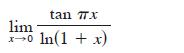
Evaluate the limit. tan 77X lim x→ ln(1 + x)
Find the most general antiderivative of the function. (Check your answer by differentiation.)f(x) = 5x1/4 – 7x3/4
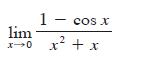
Evaluate the limit. lim x-0 1 - cos x 2 x² + x
Find the most general antiderivative of the function. (Check your answer by differentiation.)f(x) = 2x + 3x1.7
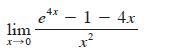
Evaluate the limit. lim x-0 4x e - 1 - 4x X
Find the most general antiderivative of the function. (Check your answer by differentiation.)f(x) = 6√x – 6√x
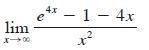
Evaluate the limit. lim 4x e - 1 - 4x 1²
Find the most general antiderivative of the function. (Check your answer by differentiation.)f(x) = 4√x3 + 3√x4
Use Newton’s method to approximate the given number correct to eight decimal places.5√20
Evaluate the limit. lim x³ex 3 -x x-
Find the most general antiderivative of the function. (Check your answer by differentiation.)f(x) = 10/x9
Use Newton’s method to approximate the given number correct to eight decimal places.100√100
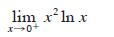
Evaluate the limit. lim x² ln x x-0+
Find the most general antiderivative of the function. (Check your answer by differentiation.)g(x) = 5 – 4x3 + 2x6/x6
Use Newton’s method to approximate the indicated root of the equation correct to six decimal places.The root of x4 – 2x3 + 5x2 – 6 = 0 in the interval [1, 2]
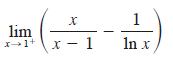
Evaluate the limit. lim X x-1 1 1 ln x
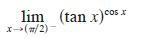
Evaluate the limit. lim (tan x) cos x x → (m/2)-
Find the most general antiderivative of the function. (Check your answer by differentiation.)f(u) = u4 + 3√u/u2
(a) Find the intervals on which f is increasing or decreasing.(b) Find the local maximum and minimum values of f.(c) Find the intervals of concavity and the inflection points.f(x) = 4x3 + 3x2 – 6x + 1
(a) Find the intervals on which f is increasing or decreasing.(b) Find the local maximum and minimum values of f.(c) Find the intervals of concavity and the inflection points.f(x) = e2x + e–x
Verify that the function satisfies the three hypotheses of Rolle's Theorem on the given interval. Then find all numbers c that satisfy the conclusion of Rolle's Theorem.f(x) = 5 – 12x + 3x2, [1,3]
Verify that the function satisfies the three hypotheses of Rolle's Theorem on the given interval. Then find all numbers c that satisfy the conclusion of Rolle's Theorem.f(x) = x3 – x2 – 6x + 2, [0,3]
Showing 2300 - 2400
of 2680
First
13
14
15
16
17
18
19
20
21
22
23
24
25
26
27
Step by Step Answers

 Get 50% OFF
Claim Now
Get 50% OFF
Claim Now