New Semester
Started
Get
50% OFF
Study Help!
--h --m --s
Claim Now
Question Answers
Textbooks
Find textbooks, questions and answers
Oops, something went wrong!
Change your search query and then try again
S
Books
FREE
Study Help
Expert Questions
Accounting
General Management
Mathematics
Finance
Organizational Behaviour
Law
Physics
Operating System
Management Leadership
Sociology
Programming
Marketing
Database
Computer Network
Economics
Textbooks Solutions
Accounting
Managerial Accounting
Management Leadership
Cost Accounting
Statistics
Business Law
Corporate Finance
Finance
Economics
Auditing
Tutors
Online Tutors
Find a Tutor
Hire a Tutor
Become a Tutor
AI Tutor
AI Study Planner
NEW
Sell Books
Search
Search
Sign In
Register
study help
mathematics
college algebra
College Algebra 11th Edition Michael Sullivan, Michael Sullivan III - Solutions
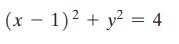
In Problems 2–5, find the domain and range of each relation. Then determine whether the relation represents a function. (x − 1)² + y² = 4 -
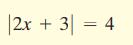
In Problems 1–6, find the real solutions of each equation. |2x + 3 = 4
In Problems 1–6, find the real solutions of each equation. 3x - 8 = 10
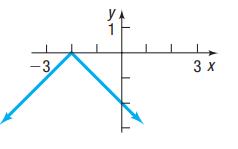
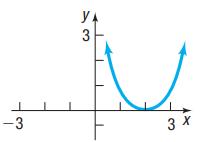
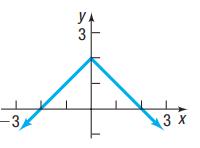
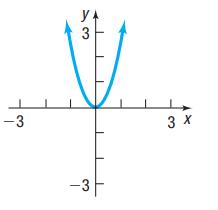
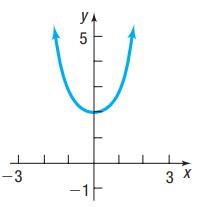
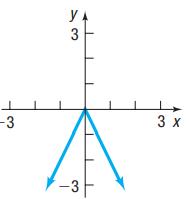
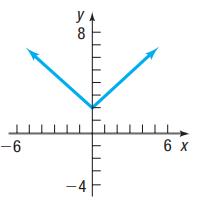
In Problems 7–18, match each graph to one of the following functions: A. y = x² + 2 B. y = -x² + 2 C. y = |x| + 2 D. y = x + 2 E. y = (x - 2)2² Fy=(x + 2)² G. y = |x2| H. y = -x + 2| I. y = 2x² J. y = -2x² K. y = 2|x| L. y = -2|x|
In Problems 7–18, match each graph to one of the following functions: A. y = x² + 2 B. y = C. y = x² + 2 x + 2 D. y = -x + 2 E. y = (x - 2)² Ey=(x + 2)² G. y = x - 2 H. y = -x + 2) 1. y = 2x² J. y = -2x² K. y = 2|x| L. y = -2|x|
In Problems 1–6, find the real solutions of each equation.3x2 - x = 0
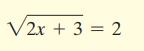
In Problems 1–6, find the real solutions of each equation. √2x + 3 = 2
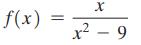
In Problems 9–14, find the domain of each function. f(x) X x² - 9
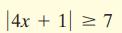
In Problems 7–9, solve each inequality. Graph the solution set. |4x + 1 ≥ 7
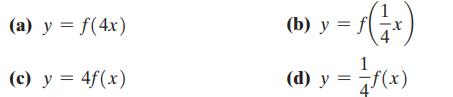
Which function has a graph that is the graph of y = f (x) horizontally stretched by a factor of 4? (a) y = f(4x) (c) y = 4f(x) (b) y = fx 1 (d) y = f(x)
Find the intercepts of the equation y = x3 - 8.
In Problems 1–6, find the real solutions of each equation.6x2 - 5x + 1 = 0
Multiple Choice Which of the following functions has a graph that is symmetric about the y-axis? (a) y = √x (b) y = |x| (c) y = x³ (d) y X
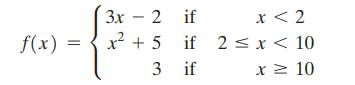
Multiple Choice Consider the following function. Which expression(s) should be used to find the y-intercept? (a) 3x - 2 (b) x2 + 5 (c) 3 (d) all three f(x) = 3x - 2 x² +5 3 if x < 2 if 2 ≤ x < 10 if x ≥ 10
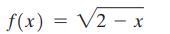
In Problems 9–14, find the domain of each function. f(x) = √2 - x
In Problems 7–18, match each graph to one of the following functions: A. y = x² + 2 B. y = x² + 2 C. y = x + 2 D. y = -x + 2 E. y = (x - 2)² Fy=(x + 2)² G. y = |x2| H. y = -x + 2 I. y = 2x² J. y = -2x² K. y = 2|x| L. y = -2|x|
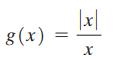
In Problems 9–14, find the domain of each function. g(x) = X
In Problems 7–18, match each graph to one of the following functions: A. y = x² + 2 B. y = - x² + 2 C. y = x + 2 D. y = x + 2 E. y = (x - 2)² Fy=(x + 2)² G. y = x - 2 H. y = -x + 2| I. y = 2x² J. y = -2x² K. y = 2|x| L. y = -2|x|
In Problems 11–14, graph each equation. 3x-2y = 12
In Problems 7–18, match each graph to one of the following functions: A. y = x² + 2 B. y = C. y = x² + 2 x + 2 D. y = -x + 2 E. y = (x - 2)² Fy=(x + 2)² G. y = x - 2 H. y = -x + 2| I. y = 2x² J. y = -2x² K. y = 2|x| L. y = -2|x|
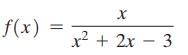
In Problems 9–14, find the domain of each function. f(x) X x² + 2x - 3
In Problems 11–14, graph each equation. x = y² 2
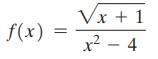
In Problems 9–14, find the domain of each function. f(x) = √x + 1 x²4
In Problems 7–18, match each graph to one of the following functions: A. y = x² + 2 B. y = C. y = x² + 2 x + 2 D. y = -x + 2 E. y = (x - 2)² Fy=(x + 2)² G. y = x - 2 H. y = -x + 2| I. y = 2x² J. y = -2x² K. y = 2|x| L. y = -2|x|
Find the difference quotient of f(x) = x2 - 3x.
In Problems 11–14, graph each equation. x² + (y - 3)² = 16
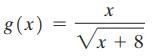
In Problems 9–14, find the domain of each function. g(x) = X /x+8
In Problems 11–14, graph each equation. y = Vx
If find: (a) f(-2) (b) f(0) (c) f(1) (d) f(3) f(x) (2x + 4 x²³ - 1 if -3 ≤ x ≤ 1 if 1 < x≤ 5
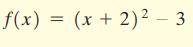
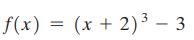
In Problems 17–19, graph each function. f(x) = (x + 2)² - 3
In Problems 7–18, match each graph to one of the following functions: A. y = x² + 2 B. y = C. y = x² + 2 x + 2 D. y = -x + 2 E. y = (x - 2)² Fy=(x + 2)² G. y = x - 2 H. y = -x + 2| I. y = 2x² J. y = -2x² K. y = 2|x| L. y = -2|x|
In Problems 11–18, match each graph to its function.A. Constant function B. Identity function C. Square function D. Cube function E. Square root function F. Reciprocal function G. Absolute value function H. Cube root function
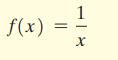
In Problems 17–19, graph each function. f(x) || X
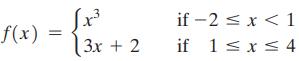
If find: (a) f(-1) (b) f(0) (c) f(1) (d) f(3) f(x) 3x + 2 if -2 ≤ x < 1 if 1 ≤ x ≤ 4
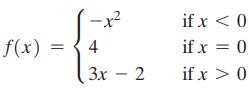
Iffind: (a) f(-3) (b) f(0) (c) f(3) f(x) = -x² 4 3x - 2 if x < 0 if x = 0 if x > 0
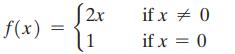
In Problems 31–42:(a) Find the domain of each function. (b) Locate any intercepts. (c) Graph each function. (d) Based on the graph, find the range. f(x) 2x 1 if x = 0 if x = 0
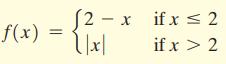
In Problems 17–19, graph each function. f(x) (2 - x x Uxl if x ≤ 2 if x > 2
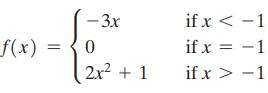
If find: (a) f(-2) (b) f(-1) (c) f(0) f(x) = - 3x 0 2x² + 1 if x < -1 if x = -1 if x > -1
In Problems 19–30, find the domain and range of each relation. Then determine whether the relation represents a function. {(-2,5), (-1,3), (3,7), (4, 12)}
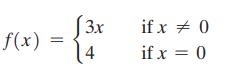
In Problems 31–42:(a) Find the domain of each function. (b) Locate any intercepts. (c) Graph each function. (d) Based on the graph, find the range. f(x) 3x 14 if x # 0 if x = 0
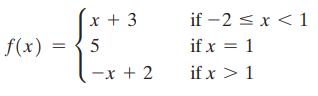
In Problems 31–42:(a) Find the domain of each function. (b) Locate any intercepts. (c) Graph each function. (d) Based on the graph, find the range. f(x) x + 3 5 -x + 2 if -2 ≤ x < 1 if x = 1 if x > 1
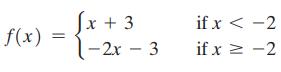
In Problems 31–42:(a) Find the domain of each function. (b) Locate any intercepts. (c) Graph each function. (d) Based on the graph, find the range. f(x) √x + 3 -2x 3 - if x < -2 if x = -2
In Problems 11–18, match each graph to its function. A. Constant function B. Identity function C. Square function D. Cube function E. Square root function F. Reciprocal function G. Absolute value function H. Cube root function
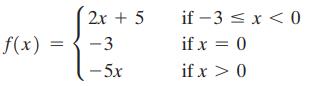
In Problems 31–42:(a) Find the domain of each function. (b) Locate any intercepts. (c) Graph each function. (d) Based on the graph, find the range. f(x) 2x + 5 -3 -5x if -3 ≤ x < 0 if x = 0 if x > 0
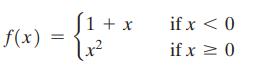
In Problems 31–42:(a) Find the domain of each function. (b) Locate any intercepts. (c) Graph each function. (d) Based on the graph, find the range. f(x) [1 + x Lx² if x < 0 if x ≥ 0
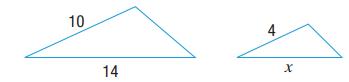
Problems 28–37 are based on material learned earlier in the course. The purpose of these problems is to keep the material fresh in your mind so that you are better prepared for the final exam. Find the missing length x for the given pair of similar triangles. 10 14 4 X
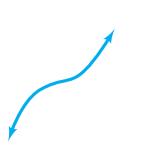
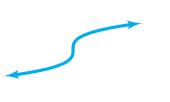
In Problems 13–24, use the graph on the right of the function f.List the interval(s) on which f is decreasing.
In Problems 19–26, graph each function. Be sure to label three points on the graph.f(x) = x
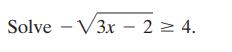
Problems 28–37 are based on material learned earlier in the course. The purpose of these problems is to keep the material fresh in your mind so that you are better prepared for the final exam. Solve -√3x - 2 ≥ 4. 3
Problems 28–37 are based on material learned earlier in the course. The purpose of these problems is to keep the material fresh in your mind so that you are better prepared for the final exam. Given y X - and u = x + 1, express y in terms of u. x + 1
Problems 28–37 are based on material learned earlier in the course. The purpose of these problems is to keep the material fresh in your mind so that you are better prepared for the final exam. Write x + 5 - + x¹/3 as a single quotient with only positive 3x-2/3 exponents.
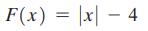
In Problems 35–40, graph each function using the techniques of shifting, compressing or stretching, and reflections. Identify any intercepts of the graph. State the domain and, based on the graph, find the range. F(x) = |x|- 4
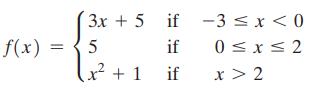
In Problems 31–42:(a) Find the domain of each function. (b) Locate any intercepts. (c) Graph each function. (d) Based on the graph, find the range. f(x) = 3x + 5 if -3 ≤ x < 0 5 if 0≤x≤2 x² + 1 if x > 2
In Problems 19–28, write the function whose graph is the graph of y = x3 , but is:Horizontally compressed by a factor of 1/2.
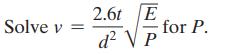
Problems 28–37 are based on material learned earlier in the course. The purpose of these problems is to keep the material fresh in your mind so that you are better prepared for the final exam. Solve v 2.6t E d² VP for P.
In Problems 19–28, write the function whose graph is the graph of y = x3, but is:Shifted to the left 4 units.
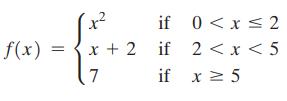
In Problems 31–42:(a) Find the domain of each function. (b) Locate any intercepts. (c) Graph each function. (d) Based on the graph, find the range. f(x) - {1+₂ 7 if x + 2 if if 0 < x≤2 2 < x < 5 x ≥ 5
In Problems 19–28, write the function whose graph is the graph of y = x3 , but is:Vertically compressed by a factor of 1/4
Problems 28–37 are based on material learned earlier in the course. The purpose of these problems is to keep the material fresh in your mind so that you are better prepared for the final exam. Find the discriminant equation 3x²7x = 4x - 2. of the quadratic
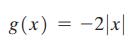
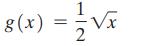
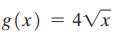
In Problems 35–40, graph each function using the techniques of shifting, compressing or stretching, and reflections. Identify any intercepts of the graph. State the domain and, based on the graph, find the range. g(x) = -2|x|
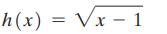
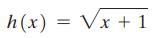
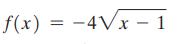
In Problems 35–40, graph each function using the techniques of shifting, compressing or stretching, and reflections. Identify any intercepts of the graph. State the domain and, based on the graph, find the range. h(x)=√x - 1
In Problems 35–40, graph each function using the techniques of shifting, compressing or stretching, and reflections. Identify any intercepts of the graph. State the domain and, based on the graph, find the range. f(x) V1 - x
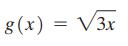
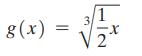
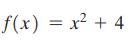
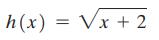
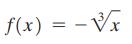
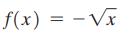
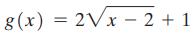
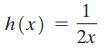
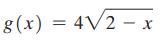
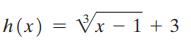
In Problems 37–60, graph each function using the techniques of shifting, compressing, stretching, and/or reflecting. Start with the graph of the basic function (for example, y = x2) and show all the steps. Be sure to show at least three key points. Find the domain and the range of each function.
In Problems 37–60, graph each function using the techniques of shifting, compressing, stretching, and/or reflecting. Start with the graph of the basic function (for example, y = x2) and show all the steps. Be sure to show at least three key points. Find the domain and the range of each function.
In Problems 37–60, graph each function using the techniques of shifting, compressing, stretching, and/or reflecting. Start with the graph of the basic function (for example, y = x2) and show all the steps. Be sure to show at least three key points. Find the domain and the range of each function.
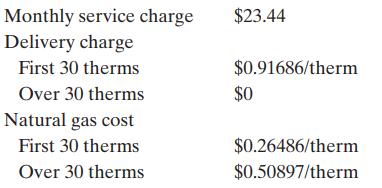
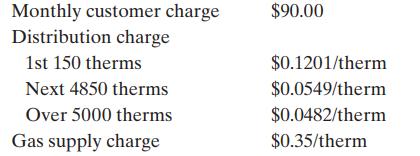
In March 2018, Spire, Inc. had the following rate schedule for natural gas usage in single-family residences. (a) What is the charge for using 20 therms in a month? (b) What is the charge for using 150 therms in a month? (c) Develop a function that models the monthly charge C for x therms of
In Problems 37–60, graph each function using the techniques of shifting, compressing, stretching, and/or reflecting. Start with the graph of the basic function (for example, y = x2) and show all the steps. Be sure to show at least three key points. Find the domain and the range of each function.
In Problems 37–60, graph each function using the techniques of shifting, compressing, stretching, and/or reflecting. Start with the graph of the basic function (for example, y = x2) and show all the steps. Be sure to show at least three key points. Find the domain and the range of each function.
In Problems 37–60, graph each function using the techniques of shifting, compressing, stretching, and/or reflecting. Start with the graph of the basic function (for example, y = x2) and show all the steps. Be sure to show at least three key points. Find the domain and the range of each function.
A monthly tablet plan costs $34.99. It includes 3 gigabytes of data and charges $15 per gigabyte for additional gigabytes. The following function is used to compute the monthly cost for a subscriber. Compute the monthly cost for each of the following gigabytes of use. (a) 2 (b) 5 (c) 13 C(x) =
Problems 28–37 are based on material learned earlier in the course. The purpose of these problems is to keep the material fresh in your mind so that you are better prepared for the final exam.If the point (3,-2) is on the graph of an equation that is symmetric about the origin, what other point
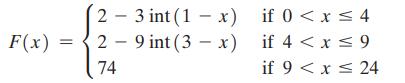
The short-term (no more than 24 hours) parking fee F (in dollars) for parking x hours on a weekday at O’Hare International Airport’s main parking garage can be modeled by the function.Determine the fee for parking in the short-term parking garage for (a) 2 hours.(b) 7 hours.(c) 15 hours.(d) 8
In Problems 37–60, graph each function using the techniques of shifting, compressing, stretching, and/or reflecting. Start with the graph of the basic function (for example, y = x2) and show all the steps. Be sure to show at least three key points. Find the domain and the range of each function.
In Problems 37–60, graph each function using the techniques of shifting, compressing, stretching, and/or reflecting. Start with the graph of the basic function (for example, y = x2) and show all the steps. Be sure to show at least three key points. Find the domain and the range of each function.
In Problems 37–48, determine algebraically whether each function is even, odd, or neither. f(x) = 4x3
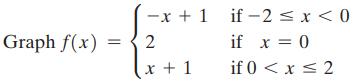
a.b. Find the domain of f. c. Find the absolute maximum and the absolute minimum, if they exist. Graph f(x) -x + 1 if-2 ≤ x < 0 2 if x = 0 x + 1 if 0 < x≤ 2
In Problems 37–60, graph each function using the techniques of shifting, compressing, stretching, and/or reflecting. Start with the graph of the basic function (for example, y = x2) and show all the steps. Be sure to show at least three key points. Find the domain and the range of each function.
In Problems 37–60, graph each function using the techniques of shifting, compressing, stretching, and/or reflecting. Start with the graph of the basic function (for example, y = x2) and show all the steps. Be sure to show at least three key points. Find the domain and the range of each function.
In April 2018, Nicor Gas had the following rate schedule for natural gas usage in small businesses. (a) What is the charge for using 1000 therms in a month? (b) What is the charge for using 6000 therms in a month? (c) Develop a function that models the monthly charge C for x therms of gas.
In Problems 37–60, graph each function using the techniques of shifting, compressing, stretching, and/or reflecting. Start with the graph of the basic function (for example, y = x2) and show all the steps. Be sure to show at least three key points. Find the domain and the range of each
In Problems 37–60, graph each function using the techniques of shifting, compressing, stretching, and/or reflecting. Start with the graph of the basic function (for example, y = x2) and show all the steps. Be sure to show at least three key points. Find the domain and the range of each function.
In Problems 37–60, graph each function using the techniques of shifting, compressing, stretching, and/or reflecting. Start with the graph of the basic function (for example, y = x2) and show all the steps. Be sure to show at least three key points. Find the domain and the range of each function.
In Problems 37–60, graph each function using the techniques of shifting, compressing, stretching, and/or reflecting. Start with the graph of the basic function (for example, y = x2) and show all the steps. Be sure to show at least three key points. Find the domain and the range of each function.
If f(x) = int(2x), find(a) f(1.7) (b) f(2.8)(c) f(-3.6)
In Problems 37–60, graph each function using the techniques of shifting, compressing, stretching, and/or reflecting. Start with the graph of the basic function (for example, y = x2) and show all the steps. Be sure to show at least three key points. Find the domain and the range of each function.
The total worldwide digital music revenues R, in billions of dollars, for the years 2012 through 2017 can be modeled by the function where x is the number of years after 2012. (a) Find R(0), R(3), and R(5) and explain what each value represents. (b) Find r(x) = R(x - 2). (c) Find r(2), r(5) and
In Problems 37–60, graph each function using the techniques of shifting, compressing, stretching, and/or reflecting. Start with the graph of the basic function (for example, y = x2) and show all the steps. Be sure to show at least three key points. Find the domain and the range of each function.
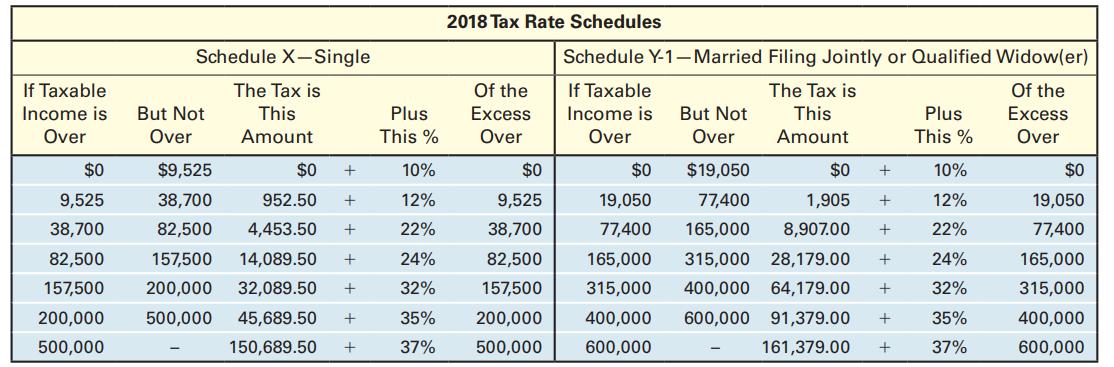
Two 2018 Tax Rate Schedules are given in the accompanying table. If x equals taxable income and y equals the tax due, construct a function y = f(x) for Schedule X. If Taxable Income is Over Schedule X-Single The Tax is This Amount But Not Over $0 $9,525 $0 + 9,525 38,700 952.50
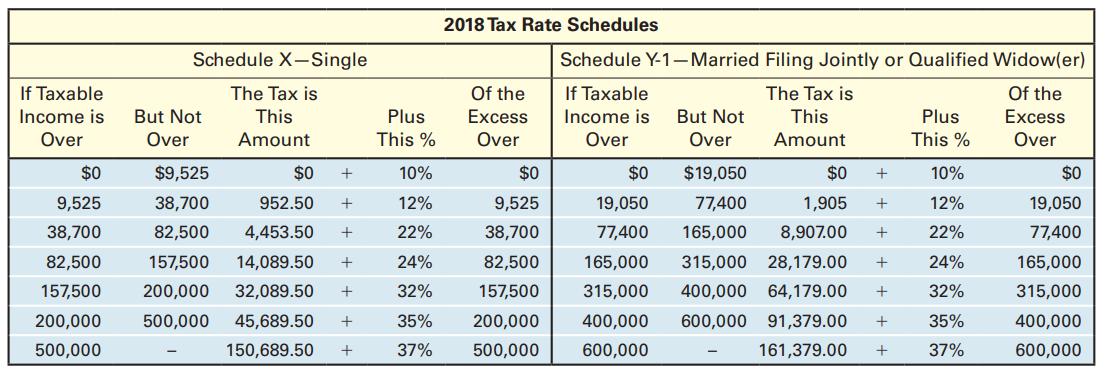
Refer to the 2018 tax rate schedules. If x equals taxable income and y equals the tax due, construct a function y = f(x) for Schedule Y-1. If Taxable Income is Over $0 9,525 38,700 82,500 157,500 200,000 500,000 Schedule X-Single The Tax is This Amount But Not Over $9,525 $0 + 38,700 952.50
In Problems 37–60, graph each function using the techniques of shifting, compressing, stretching, and/or reflecting. Start with the graph of the basic function (for example, y = x2) and show all the steps. Be sure to show at least three key points. Find the domain and the range of each function.
In Problems 37–60, graph each function using the techniques of shifting, compressing, stretching, and/or reflecting. Start with the graph of the basic function (for example, y = x2) and show all the steps. Be sure to show at least three key points. Find the domain and the range of each function.
In Problems 37–60, graph each function using the techniques of shifting, compressing, stretching, and/or reflecting. Start with the graph of the basic function (for example, y = x2) and show all the steps. Be sure to show at least three key points. Find the domain and the range of each function.
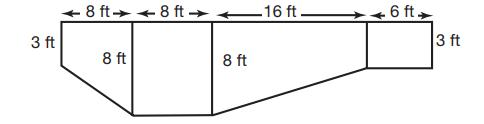
Develop a model for the depth of the swimming pool shown below as a function of the distance from the wall on the left. 3 ft 8 ft 8 ft → 8 ft 8 ft 16 ft. 6 ft- 3 ft
In Problems 37–60, graph each function using the techniques of shifting, compressing, stretching, and/or reflecting. Start with the graph of the basic function (for example, y = x2) and show all the steps. Be sure to show at least three key points. Find the domain and the range of each function.
In Problems 37–60, graph each function using the techniques of shifting, compressing, stretching, and/or reflecting. Start with the graph of the basic function (for example, y = x2) and show all the steps. Be sure to show at least three key points. Find the domain and the range of each function.
Problems 76–85 are based on material learned earlier in the course. The purpose of these problems is to keep the material fresh in your mind so that you are better prepared for the final exam. Solve: 4x5 (2x - 1) = 47(x + 1)
Problems 76–85 are based on material learned earlier in the course. The purpose of these problems is to keep the material fresh in your mind so that you are better prepared for the final exam. Factor: 3x³y - 2x²y² + 18x12y
Problems 76–85 are based on material learned earlier in the course. The purpose of these problems is to keep the material fresh in your mind so that you are better prepared for the final exam. 2 Simplify: (51²)² + (257/2)²
An economy car rented in Florida from Enterprise® on a weekly basis costs $185 per week. Extra days cost $37 per day until the day rate exceeds the weekly rate, in which case the weekly rate applies. Also, any part of a day used counts as a full day. Find the cost C of renting an economy car as a
Problems 127–135 are based on material learned earlier in the course. The purpose of these problems is to keep the material fresh in your mind so that you are better prepared for the final exam. List the intercepts and test for symmetry the graph of (x + 12)² + y² = 16
Showing 7400 - 7500
of 16373
First
68
69
70
71
72
73
74
75
76
77
78
79
80
81
82
Last
Step by Step Answers

 Get 50% OFF
Claim Now
Get 50% OFF
Claim Now