New Semester
Started
Get
50% OFF
Study Help!
--h --m --s
Claim Now
Question Answers
Textbooks
Find textbooks, questions and answers
Oops, something went wrong!
Change your search query and then try again
S
Books
FREE
Study Help
Expert Questions
Accounting
General Management
Mathematics
Finance
Organizational Behaviour
Law
Physics
Operating System
Management Leadership
Sociology
Programming
Marketing
Database
Computer Network
Economics
Textbooks Solutions
Accounting
Managerial Accounting
Management Leadership
Cost Accounting
Statistics
Business Law
Corporate Finance
Finance
Economics
Auditing
Tutors
Online Tutors
Find a Tutor
Hire a Tutor
Become a Tutor
AI Tutor
AI Study Planner
NEW
Sell Books
Search
Search
Sign In
Register
study help
mathematics
precalculus
Precalculus 9th edition Michael Sullivan - Solutions
Find a general formula for the arithmetic sequence. 8th term is 17th term is -20; -47
Find a general formula for the arithmetic sequence. 7th term is 31; 20th term is 96
Find the indicated term in the sequence. 9th term of √2, 2, 23/2 …
Find the indicated term in the sequence. Find the indicated term in the sequence. 9th term of √2, 2√2, 3√2 …
Find the indicated term in the sequence.11th term of 1, 2, 4, 8, ...
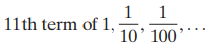
Find the indicated term in the sequence. 11th term of 1, 10' 100
Find the indicated term in the sequence.8th term of 1, -1, -3, -5, ...
Find the indicated term in the sequence.9th term of 3, 7, 11, 15, ...
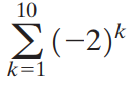
Find the sum. 10 Σ-2) k k=1
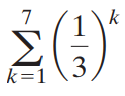
Find the sum. k 3 k=1
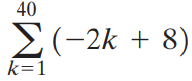
Find the sum. 40 Σ(-2k + 8 ) k=1
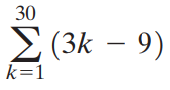
Find the sum. 30 Σ (3k-9) k=1
Find the sum. 30 Σ2 k=1
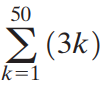
Find the sum. 50 Σ (3k) k=1
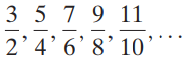
Determine whether the given sequence is arithmetic, geometric, or neither. If the sequence is arithmetic, find the common difference and the sum of the first n terms. If the sequence is geometric, find the common ratio and the sum of the first n terms. 3 5 79 11 2'4'6'8' 10 6.
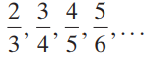
Determine whether the given sequence is arithmetic, geometric, or neither. If the sequence is arithmetic, find the common difference and the sum of the first n terms. If the sequence is geometric, find the common ratio and the sum of the first n terms. 2 3 4 5 6. 3’4'5’6
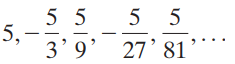
Determine whether the given sequence is arithmetic, geometric, or neither. If the sequence is arithmetic, find the common difference and the sum of the first n terms. If the sequence is geometric, find the common ratio and the sum of the first n terms. 5 5 3'9' 27' 81 5 5 5,-
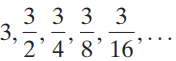
Determine whether the given sequence is arithmetic, geometric, or neither. If the sequence is arithmetic, find the common difference and the sum of the first n terms. If the sequence is geometric, find the common ratio and the sum of the first n terms. 3 3 3 3 3. 2'4'8' 16
Determine whether the given sequence is arithmetic, geometric, or neither. If the sequence is arithmetic, find the common difference and the sum of the first n terms. If the sequence is geometric, find the common ratio and the sum of the first n terms. 1, -3, -7, -11, ...
Determine whether the given sequence is arithmetic, geometric, or neither. If the sequence is arithmetic, find the common difference and the sum of the first n terms. If the sequence is geometric, find the common ratio and the sum of the first n terms. 0, 4, 8, 12, ...
Determine whether the given sequence is arithmetic, geometric, or neither. If the sequence is arithmetic, find the common difference and the sum of the first n terms. If the sequence is geometric, find the common ratio and the sum of the first n terms. {un} = {32n}
Determine whether the given sequence is arithmetic, geometric, or neither. If the sequence is arithmetic, find the common difference and the sum of the first n terms. If the sequence is geometric, find the common ratio and the sum of the first n terms. {Sn} = {23n}
Determine whether the given sequence is arithmetic, geometric, or neither. If the sequence is arithmetic, find the common difference and the sum of the first n terms. If the sequence is geometric, find the common ratio and the sum of the first n terms. {dn} = {2n2 – 1}
Determine whether the given sequence is arithmetic, geometric, or neither. If the sequence is arithmetic, find the common difference and the sum of the first n terms. If the sequence is geometric, find the common ratio and the sum of the first n terms. {Cn} = {2n3}
Determine whether the given sequence is arithmetic, geometric, or neither. If the sequence is arithmetic, find the common difference and the sum of the first n terms. If the sequence is geometric, find the common ratio and the sum of the first n terms. {bn} = {4n + 3}
Determine whether the given sequence is arithmetic, geometric, or neither. If the sequence is arithmetic, find the common difference and the sum of the first n terms. If the sequence is geometric, find the common ratio and the sum of the first n terms. {an} = {n + 5}
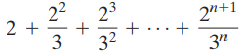
Express each sum using summation notation. 22 2 + 23 2"+1 3" 3 32 2.
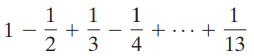
Express each sum using summation notation. + · . ·+ 4 13
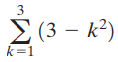
Write out the sum. 3 Σ (3-) 2. k=1
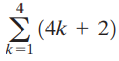
Write out the sum. E (4k + 2) k=1
Write down the first five terms of each sequence.a1 = -3; an = 4 – an-1
Write down the first five terms of each sequence.a1 = 2; an = 2 – an-1
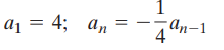
Write down the first five terms of each sequence. An-1 ат — 4; ат ||
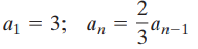
Write down the first five terms of each sequence. a1 = 3; an An-1 3 an
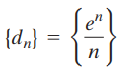
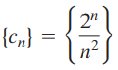
Write down the first five terms of each sequence. {d,} п
Write down the first five terms of each sequence.
Write down the first five terms of each sequence.{bn} = {(-1)n+1(2n + 3)}
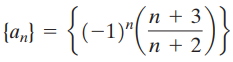
Write down the first five terms of each sequence. - {-»} n + 3 {(-»( {a,} n + 2
Find the next term. + 4 4 3 3 3 : ?
An approximation for n!, when n is large, is given by Calculate 12!, 20!, and 25! on your calculator. Then use Stirling’s formula to approximate 12!, 20!, and 25!. п n! - V2n7| 12n – 1
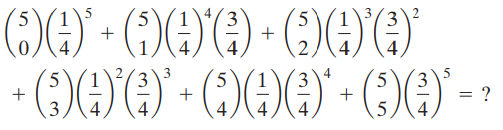
If n is a positive integer, show that
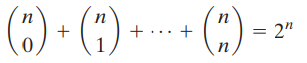
If n is a positive integer, show that
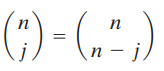
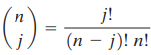
Show that if n and j are integers 0 ≤ j ≤ n with thenConclude that the Pascal triangle is symmetric with respect to a vertical line drawn from the topmost entry (;) - (,-) п
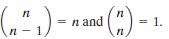
Show that = n and 1. - 1 -('",")
Use the Binomial Theorem to find the numerical value of (0.998)6 correct to five decimal places
Use the Binomial Theorem to find the numerical value of (1.001)5 correct to five decimal places.
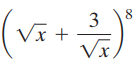
Use the Binomial Theorem to find the indicated coefficient or term. The coefficient x2 in the expansion of 3 Vx + Vx,
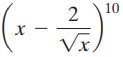
Use the Binomial Theorem to find the indicated coefficient or term. The coefficient x4 in the expansion of 10 Vx,
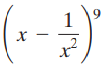
Use the Binomial Theorem to find the indicated coefficient or term. The coefficient x0 in the expansion of
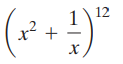
Use the Binomial Theorem to find the indicated coefficient or term. The coefficient x0 in the expansion of 12 x² + х.
Use the Binomial Theorem to find the indicated coefficient or term. The sixth term in the expansion of (3x + 2)8
Use the Binomial Theorem to find the indicated coefficient or term. The third term in the expansion of (3x – 2)9
Use the Binomial Theorem to find the indicated coefficient or term. The third term in the expansion of (x – 3)7
Use the Binomial Theorem to find the indicated coefficient or term. The fifth term in the expansion of (x + 3)7
Use the Binomial Theorem to find the indicated coefficient or term. The coefficient x2 in the expansion of (2x – 3)9
Use the Binomial Theorem to find the indicated coefficient or term. The coefficient x7 in the expansion of (2x + 3)9
Use the Binomial Theorem to find the indicated coefficient or term. The coefficient x3 in the expansion of (2x + 1) 12
Use the Binomial Theorem to find the indicated coefficient or term. The coefficient x7 in the expansion of (2x – 1)12
Use the Binomial Theorem to find the indicated coefficient or term. The coefficient x3 in the expansion of (x – 3)10
Use the Binomial Theorem to find the indicated coefficient or term. The coefficient x6 in the expansion of (x + 3)10
Expand the expression using the Binomial Theorem. (ax + by)4
Expand the expression using the Binomial Theorem. (ax + by)5
Expand the expression using the Binomial Theorem. (√x + √3)4
Expand the expression using the Binomial Theorem. (√x + √2)6
Expand the expression using the Binomial Theorem. (x2 - y2)6
Expand the expression using the Binomial Theorem. (x2 + y2)5
Expand the expression using the Binomial Theorem. (2x + 3)5
Expand the expression using the Binomial Theorem.(3x + 1)4
Expand the expression using the Binomial Theorem. (x + 3)5
Expand the expression using the Binomial Theorem. (x - 2)6
Expand the expression using the Binomial Theorem. (x - 1)5
Expand the expression using the Binomial Theorem. (x + 1)5
Evaluate the expression. 37 19
Evaluate the expression. 47 25
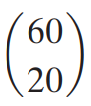
Evaluate the expression. 60 20
Evaluate the expression. 55 23
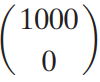
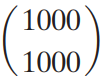
Evaluate the expression. 1000
Evaluate the expression. 1000 1000
Evaluate the expression. 100 98
Evaluate the expression. 50 49
Evaluate the expression. 6, 7)
Evaluate the expression. 5
Evaluate the expression.
Evaluate the expression. (3.
The __________ can be used to expand expressions like (2x + 3)6.
True or False. j! (п — ј)! n! п
________ is a triangular display of the binomial coefficients.
For the sequence given in Problem 97, show thatun+1 + un = (n +1)2
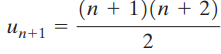
For the sequence given in Problem 97, show that Data from Problem 97u1 = 1, un +1 = un + (n + 1). (n + 1)(n + 2) Un+1 2
A triangular number is a term of the sequence u1 = 1, un +1 = un + (n + 1). Write down the first seven triangular numbers.
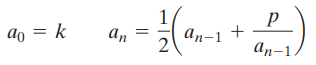
A method for approximating √p can be traced back to the Babylonians. The formula is given by the recursively defined sequencewhere k is an initial guess as to the value of the square root. Use this recursive formula to approximate the following square roots by finding a5 Compare this result
A method for approximating √p can be traced back to the Babylonians. The formula is given by the recursively defined sequencewhere k is an initial guess as to the value of the square root. Use this recursive formula to approximate the following square roots by finding a5 Compare this result
A method for approximating √p can be traced back to the Babylonians. The formula is given by the recursively defined sequencewhere k is an initial guess as to the value of the square root. Use this recursive formula to approximate the following square roots by finding a5 Compare this result
A method for approximating √p can be traced back to the Babylonians. The formula is given by the recursively defined sequencewhere k is an initial guess as to the value of the square root. Use this recursive formula to approximate the following square roots by finding a5 Compare this result
Show that LetS = 1 + 2 + ... + (n - 1) + n S = n + (n - 1) + (n - 2) + ... + 1 Add these equations. Then Now, complete the derivation. п(п + 1) |1 + 2 +... + (n — 1) + п %3 25 = [1+ n] + [2 + (n – 1)] + · · · + [n + 1] n terms in brackets
In 1772, Johann Bode published the following formula for predicting the mean distances, in astronomical units (AU), of the planets from the sun: a1 = 0.4, an = 0.4 + 0.3•2n-2, n ≥ 2where n is the number of the planet from the sun.(a) Determine the first eight terms of this
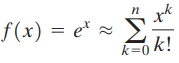
Approximating f(x) = ex Refer to problem 89.(a) Approximate with f(- 2.4) with n = 3.(b) Approximate f(-2,5) with n = 6.(c) Use a calculator to approximate f( -2,4).(d) Using trial and error along with a graphing utility’s SEQuence mode, determine the value of n required to approximate
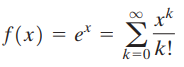
Approximating f(x) = ex In calculus, it can be shown thatWe can approximate the value of f(x) = ex for any x using the following sumfor some n.(a) Approximate f(1.3) with n = 4.(b) Approximate f(1.3) with n = 7.(c) Use a calculator to approximate f(1.3).(d) Using trial and error
Use the result of Problem 86 to do the following problems: (a) Write the first 11 terms of the Fibonacci sequence. (b) Write the first 10 terms of the ratio un + 1/ un.(c) As n gets large, what number does the ratio approach? This number is referred to as the golden ratio. Rectangles
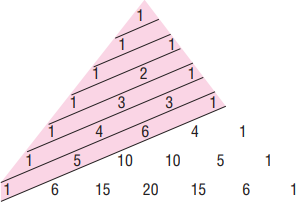
Divide the triangular array shown (called Pascal’s triangle) using diagonal lines as indicated. Find the sum of the numbers in each diagonal row. Do you recognize this sequence? 4 10 10 6. 15 20 15 6
Showing 21000 - 21100
of 29454
First
204
205
206
207
208
209
210
211
212
213
214
215
216
217
218
Last
Step by Step Answers

 Get 50% OFF
Claim Now
Get 50% OFF
Claim Now











![25 = [1+ n] + [2 + (n – 1)] + · · · + [n + 1] n terms in brackets](https://dsd5zvtm8ll6.cloudfront.net/si.question.images/images/question_images/1552/3/0/9/3765c865c8030a761552292123512.jpg)