New Semester
Started
Get
50% OFF
Study Help!
--h --m --s
Claim Now
Question Answers
Textbooks
Find textbooks, questions and answers
Oops, something went wrong!
Change your search query and then try again
S
Books
FREE
Study Help
Expert Questions
Accounting
General Management
Mathematics
Finance
Organizational Behaviour
Law
Physics
Operating System
Management Leadership
Sociology
Programming
Marketing
Database
Computer Network
Economics
Textbooks Solutions
Accounting
Managerial Accounting
Management Leadership
Cost Accounting
Statistics
Business Law
Corporate Finance
Finance
Economics
Auditing
Tutors
Online Tutors
Find a Tutor
Hire a Tutor
Become a Tutor
AI Tutor
AI Study Planner
NEW
Sell Books
Search
Search
Sign In
Register
study help
Computer science
object-oriented programming
object-oriented systems analysis
Object-Oriented Systems Analysis And Design Using UML 4th Edition Simon Bennett, Steve McRobb, Ray Farmer - Solutions
List two specific features of bad object-oriented modelling that are discouraged by the use of communication diagrams.
What are the benefits of keeping all classes reasonably small and self-contained?
What are the main differences between sequence diagrams and communication diagrams?
What are the essential parts of a message label (i) in a sequence diagram and (ii) in a communication diagram?
What is a lifeline?
What is meant by execution occurrence?
How are combined fragments used in sequence diagrams?
How do asynchronous messages differ from synchronous messages (i) in terms of the behaviour of the sending and receiving objects and (ii) in their notation?
In what circumstances are sequence numbers in a communication diagram written in nested style (e.g. 3.2.1)?
What consistency checks should be applied to interaction diagrams?
Describe three ways in which complex interactions may be represented using UML.
What is the difference between an interaction use and an interaction fragment?
What is the purpose of interaction overview diagrams?
What can be represented by the nodes in an interaction overview diagram?
How are timing diagrams used and when are they most useful?
Define event, state and transition.
What is the effect of a guard condition?
Why should all the guard conditions from a state be mutually exclusive?
What is a composite state?
What does it mean to say that an object can be in concurrent states?
How do nested states differ from concurrent states?
When are entry and exit pseudostates used?
What is the difference between shallow history and deep history pseudostates?
Which UML modelling elements can have their behaviour described by a state machine?
What indications would suggest that a state machine has not been drawn to model state changes?
Describe the difference between behavioural and protocol state machines.
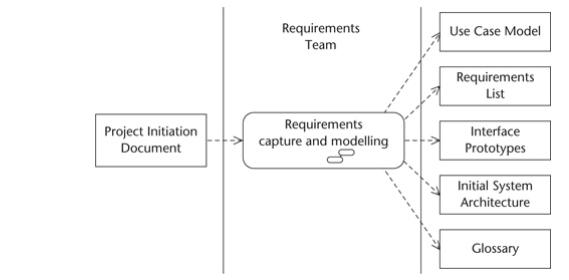
Against which other UML diagrams should a state machine be cross-checked? Project Initiation Document Requirements Team Use Case Model Requirements List Requirements capture and modelling Interface Prototypes Initial System Architecture Glossary
What cross-checks should be carried out?
What are the advantages of separating the analysis and design phases of a project?
What are the advantages of separating the analysis and design activities of a project?
Users at Agate require a report of unpaid campaigns. Which of the following aspects of the report represents analysis, logical design and physical design?The size of the paper and the position of each field in the report.The fact that the user wants a report of completed campaigns that have not yet
Which of the following sentences describing an element of the FoodCo system represents analysis, logical design and physical design?The reason for stopping a run will be selected from one of the values displayed in a listbox (Java Choice) in the Record Line Stop dialogue window.When a production
What is meant by seamlessness in object-oriented systems development?
What are the differences between system design and detailed design?
List twelve quality criteria for good design.
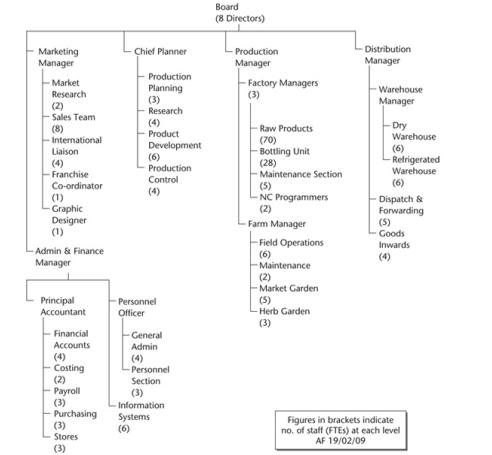
Reread the description of the FoodCo case study in Case Study B1. Identify any constraints that you think might be imposed on the design of the new system. FoodCo Case Study:FoodCo produces a range of perishable foods for supermarkets and is based in the flat agricultural lands of the East
Based on the same information try to identify possible measurable objectives for the new FoodCo system.
Agate wants the new system to provide access to the same data from every office around the world. Maintaining a network that is constantly connected between all the offices is considered too expensive, while using a network that dials up remote offices as required would provide response times that
Showing 200 - 300
of 238
1
2
3
Step by Step Answers

 Get 50% OFF
Claim Now
Get 50% OFF
Claim Now