







Question: 1 2 3 4 Case Study - Biodiesel Incorporated BIODIESEL INCORPORATED Joshua Maxwell shut down his laptop and looked out the window. From the second
1
2
3
4
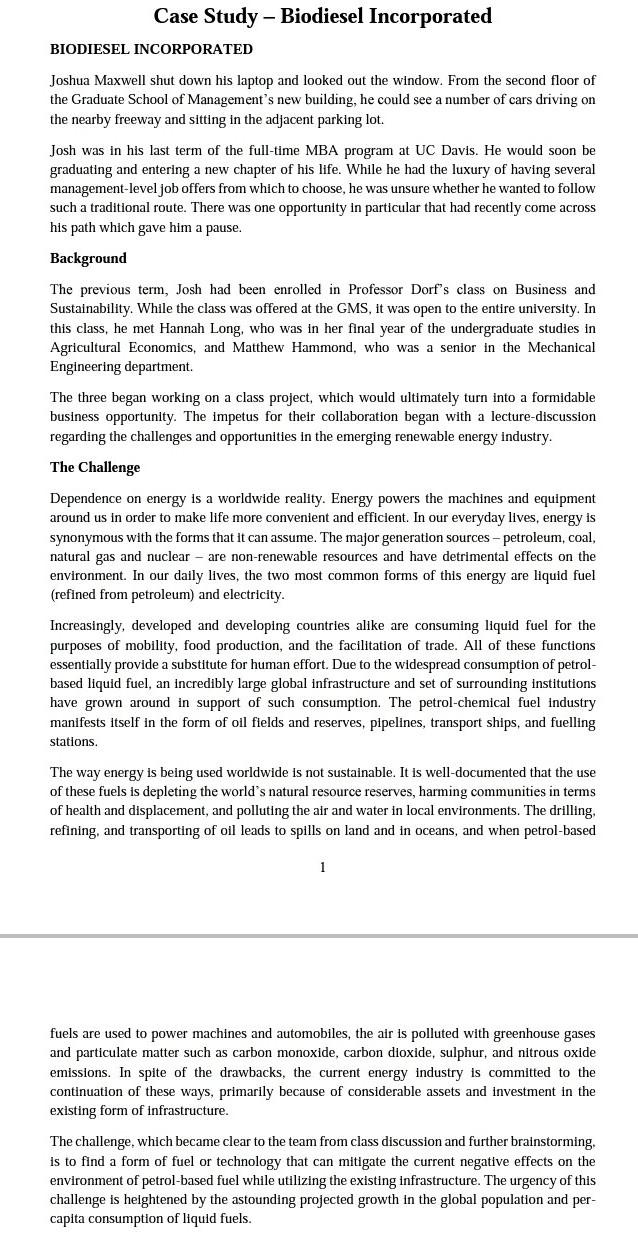
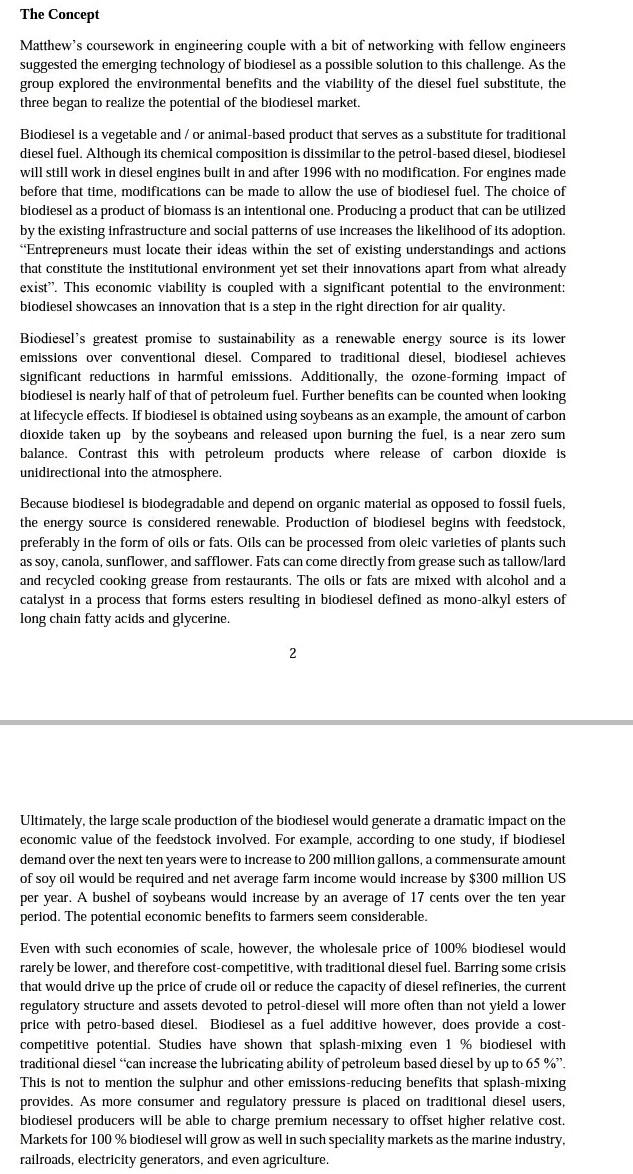
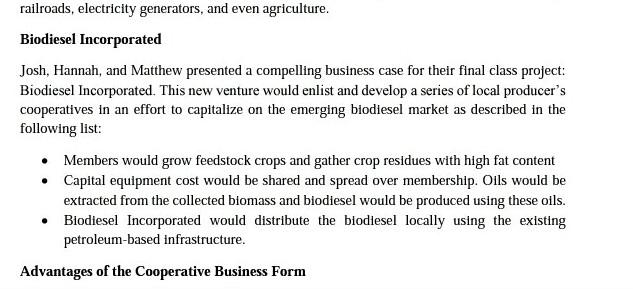
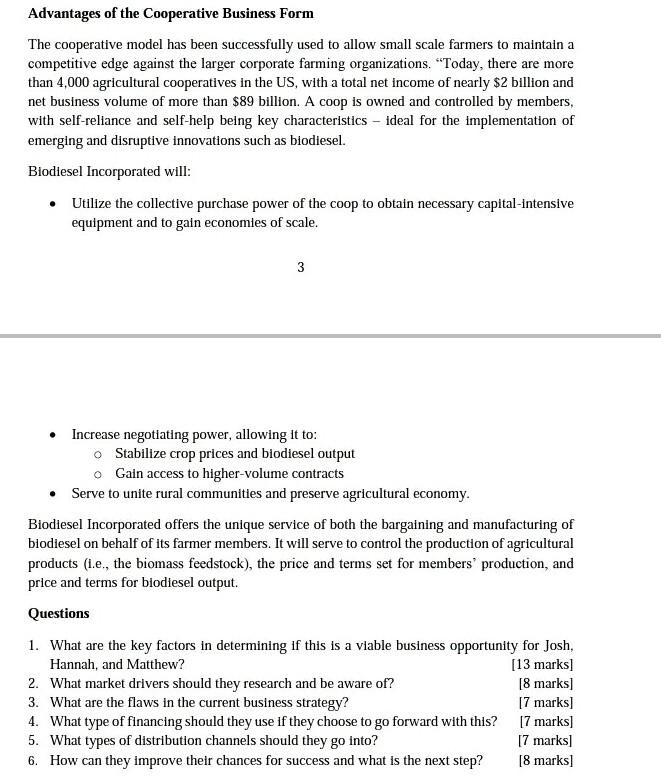
Case Study - Biodiesel Incorporated BIODIESEL INCORPORATED Joshua Maxwell shut down his laptop and looked out the window. From the second floor of the Graduate School of Management's new building, he could see a number of cars driving on the nearby freeway and sitting in the adjacent parking lot. Josh was in his last term of the full-time MBA program at UC Davis. He would soon be graduating and entering a new chapter of his life. While he had the luxury of having several management-level job offers from which to choose, he was unsure whether he wanted to follow such a traditional route. There was one opportunity in particular that had recently come across his path which gave him a pause. Background The previous term, Josh had been enrolled in Professor Dorf's class on Business and Sustainability. While the class was offered at the GMS, it was open to the entire university. In this class, he met Hannah Long, who was in her final year of the undergraduate studies in Agricultural Economics, and Matthew Hammond, who was a senior in the Mechanical Engineering department The three began working on a class project, which would ultimately turn into a formidable business opportunity. The impetus for their collaboration began with a lecture discussion regarding the challenges and opportunities in the emerging renewable energy industry. The Challenge Dependence on energy is a worldwide reality. Energy powers the machines and equipment around us in order to make life more convenient and efficient. In our everyday lives, energy is synonymous with the forms that it can assume. The major generation sources - petroleum, coal, natural gas and nuclear - are non-renewable resources and have detrimental effects on the environment. In our daily lives, the two most common forms of this energy are liquid fuel (refined from petroleum) and electricity. Increasingly, developed and developing countries alike are consuming liquid fuel for the purposes of mobility, food production, and the facilitation of trade. All of these functions essentially provide a substitute for human effort. Due to the widespread consumption of petrol- based liquid fuel, an incredibly large global infrastructure and set of surrounding institutions have grown around in support of such consumption. The petrol-chemical fuel industry manifests itself in the form of oil fields and reserves, pipelines, transport ships, and fuelling stations. The way energy is being used worldwide is not sustainable. It is well-documented that the use of these fuels is depleting the world's natural resource reserves, harming communities in terms of health and displacement, and polluting the air and water in local environments. The drilling, refining, and transporting of oil leads to spills on land and in oceans, and when petrol-based 1 fuels are used to power machines and automobiles, the air is polluted with greenhouse gases and particulate matter such as carbon monoxide, carbon dioxide, sulphur, and nitrous oxide emissions. In spite of the drawbacks, the current energy industry is committed to the continuation of these ways, primarily because of considerable assets and investment in the existing form of Infrastructure. The challenge, which became clear to the team from class discussion and further brainstorming, is to find a form of fuel or technology that can mitigate the current negative effects on the environment of petrol-based fuel while utilizing the existing infrastructure. The urgency of this challenge is heightened by the astounding projected growth in the global population and per- capita consumption of liquid fuels. The Concept Matthew's coursework in engineering couple with a bit of networking with fellow engineers suggested the emerging technology of biodiesel as a possible solution to this challenge. As the group explored the environmental benefits and the viability of the diesel fuel substitute, the three began to realize the potential of the biodiesel market. Biodiesel is a vegetable and/or animal-based product that serves as a substitute for traditional diesel fuel. Although its chemical composition is dissimilar to the petrol-based diesel, biodiesel will still work in diesel engines built in and after 1996 with no modification. For engines made before that time, modifications can be made to allow the use of biodiesel fuel. The choice of biodiesel as a product of biomass is an intentional one. Producing a product that can be utilized by the existing infrastructure and social patterns of use increases the likelihood of its adoption. "Entrepreneurs must locate their ideas within the set of existing understandings and actions that constitute the institutional environment yet set their innovations apart from what already exist. This economic viability is coupled with a significant potential to the environment: biodiesel showcases an innovation that is a step in the right direction for air quality. Biodiesel's greatest promise to sustainability as a renewable energy source is its lower emissions over conventional diesel. Compared to traditional diesel, biodiesel achieves significant reductions in harmful emissions. Additionally, the ozone-forming impact of biodiesel is nearly half of that of petroleum fuel. Further benefits can be counted when looking at lifecycle effects. If biodiesel is obtained using soybeans as an example, the amount of carbon dioxide taken up by the soybeans and released upon burning the fuel, is a near zero sum balance. Contrast this with petroleum products where release of carbon dioxide is unidirectional into the atmosphere. Because biodiesel is biodegradable and depend on organic material as opposed to fossil fuels, the energy source is considered renewable. Production of biodiesel begins with feedstock, preferably in the form of oils or fats. Oils can be processed from oleic varieties of plants such as soy, canola, sunflower, and safflower. Fats can come directly from grease such as tallow/lard and recycled cooking grease from restaurants. The oils or fats are mixed with alcohol and a catalyst in a process that forms esters resulting in biodiesel defined as mono-alkyl esters of long chain fatty acids and glycerine. 2 Ultimately, the large scale production of the biodiesel would generate a dramatic impact on the economic value of the feedstock involved. For example, according to one study, if biodiesel demand over the next ten years were to increase to 200 million gallons, a commensurate amount of soy oil would be required and net average farm income would increase by $300 million US per year. A bushel of soybeans would increase by an average of 17 cents over the ten year period. The potential economic benefits to farmers seem considerable. Even with such economies of scale, however, the wholesale price of 100% biodiesel would rarely be lower, and therefore cost-competitive, with traditional diesel fuel. Barring some crisis that would drive up the price of crude oil or reduce the capacity of diesel refineries, the current regulatory structure and assets devoted to petrol-diesel will more often than not yield a lower price with petro-based diesel. Biodiesel as a fuel additive however, does provide a cost- competitive potential. Studies have shown that splash-mixing even 1 % biodiesel with traditional diesel "can increase the lubricating ability of petroleum based diesel by up to 65%". This is not to mention the sulphur and other emissions-reducing benefits that splash-mixing provides. As more consumer and regulatory pressure is placed on traditional diesel users, biodiesel producers will be able to charge premium necessary to offset higher relative cost. Markets for 100% biodiesel will grow as well in such speciality markets as the marine industry, railroads, electricity generators, and even agriculture. railroads, electricity generators, and even agriculture. Biodiesel Incorporated Josh, Hannah, and Matthew presented a compelling business case for their final class project: Biodiesel Incorporated. This new venture would enlist and develop a series of local producer's cooperatives in an effort to capitalize on the emerging biodiesel market as described in the following list: Members would grow feedstock crops and gather crop residues with high fat content Capital equipment cost would be shared and spread over membership. Oils would be extracted from the collected biomass and biodiesel would be produced using these oils. Biodiesel Incorporated would distribute the biodiesel locally using the existing petroleum-based Infrastructure. Advantages of the Cooperative Business Form Advantages of the Cooperative Business Form The cooperative model has been successfully used to allow small scale farmers to maintain a competitive edge against the larger corporate farming organizations. Today, there are more than 4,000 agricultural cooperatives in the US, with a total net income of nearly $2 billion and net business volume of more than $89 billion. A coop is owned and controlled by members, with self-reliance and self-help being key characteristics - ideal for the implementation of emerging and disruptive innovations such as biodiesel. Biodiesel Incorporated will: Utilize the collective purchase power of the coop to obtain necessary capital-intensive equipment and to gain economies of scale. 3 Increase negotiating power, allowing it to: o Stabilize crop prices and biodiesel output o Gain access to higher-volume contracts Serve to unite rural communities and preserve agricultural economy. Biodiesel Incorporated offers the unique service of both the bargaining and manufacturing of biodiesel on behalf of its farmer members. It will serve to control the production of agricultural products (1.e., the biomass feedstock), the price and terms set for members' production, and price and terms for biodiesel output. Questions 1. What are the key factors in determining if this is a viable business opportunity for Josh, Hannah, and Matthew? [13 marks] 2. What market drivers should they research and be aware of? [8 marks) 3. What are the flaws in the current business strategy? [7 marks) 4. What type of financing should they use if they choose to go forward with this? [7 marks] 5. What types of distribution channels should they go into? [7 marks) 6. How can they improve their chances for success and what is the next step? [8 marksStep by Step Solution
There are 3 Steps involved in it
1 Expert Approved Answer
Step: 1 Unlock

Question Has Been Solved by an Expert!
Get step-by-step solutions from verified subject matter experts
Step: 2 Unlock
Step: 3 Unlock
 Study Help