







Question: 1. 2 3. 4. please answer the all the ielts questions answer 17 to 34 please answer all the questions answer as soon as possible
1. 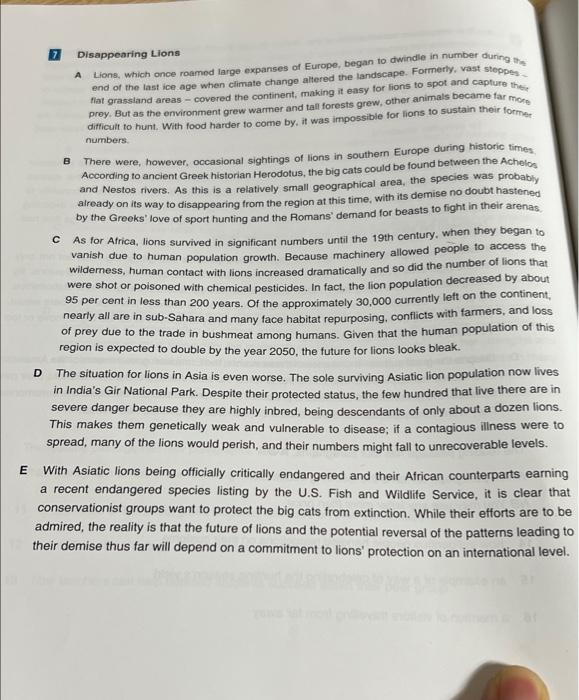
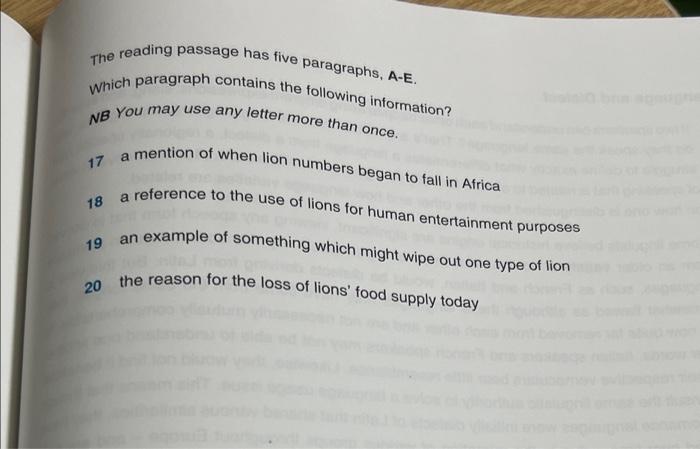
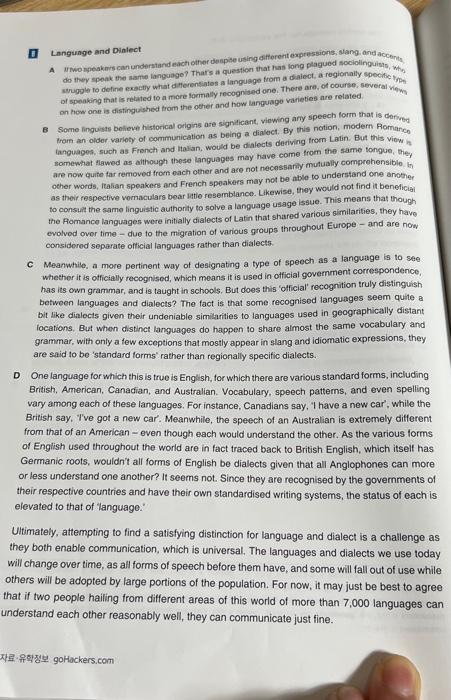
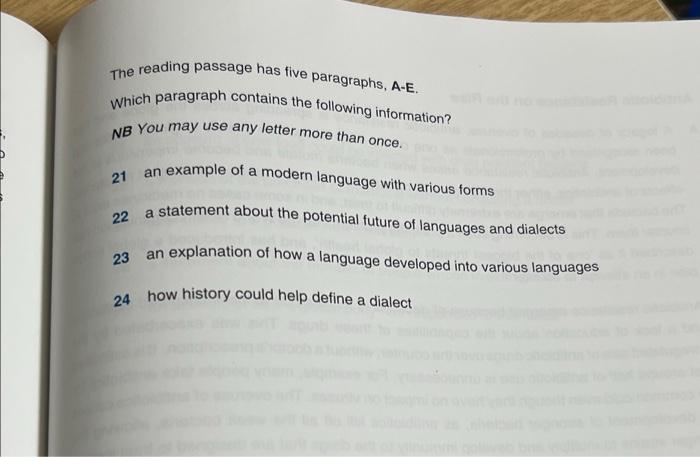
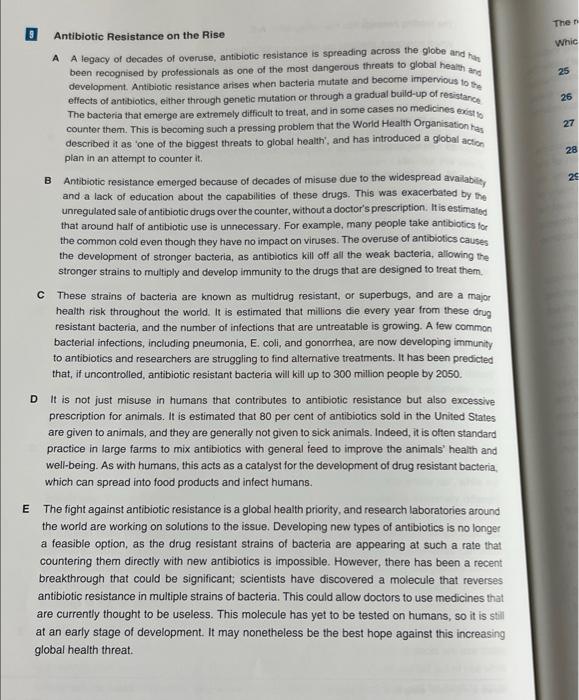
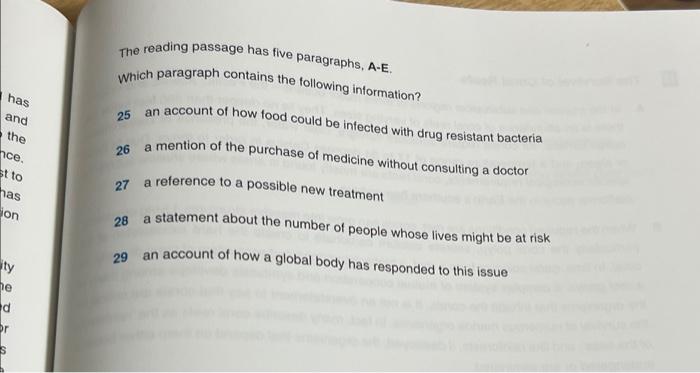
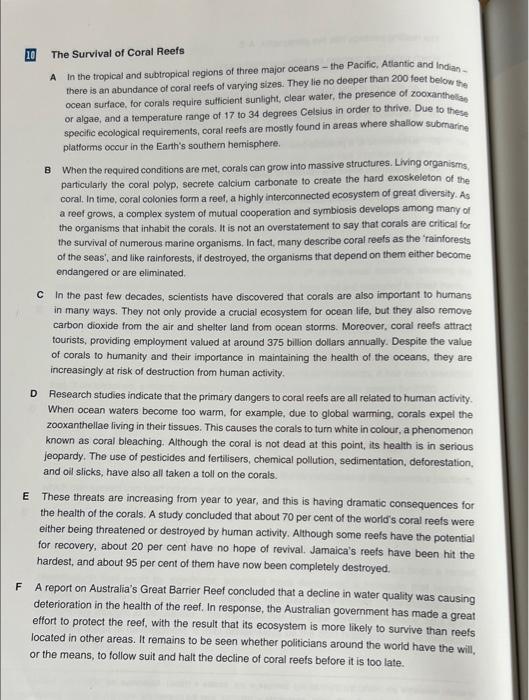
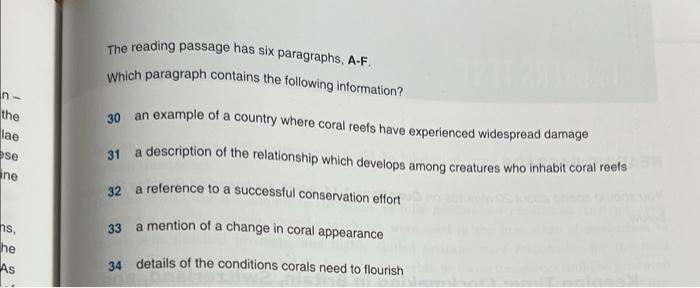
7 Disappearing Lions A Lions, which once roamed large expanses of Europe, began to dwindle in number during the end of the last ice age when climate change altered the landscape. Formerly, vast steppes- prey. But as the environment grew warmer and tall forests grew, other animals became far more flat grassland areas - covered the continent, making it easy for lions to spot and capture their difficult to hunt. With food harder to come by, it was impossible for lions to sustain their former numbers. B There were, however, occasional sightings of lions in southern Europe during historic times According to ancient Greek historian Herodotus, the big cats could be found between the Achelos and Nestos rivers. As this is a relatively small geographical area, the species was probably already on its way to disappearing from the region at this time, with its demise no doubt hastened by the Greeks' love of sport hunting and the Romans' demand for beasts to fight in their arenas. As for Africa, lions survived in significant numbers until the 19th century, when they began to vanish due to human population growth. Because machinery allowed people to access the wilderness, human contact with lions increased dramatically and so did the number of lions that were shot or poisoned with chemical pesticides. In fact, the lion population decreased by about 95 per cent in less than 200 years. Of the approximately 30,000 currently left on the continent, nearly all are in sub-Sahara and many face habitat repurposing, conflicts with farmers, and loss of prey due to the trade in bushmeat among humans. Given that the human population of this region is expected to double by the year 2050, the future for lions looks bleak. D The situation for lions in Asia is even worse. The sole surviving Asiatic lion population now lives in India's Gir National Park. Despite their protected status, the few hundred that live there are in severe danger because they are highly inbred, being descendants of only about a dozen lions. This makes them genetically weak and vulnerable to disease; if a contagious illness were to spread, many of the lions would perish, and their numbers might fall to unrecoverable levels. E With Asiatic lions being officially critically endangered and their African counterparts earning a recent endangered species listing by the U.S. Fish and Wildlife Service, it is clear that conservationist groups want to protect the big cats from extinction. While their efforts are to be admired, the reality is that the future of lions and the potential reversal of the patterns leading to their demise thus far will depend on a commitment to lions' protection on an international level. The reading passage has five paragraphs, A-E. Which paragraph contains the following information? NB You may use any letter more than once. 17 a mention of when lion numbers began to fall in Africa 18 a reference to the use of lions for human entertainment purposes 19 an example of something which might wipe out one type of lion 20 the reason for the loss of lions' food supply today Language and Dialect A two speakers can understand each other despite using different expressions, slang, and acces do they speak the same language? That's a question that has long plagued sociolinguists, who struggle to define exactly what differentiates a language from a dialect, a regionally specific typ of speaking that is related to a more formally recognised one. There are, of course, several views on how one is distinguished from the other and how language varieties are related. 8 Some linguists believe historical origins are significant, viewing any speech form that is derived from an older variety of communication as being a dialect. By this notion, modem Romance languages, such as French and Italian, would be dialects deriving from Latin. But this view somewhat flawed as although these languages may have come from the same tongue, they are now quite far removed from each other and are not necessarily mutually comprehensible in other words, Italian speakers and French speakers may not be able to understand one another as their respective vernaculars bear little resemblance. Likewise, they would not find it beneficial to consult the same linguistic authority to solve a language usage issue. This means that though the Romance languages were initially dialects of Latin that shared various similarities, they have evolved over time - due to the migration of various groups throughout Europe and are now considered separate official languages rather than dialects. C Meanwhile, a more pertinent way of designating a type of speech as a language is to see whether it is officially recognised, which means it is used in official government correspondence, has its own grammar, and is taught in schools. But does this official recognition truly distinguish between languages and dialects? The fact is that some recognised languages seem quite a bit like dialects given their undeniable similarities to languages used in geographically distant locations. But when distinct languages do happen to share almost the same vocabulary and grammar, with only a few exceptions that mostly appear in slang and idiomatic expressions, they are said to be 'standard forms rather than regionally specific dialects. D One language for which this is true is English, for which there are various standard forms, including British, American, Canadian, and Australian. Vocabulary, speech patterns, and even spelling vary among each of these languages. For instance, Canadians say, "I have a new car', while the British say, I've got a new car. Meanwhile, the speech of an Australian is extremely different from that of an American - even though each would understand the other. As the various forms of English used throughout the world are in fact traced back to British English, which itself has Germanic roots, wouldn't all forms of English be dialects given that all Anglophones can more or less understand one another? It seems not. Since they are recognised by the governments of their respective countries and have their own standardised writing systems, the status of each is elevated to that of "language." Ultimately, attempting to find a satisfying distinction for language and dialect is a challenge as they both enable communication, which is universal. The languages and dialects we use today will change over time, as all forms of speech before them have, and some will fall out of use while others will be adopted by large portions of the population. For now, it may just be best to agree that if two people hailing from different areas of this world of more than 7,000 languages can understand each other reasonably well, they can communicate just fine. goHackers.com The reading passage has five paragraphs, A-E. Which paragraph contains the following information? NB You may use any letter more than once. 21 an example of a modern language with various forms 22 a statement about the potential future of languages and dialects 23 an explanation of how a language developed into various languages 24 how history could help define a dialect Antibiotic Resistance on the Rise A A legacy of decades of overuse, antibiotic resistance is spreading across the globe and has been recognised by professionals as one of the most dangerous threats to global health and development. Antibiotic resistance arises when bacteria mutate and become impervious to the effects of antibiotics, either through genetic mutation or through a gradual build-up of resistance The bacteria that emerge are extremely difficult to treat, and in some cases no medicines exist to counter them. This is becoming such a pressing problem that the World Health Organisation has described it as one of the biggest threats to global health', and has introduced a global action plan in an attempt to counter it. B Antibiotic resistance emerged because of decades of misuse due to the widespread availability and a lack of education about the capabilities of these drugs. This was exacerbated by the unregulated sale of antibiotic drugs over the counter, without a doctor's prescription. It is estimated that around half of antibiotic use is unnecessary. For example, many people take antibiotics for the common cold even though they have no impact on viruses. The overuse of antibiotics causes the development of stronger bacteria, as antibiotics kill off all the weak bacteria, allowing the stronger strains to multiply and develop immunity to the drugs that are designed to treat them. C These strains of bacteria are known as multidrug resistant, or superbugs, and are a major health risk throughout the world. It is estimated that millions die every year from these drug resistant bacteria, and the number of infections that are untreatable is growing. A few common bacterial infections, including pneumonia, E. coli, and gonorrhea, are now developing immunity to antibiotics and researchers are struggling to find alternative treatments. It has been predicted that, if uncontrolled, antibiotic resistant bacteria will kill up to 300 million people by 2050. D It is not just misuse in humans that contributes to antibiotic resistance but also excessive prescription for animals. It is estimated that 80 per cent of antibiotics sold in the United States are given to animals, and they are generally not given to sick animals. Indeed, it is often standard practice in large farms to mix antibiotics with general feed to improve the animals' health and well-being. As with humans, this acts as a catalyst for the development of drug resistant bacteria, which can spread into food products and infect humans. E The fight against antibiotic resistance is a global health priority, and research laboratories around the world are working on solutions to the issue. Developing new types of antibiotics is no longer a feasible option, as the drug resistant strains of bacteria are appearing at such a rate that countering them directly with new antibiotics is impossible. However, there has been a recent breakthrough that could be significant; scientists have discovered a molecule that reverses antibiotic resistance in multiple strains of bacteria. This could allow doctors to use medicines that are currently thought to be useless. This molecule has yet to be tested on humans, so it is still at an early stage of development. It may nonetheless be the best hope against this increasing global health threat. The n Whic 25 26 27 28 25 has and the nce. st to has on ty he d or The reading passage has five paragraphs, A-E. Which paragraph contains the following information? 25 an account of how food could be infected with drug resistant bacteria 26 a mention of the purchase of medicine without consulting a doctor 27 a reference to a possible new treatment 28 a statement about the number of people whose lives might be at risk 29 an account of how a global body has responded to this issue The Survival of Coral Reefs A In the tropical and subtropical regions of three major oceans-the Pacific, Atlantic and Indian- there is an abundance of coral reefs of varying sizes. They lie no deeper than 200 feet below the ocean surface, for corals require sufficient sunlight, clear water, the presence of zooxanthella or algae, and a temperature range of 17 to 34 degrees Celsius in order to thrive. Due to these specific ecological requirements, coral reefs are mostly found in areas where shallow submarine platforms occur in the Earth's southern hemisphere. B When the required conditions are met, corals can grow into massive structures. Living organisms, particularly the coral polyp, secrete calcium carbonate to create the hard exoskeleton of the coral. In time, coral colonies form a reef, a highly interconnected ecosystem of great diversity. As a reef grows, a complex system of mutual cooperation and symbiosis develops among many of the organisms that inhabit the corals. It is not an overstatement to say that corals are critical for the survival of numerous marine organisms. In fact, many describe coral reefs as the 'rainforests of the seas', and like rainforests, if destroyed, the organisms that depend on them either become endangered or are eliminated. C In the past few decades, scientists have discovered that corals are also important to humans in many ways. They not only provide a crucial ecosystem for ocean life, but they also remove carbon dioxide from the air and shelter land from ocean storms. Moreover, coral reefs attract tourists, providing employment valued at around 375 billion dollars annually. Despite the value of corals to humanity and their importance in maintaining the health of the oceans, they are increasingly at risk of destruction from human activity. D Research studies indicate that the primary dangers to coral reefs are all related to human activity. When ocean waters become too warm, for example, due to global warming, corals expel the zooxanthellae living in their tissues. This causes the corals to turn white in colour, a phenomenon known as coral bleaching. Although the coral is not dead at this point, its health is in serious jeopardy. The use of pesticides and fertilisers, chemical pollution, sedimentation, deforestation, and oil slicks, have also all taken a toll on the corals. E These threats are increasing from year to year, and this is having dramatic consequences for the health of the corals. A study concluded that about 70 per cent of the world's coral reefs were either being threatened or destroyed by human activity. Although some reefs have the potential for recovery, about 20 per cent have no hope of revival. Jamaica's reefs have been hit the hardest, and about 95 per cent of them have now been completely destroyed. F A report on Australia's Great Barrier Reef concluded that a decline in water quality was causing deterioration in the health of the reef. In response, the Australian government has made a great effort to protect the reef, with the result that its ecosystem is more likely to survive than reefs located in other areas. It remains to be seen whether politicians around the world have the will, or the means, to follow suit and halt the decline of coral reefs before it is too late. n- the lae se ne ns. he As The reading passage has six paragraphs, A-F. Which paragraph contains the following information? 30 an example of a country where coral reefs have experienced widespread damage 31 a description of the relationship which develops among creatures who inhabit coral reefs 32 a reference to a successful conservation effort 33 a mention of a change in coral appearance 34 details of the conditions corals need to flourish
2
3.
4.
please answer the all the ielts questions answer 17 to 34 please answer all the questions answer as soon as possible
Step by Step Solution
There are 3 Steps involved in it
1 Expert Approved Answer
Step: 1 Unlock

Question Has Been Solved by an Expert!
Get step-by-step solutions from verified subject matter experts
Step: 2 Unlock
Step: 3 Unlock
 Study Help