



Question: 1. 2. 3. 4. please answer the ielts questions 19 to 34 please answer all the questions as soon as possible 7 How Steam Power
1. 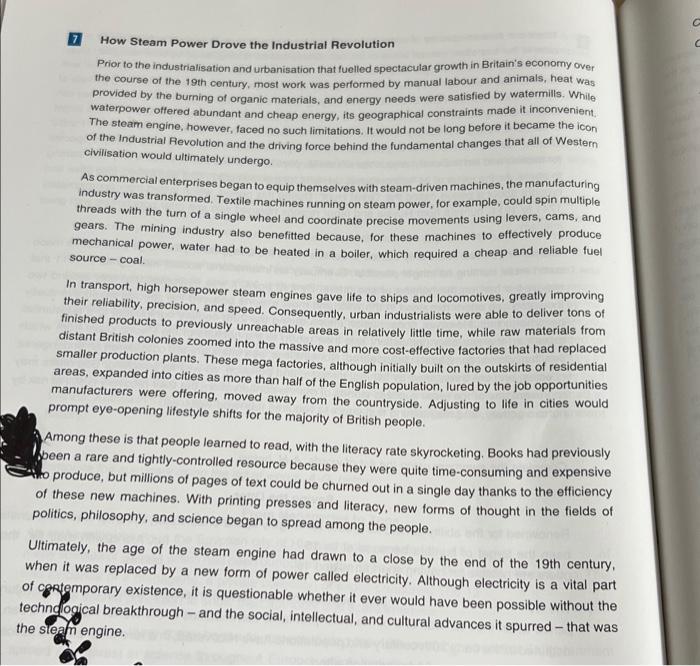
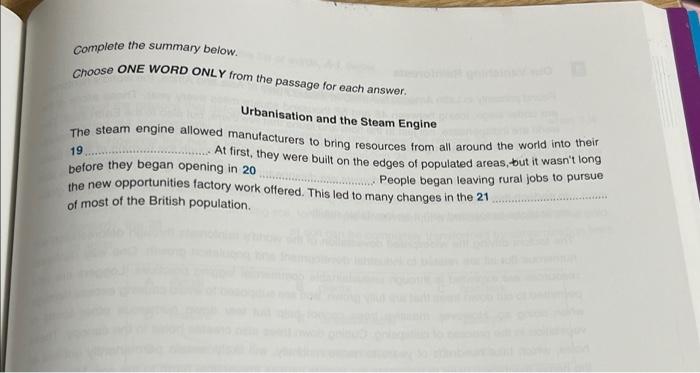
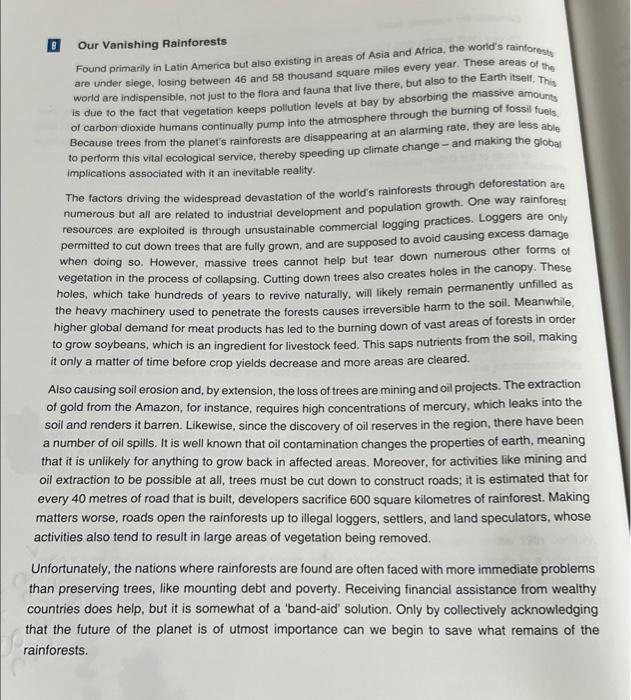
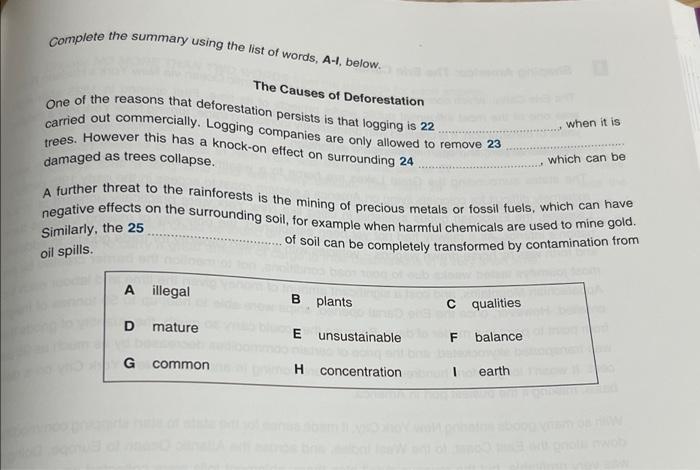
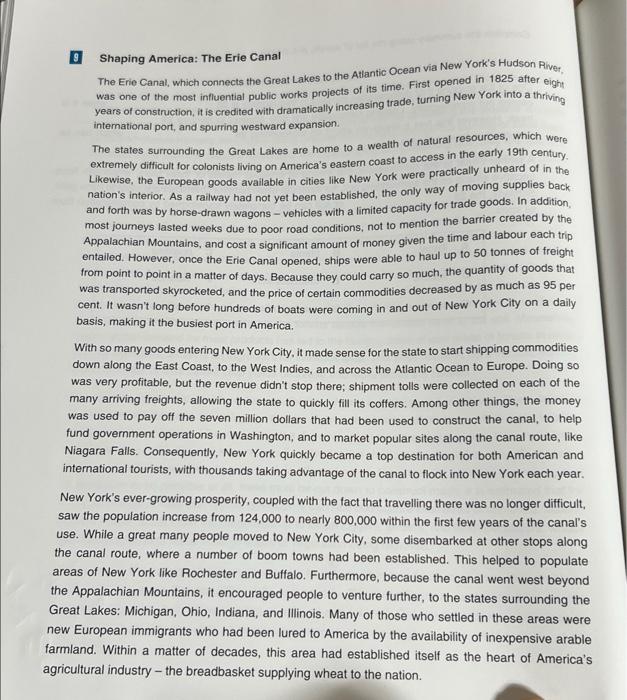
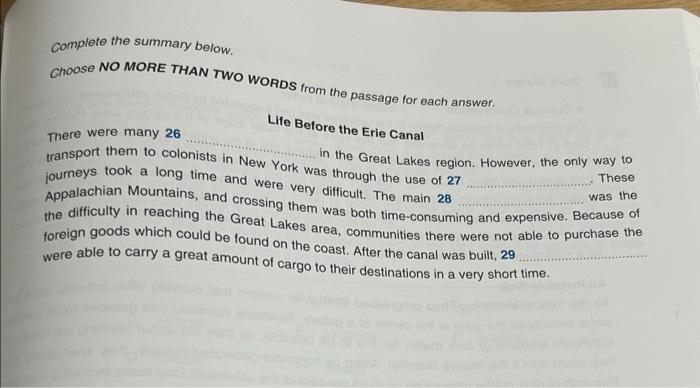
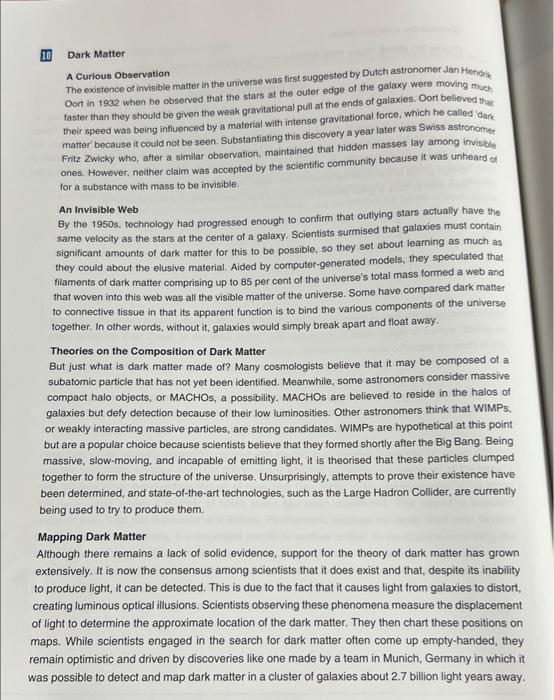
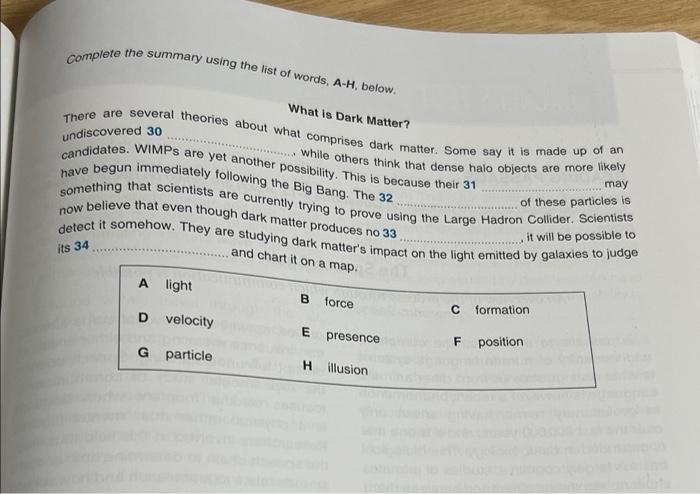
7 How Steam Power Drove the Industrial Revolution Prior to the industrialisation and urbanisation that fuelled spectacular growth in Britain's economy over the course of the 19th century, most work was performed by manual labour and animals, heat was provided by the burning of organic materials, and energy needs were satisfied by watermills. While waterpower offered abundant and cheap energy, its geographical constraints made it inconvenient. The steam engine, however, faced no such limitations. It would not be long before it became the icon of the Industrial Revolution and the driving force behind the fundamental changes that all of Western civilisation would ultimately undergo. As commercial enterprises began to equip themselves with steam-driven machines, the manufacturing industry was transformed. Textile machines running on steam power, for example, could spin multiple threads with the turn of a single wheel and coordinate precise movements using levers, cams, and gears. The mining industry also benefitted because, for these machines to effectively produce mechanical power, water had to be heated in a boiler, which required a cheap and reliable fuel source coal. In transport, high horsepower steam engines gave life to ships and locomotives, greatly improving their reliability, precision, and speed. Consequently, urban industrialists were able to deliver tons of finished products to previously unreachable areas in relatively little time, while raw materials from distant British colonies zoomed into the massive and more cost-effective factories that had replaced smaller production plants. These mega factories, although initially built on the outskirts of residential areas, expanded into cities as more than half of the English population, lured by the job opportunities manufacturers were offering, moved away from the countryside. Adjusting to life in cities would prompt eye-opening lifestyle shifts for the majority of British people. Among these is that people learned to read, with the literacy rate skyrocketing. Books had previously been a rare and tightly-controlled resource because they were quite time-consuming and expensive to produce, but millions of pages of text could be churned out in a single day thanks to the efficiency of these new machines. With printing presses and literacy, new forms of thought in the fields of politics, philosophy, and science began to spread among the people. Ultimately, the age of the steam engine had drawn to a close by the end of the 19th century, when it was replaced by a new form of power called electricity. Although electricity is a vital part of contemporary existence, it is questionable whether it ever would have been possible without the technological breakthrough- and the social, intellectual, and cultural advances it spurred the steam engine. that was - G C Complete the summary below. Choose ONE WORD ONLY from the passage for each answer. Urbanisation and the Steam Engine The steam engine allowed manufacturers to bring resources from all around the world into their At first, they were built on the edges of populated areas, but it wasn't long 19 before they began opening in 20 the new opportunities factory work offered. This led to many changes in the 21 People began leaving rural jobs to pursue of most of the British population. Our Vanishing Rainforests Found primarily in Latin America but also existing in areas of Asia and Africa, the world's rainforests are under siege, losing between 46 and 58 thousand square miles every year. These areas of the world are indispensible, not just to the flora and fauna that live there, but also to the Earth itself. This is due to the fact that vegetation keeps pollution levels at bay by absorbing the massive amounts of carbon dioxide humans continually pump into the atmosphere through the burning of fossil fuels Because trees from the planet's rainforests are disappearing at an alarming rate, they are less able to perform this vital ecological service, thereby speeding up climate change- and making the global implications associated with it an inevitable reality. The factors driving the widespread devastation of the world's rainforests through deforestation are numerous but all are related to industrial development and population growth. One way rainforest resources are exploited is through unsustainable commercial logging practices. Loggers are only permitted to cut down trees that are fully grown, and are supposed to avoid causing excess damage when doing so. However, massive trees cannot help but tear down numerous other forms of vegetation in the process of collapsing. Cutting down trees also creates holes in the canopy. These holes, which take hundreds of years to revive naturally, will likely remain permanently unfilled as the heavy machinery used to penetrate the forests causes irreversible harm to the soil. Meanwhile, higher global demand for meat products has led to the burning down of vast areas of forests in order to grow soybeans, which is an ingredient for livestock feed. This saps nutrients from the soil, making it only a matter of time before crop yields decrease and more areas are cleared. Also causing soil erosion and, by extension, the loss of trees are mining and oil projects. The extraction of gold from the Amazon, for instance, requires high concentrations of mercury, which leaks into the soil and renders it barren. Likewise, since the discovery of oil reserves in the region, there have been a number of oil spills. It is well known that oil contamination changes the properties of earth, meaning that it is unlikely for anything to grow back in affected areas. Moreover, for activities like mining and oil extraction to be possible at all, trees must be cut down to construct roads; it is estimated that for every 40 metres of road that is built, developers sacrifice 600 square kilometres of rainforest. Making matters worse, roads open the rainforests up to illegal loggers, settlers, and land speculators, whose activities also tend to result in large areas of vegetation being removed. Unfortunately, the nations where rainforests are found are often faced with more immediate problems than preserving trees, like mounting debt and poverty. Receiving financial assistance from wealthy countries does help, but it is somewhat of a 'band-aid' solution. Only by collectively acknowledging that the future of the planet is of utmost importance can we begin to save what remains of the rainforests. Complete the summary using the list of words, A-I, below. The Causes of Deforestation when it is One of the reasons that deforestation persists is that logging is 22 carried out commercially. Logging companies are only allowed to remove 23 trees. However this has a knock-on effect on surrounding 24 damaged as trees collapse. which can be A further threat to the rainforests is the mining of precious metals or fossil fuels, which can have negative effects on the surrounding soil, for example when harmful chemicals are used to mine gold. Similarly, the 25 of soil can be completely transformed by contamination from oil spills. A illegal B plants C qualities D mature E unsustainable F balance G common H concentration I earth O 9 Shaping America: The Erie Canal The Erie Canal, which connects the Great Lakes to the Atlantic Ocean via New York's Hudson River, was one of the most influential public works projects of its time. First opened in 1825 after eight years of construction, it is credited with dramatically increasing trade, turning New York into a thriving international port, and spurring westward expansion. The states surrounding the Great Lakes are home to a wealth of natural resources, which were extremely difficult for colonists living on America's eastern coast to access in the early 19th century. Likewise, the European goods available in cities like New York were practically unheard of in the nation's interior. As a railway had not yet been established, the only way of moving supplies back and forth was by horse-drawn wagons-vehicles with a limited capacity for trade goods. In addition, most journeys lasted weeks due to poor road conditions, not to mention the barrier created by the Appalachian Mountains, and cost a significant amount of money given the time and labour each trip entailed. However, once the Erie Canal opened, ships were able to haul up to 50 tonnes of freight from point to point in a matter of days. Because they could carry so much, the quantity of goods that was transported skyrocketed, and the price of certain commodities decreased by as much as 95 per cent. It wasn't long before hundreds of boats were coming in and out of New York City on a daily basis, making it the busiest port in America. With so many goods entering New York City, it made sense for the state to start shipping commodities down along the East Coast, to the West Indies, and across the Atlantic Ocean to Europe. Doing so was very profitable, but the revenue didn't stop there; shipment tolls were collected on each of the many arriving freights, allowing the state to quickly fill its coffers. Among other things, the money was used to pay off the seven million dollars that had been used to construct the canal, to help fund government operations in Washington, and to market popular sites along the canal route, like Niagara Falls. Consequently, New York quickly became a top destination for both American and international tourists, with thousands taking advantage of the canal to flock into New York each year. New York's ever-growing prosperity, coupled with the fact that travelling there was no longer difficult, saw the population increase from 124,000 to nearly 800,000 within the first few years of the canal's use. While a great many people moved to New York City, some disembarked at other stops along the canal route, where a number of boom towns had been established. This helped to populate areas of New York like Rochester and Buffalo. Furthermore, because the canal went west beyond the Appalachian Mountains, it encouraged people to venture further, to the states surrounding the Great Lakes: Michigan, Ohio, Indiana, and Illinois. Many of those who settled in these areas were new European immigrants who had been lured to America by the availability of inexpensive arable farmland. Within a matter of decades, this area had established itself as the heart of America's agricultural industry - the breadbasket supplying wheat to the nation. Complete the summary below. Choose NO MORE THAN TWO WORDS from the passage for each answer. Life Before the Erie Canal There were many 26 These was the transport them to colonists in New York was through the use of 27 in the Great Lakes region. However, the only way to journeys took a long time and were very difficult. The main 28 Appalachian Mountains, and crossing them was both time-consuming and expensive. Because of the difficulty in reaching the Great Lakes area, communities there were not able to purchase the foreign goods which could be found on the coast. After the canal was built, 29 were able to carry a great amount of cargo to their destinations in a very short time. Dark Matter A Curious Observation. The existence of invisible matter in the universe was first suggested by Dutch astronomer Jan Hendrik Oort in 1932 when he observed that the stars at the outer edge of the galaxy were moving much faster than they should be given the weak gravitational pull at the ends of galaxies. Oort believed that their speed was being influenced by a material with intense gravitational force, which he called 'dark matter because it could not be seen. Substantiating this discovery a year later was Swiss astronomer Fritz Zwicky who, after a similar observation, maintained that hidden masses lay among invisible ones. However, neither claim was accepted by the scientific community because it was unheard of for a substance with mass to be invisible. An Invisible Web By the 1950s, technology had progressed enough to confirm that outlying stars actually have the same velocity as the stars at the center of a galaxy. Scientists surmised that galaxies must contain significant amounts of dark matter for this to be possible, so they set about learning as much as they could about the elusive material. Aided by computer-generated models, they speculated that filaments of dark matter comprising up to 85 per cent of the universe's total mass formed a web and that woven into this web was all the visible matter of the universe. Some have compared dark matter to connective tissue in that its apparent function is to bind the various components of the universe together. In other words, without it, galaxies would simply break apart and float away. Theories on the Composition of Dark Matter But just what is dark matter made of? Many cosmologists believe that it may be composed of a subatomic particle that has not yet been identified. Meanwhile, some astronomers consider massive compact halo objects, or MACHOS, a possibility. MACHOS are believed to reside in the halos of galaxies but defy detection because of their low luminosities. Other astronomers think that WIMPS, or weakly interacting massive particles, are strong candidates. WIMPS are hypothetical at this point but are a popular choice because scientists believe that they formed shortly after the Big Bang. Being massive, slow-moving, and incapable of emitting light, it is theorised that these particles clumped together to form the structure of the universe. Unsurprisingly, attempts to prove their existence have been determined, and state-of-the-art technologies, such as the Large Hadron Collider, are currently being used to try to produce them. Mapping Dark Matter Although there remains a lack of solid evidence, support for the theory of dark matter has grown extensively. It is now the consensus among scientists that it does exist and that, despite its inability to produce light, it can be detected. This is due to the fact that it causes light from galaxies to distort, creating luminous optical illusions. Scientists observing these phenomena measure the displacement of light to determine the approximate location of the dark matter. They then chart these positions on haps. While scientists engaged in the search for dark matter often come up empty-handed, they remain optimistic and driven by discoveries like one made by a team in Munich, Germany in which it was possible to detect and map dark matter in a cluster of galaxies about 2.7 billion light years away. 10 Complete the summary using the list of words, A-H, below. What is Dark Matter? There are several theories about what comprises dark matter. Some say it is made up of an undiscovered 30 while others think that dense halo objects are more likely candidates. WIMPS are yet another possibility. This is because their 31 I have begun immediately following the Big Bang. The 32 something that scientists are currently trying to prove using the Large Hadron Collider. Scientists now believe that even though dark matter produces no 33 may of these particles is it will be possible to detect it somehow. They are studying dark matter's impact on the light emitted by galaxies to judge and chart it on a map. its 34 A light B force C formation D velocity presence F position G particle E H illusion 2.
3.
4.
please answer the ielts questions 19 to 34 please answer all the questions as soon as possible
Step by Step Solution
There are 3 Steps involved in it
1 Expert Approved Answer
Step: 1 Unlock

Question Has Been Solved by an Expert!
Get step-by-step solutions from verified subject matter experts
Step: 2 Unlock
Step: 3 Unlock