







Question: 1. 2. 3. 4. You are given the following code to analyze: int x [2] [128]; int i, sum = 0; for (i 0;
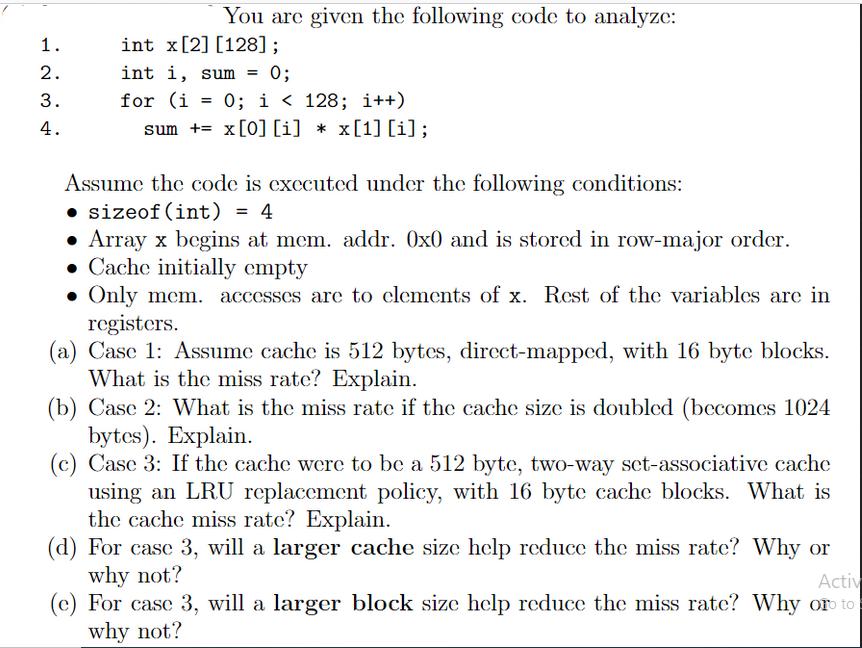
1. 2. 3. 4. You are given the following code to analyze: int x [2] [128]; int i, sum = 0; for (i 0; i < 128; i++) sum + x [0] [i] * x[1] [i]; = Assume the code is executed under the following conditions: sizeof (int) = 4 Array x begins at mcm. addr. 0x0 and is stored in row-major order. . Cache initially empty Only mem. accesses are to clements of x. Rest of the variables are in registers. (a) Case 1: Assume cache is 512 bytes, direct-mapped, with 16 byte blocks. What is the miss rate? Explain. (b) Case 2: What is the miss rate if the cache size is doubled (becomes 1024 bytes). Explain. (c) Case 3: If the cache were to be a 512 byte, two-way set-associative cache using an LRU replacement policy, with 16 byte cache blocks. What is the cache miss rate? Explain. (d) For case 3, will a larger cache size help reduce the miss rate? Why or why not? Activ (c) For case 3, will a larger block size help reduce the miss rate? Why or to why not?
Step by Step Solution
There are 3 Steps involved in it
a Case 1 With a cache size of 512 bytes directmapped and 16byte blocks The total number of cache blo... View full answer

Get step-by-step solutions from verified subject matter experts
 Study Help