







Question: 1/ Comparable worth laws require employers to pay the same wage scale to workers who do comparable work or have comparable training. What likely effect
1/ Comparable worth laws require employers to pay the same wage scale to workers who do comparable work or have comparable training. What likely effect would these laws have on the labor market?
Group of answer choices
These laws would likely lead to more discrimination because the laws legalize salary based on relevant group characteristics.
These laws would likely lead to lower wages because employers would be required to pay everyone health benefits regardless of hours worked.
These laws would likely politicize the labor market much more than it is currently politicized. It would involve an enormous increase in government involvement and regulation of pay.
These laws would likely lead to lower unemployment because firms will have an incentive to hire less-skilled workers so that they can pay lower salaries.
2/ In 1993 Congress passed the Family and Medical Leave Act (FMLA), which requires firms with more than 50 employees grant a 12-week unpaid leave of absence for family and medical reasons. What is the likely effect on the demand for female employees?
Group of answer choices
If more men take time off because of FMLA, female employees will cost firms more, which decreases the demand for female employees.
There is likely no change in the demand for female employees because it is illegal to discriminate based on gender.
If more women than men take time off because of FMLA, female employees will cost firms more, which decreases the demand for female employees.
If more women than men take time off because of FMLA, then the demand for female employees will decrease because of institutional discrimination.
3/ What assumptions lead to the prisoner's dilemma?
Group of answer choices
If the prisoners do not confess, each would get a light sentence. But each prisoner is interrogated separately and is offered the chance to go free if he or she confesses to the crime and agrees to serve as a witness against the other prisoner. This creates the incentive for both prisoners to confess.
Prisoners know each other so they don't confess.
If the prisoners do not confess, each would get a light sentence. But each prisoner is interrogated separately and is offered the chance to go free if he or she confesses to the crime and agrees to serve as a witness against the other prisoner. This creates the incentive for both prisoners to not confess.
If the prisoners confess, each would get a light sentence. But each prisoner is interrogated separately and is offered the chance to go free if he or she confesses to the crime and agrees to serve as a witness against the other prisoner. This creates the incentive for both prisoners to not confess.
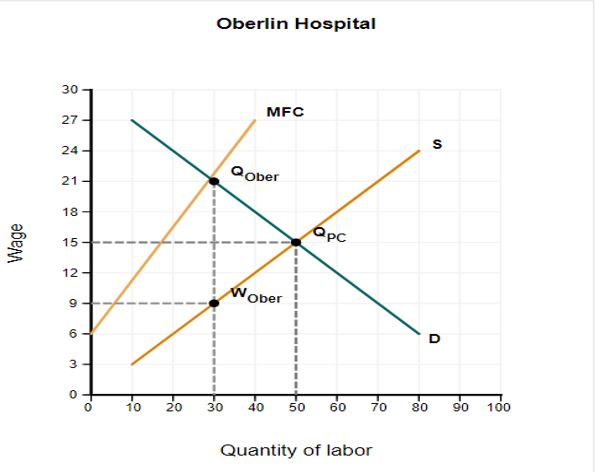
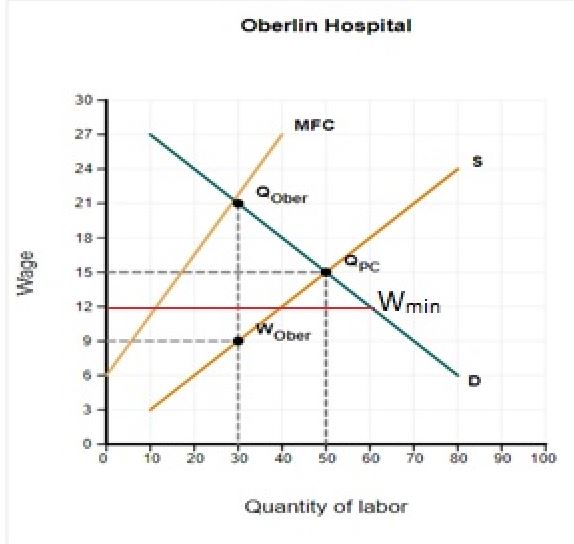
4/ Refer to the figure below, Oberlin Hospital is the only hospital in town. If it acts as a monopsonist, how many workers does it hire and at what wage?
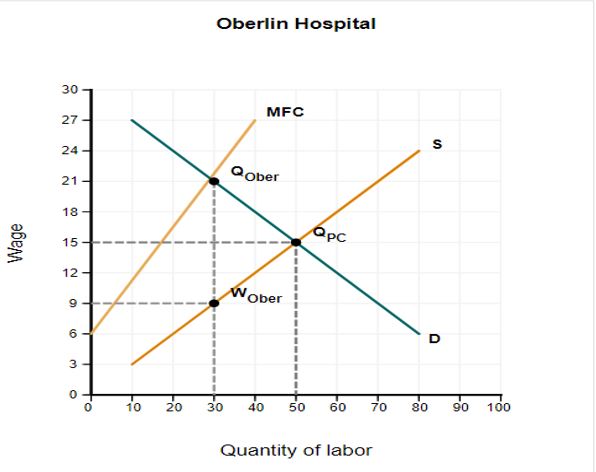
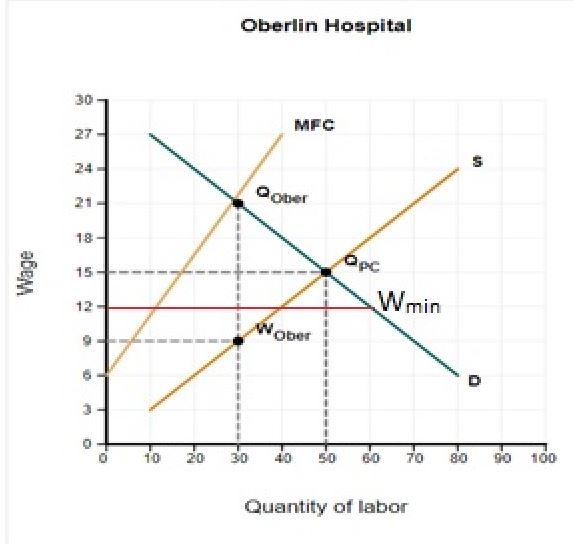
Oberlin Hospital 30 MFC 27 S 24 Qober 21 18- Qpc Wage 15 12 - Wober 9 6 D 3 0 10 20 30 40 50 60 70 80 90 100 Quantity of laborOberlin Hospital 30 MFC 27 24- Qober 21 - 18- Coc Wage 15- Wmin 12- Wober D 10 50 60 70 80 90 100 10 20 30 Quantity of labor
Step by Step Solution
There are 3 Steps involved in it

Get step-by-step solutions from verified subject matter experts
 Study Help