







Question: 1. Data collection:Design a module that can connect to multiple social media platforms and retrieve incoming data streams. This module should be able to handle
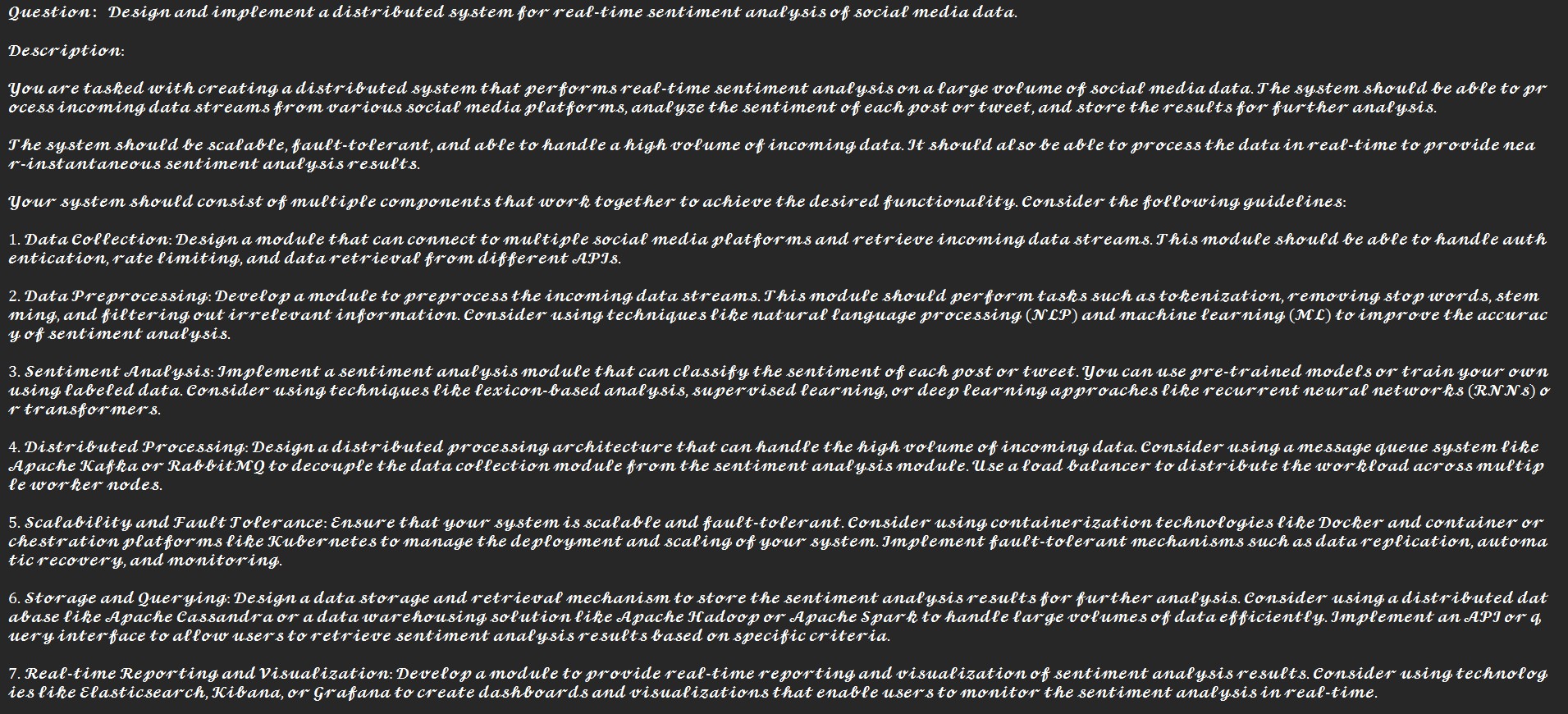
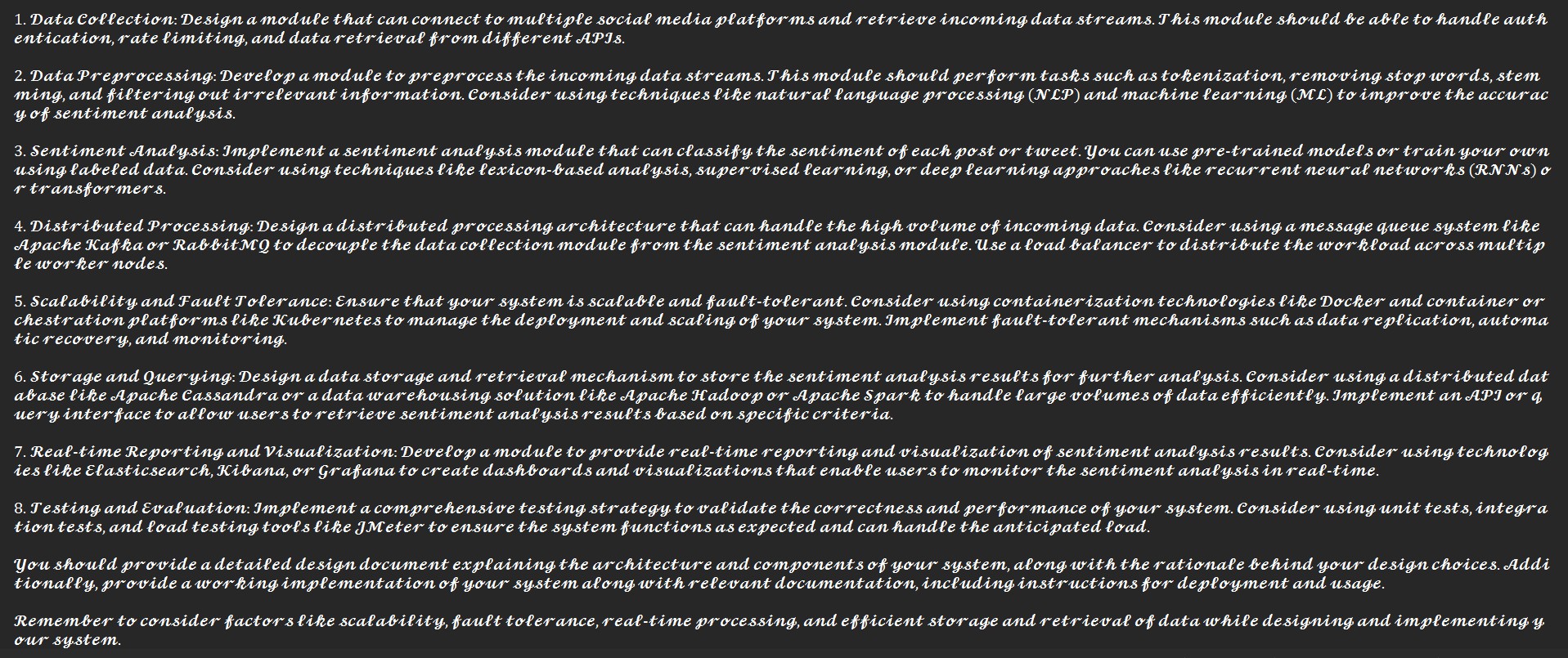
1. Data collection:Design a module that can connect to multiple social media platforms and retrieve incoming data streams. This module should be able to handle auth entication, rate eimiting, and data retrieval from different APJ2. 2. Data Preprocessing: Develop a module to preprocess the incoming data streams. This module should perform tashs such as tohenization, removing stop words, stem yof sentiment analysis. 3. Sentiment Analysis: Implement a sentiment analysis module that can classify the sentiment of each post or tweet. You can use pre-trained models or train your own rtransformers. 4. Distributed Processing:Design a distributed processing architecture that can handee the high volume of incoming data consider using a message queue system eike Apache Kafha or RabbitMV to decouple the data colfection module from the sentiment analysis module. Use a foad balancer to distribute the worhecad across multip le workernodes. 5. Scalability and Fault Jolerance: Ensure that your system is scalable and fault-toler ant. Consider using containerization technologies like Docher and container or chestration platforms fike Kubernetes to manage the deployment and scaling of your system. Implement fault-tolerant mechanisms such as data replication, automa tic recovery, and monitoring. 6. Storage and Querying:Design a data storage and retrieval mechanism to store the sentiment analysis results for further analysis. Consider using a distributed dat uery interface to alfow users to retrieve sentiment analysis results based onspecific criteria. 7. Real-time Reporting and Visualization:Develop a module to provide real-time reporting and visualization of sentiment analysis results. Consider using technolog ies fike Elasticsearch, Kibana, or Grafana to create dashboards and visuafizations that enable users to monitor the sentiment analysis in real-time. 8. Jesting and Evaluation: Implement a comprehensive testing strategy to validate the correctness and performance of your system. consider using unit tests, integra tiontests, and load testing tools like JMeter to ensure the system functions as expected and can handle the anticipated load. You should provide a detailed design document explaining the architecture and components of your system, along with the rationale behind your design choices. Addi tionaley, provide a working implementation of your system along with relevant documentation, including instructions for deployment and usage. Remember to consider factors fike scalabifity, fauft tolerance, real-time processing, and efficient storage and retrieval of data while designing and implementingy our system. 1. Data collection:Design a module that can connect to multiple social media platforms and retrieve incoming data streams. This module should be able to handle auth entication, rate eimiting, and data retrieval from different APJ2. 2. Data Preprocessing: Develop a module to preprocess the incoming data streams. This module should perform tashs such as tohenization, removing stop words, stem yof sentiment analysis. 3. Sentiment Analysis: Implement a sentiment analysis module that can classify the sentiment of each post or tweet. You can use pre-trained models or train your own rtransformers. 4. Distributed Processing:Design a distributed processing architecture that can handee the high volume of incoming data consider using a message queue system eike Apache Kafha or RabbitMV to decouple the data colfection module from the sentiment analysis module. Use a foad balancer to distribute the worhecad across multip le workernodes. 5. Scalability and Fault Jolerance: Ensure that your system is scalable and fault-toler ant. Consider using containerization technologies like Docher and container or chestration platforms fike Kubernetes to manage the deployment and scaling of your system. Implement fault-tolerant mechanisms such as data replication, automa tic recovery, and monitoring. 6. Storage and Querying:Design a data storage and retrieval mechanism to store the sentiment analysis results for further analysis. Consider using a distributed dat uery interface to alfow users to retrieve sentiment analysis results based onspecific criteria. 7. Real-time Reporting and Visualization:Develop a module to provide real-time reporting and visualization of sentiment analysis results. Consider using technolog ies fike Elasticsearch, Kibana, or Grafana to create dashboards and visuafizations that enable users to monitor the sentiment analysis in real-time. 8. Jesting and Evaluation: Implement a comprehensive testing strategy to validate the correctness and performance of your system. consider using unit tests, integra tiontests, and load testing tools like JMeter to ensure the system functions as expected and can handle the anticipated load. You should provide a detailed design document explaining the architecture and components of your system, along with the rationale behind your design choices. Addi tionaley, provide a working implementation of your system along with relevant documentation, including instructions for deployment and usage. Remember to consider factors fike scalabifity, fauft tolerance, real-time processing, and efficient storage and retrieval of data while designing and implementingy our system
Step by Step Solution
There are 3 Steps involved in it

Get step-by-step solutions from verified subject matter experts
 Study Help