







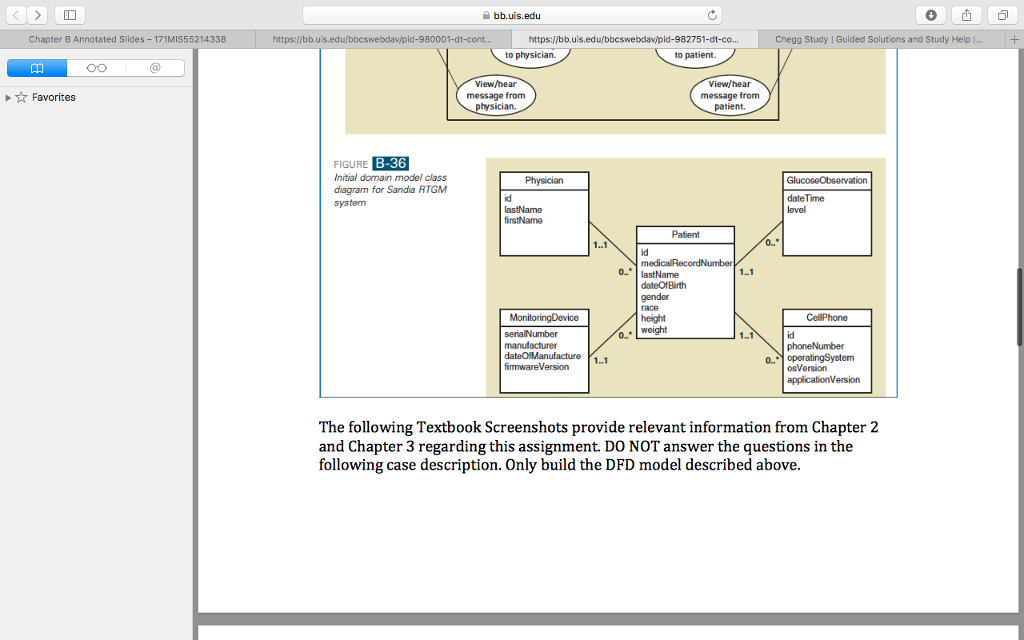
Question: 1. Develop an event-partitioned system model encompassing all the use cases in figure B-35. Assume that the classes and associations in Figure B-36 correspond to
1. Develop an event-partitioned system model encompassing all the use cases in figure B-35. Assume that the classes and associations in Figure B-36 correspond to entities and relationships from a similar ERD.
2. Develop a DFD fragment and a process explosion for the view history use case. Assume that the system will automatically display the most recent glucose level, which is updated at five-minute intervals by default. Assume further that the user can ask the system to view glucose levels during a user-specified time period and that the levels can be displayed in tabular form or as a graph.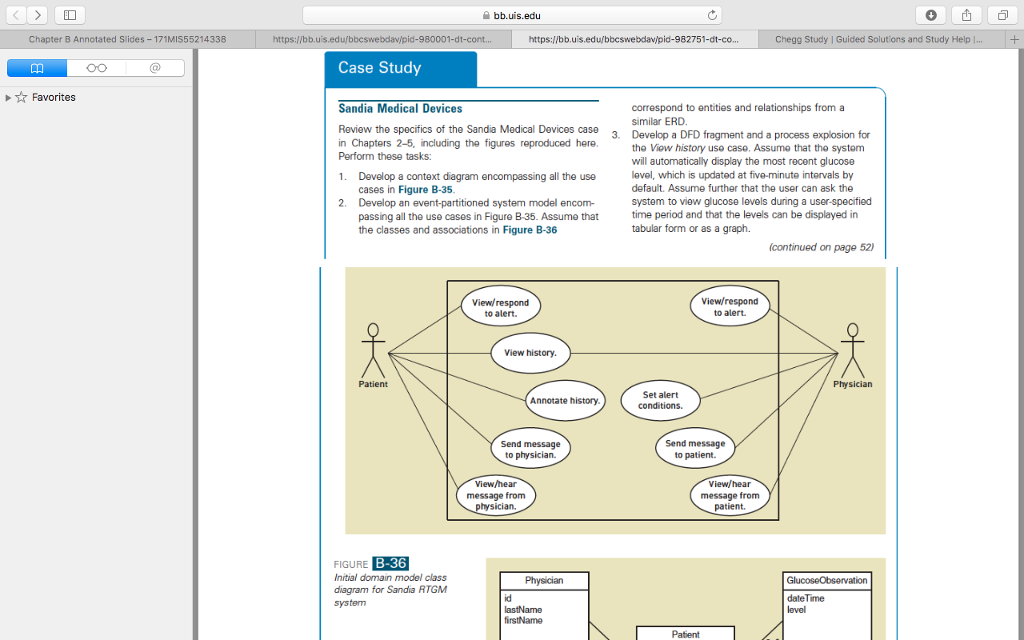
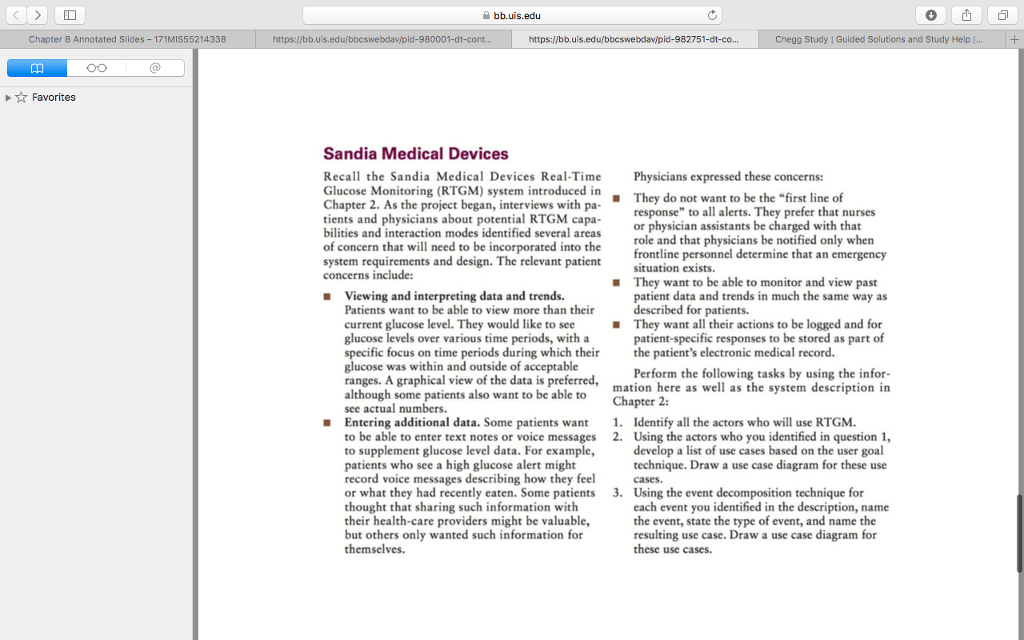
Chapter B Annotated Slides Favorites MIS552 14338 bb.uis.edu https://bb.uis.edu/bbcswebdavpid-98 000 https libb.uis.edufbbcswebdav/pid-982751-dt-co. Chegg Study Guided Solutions and Study Help Case Study Sandia Medical Devices correspond to entities and relationships from a similar ERD. Review the specifics of the Sandia Medical Devices case 3. Develop a DFD fragment and a process explosion for in Chapters 2-5, including the figures reproduced here. the Viow history use case. Assume that the system Perform these tasks: will automatically display the most recent glucose level, which is updated at five-minute intervals by 1. Develop a context diagram encompassing all the use default. Assume further that the user can ask the cases in Figure B-35. system to view glucose levels during a user-specified 2. Develop an event-partitioned system model encom- passing all the use cases in Figure B-35. Assume that time period and that the levels can be displayed in tabular form or as a graph. the classes and associations in Figure B-36 (continued on page 52 View/respond View/respond to alert. to alert. View history. Patient Physician Set alert Annotate history conditions. Send message Send message to physician. to patient. View/hear message from message from physician. patient. B-36 FIGURE Initial domain model class ation diagram for Sandia RTGM dateTime system lastName firstName Chapter B Annotated Slides Favorites MIS552 14338 bb.uis.edu https://bb.uis.edu/bbcswebdavpid-98 000 https libb.uis.edufbbcswebdav/pid-982751-dt-co. Chegg Study Guided Solutions and Study Help Case Study Sandia Medical Devices correspond to entities and relationships from a similar ERD. Review the specifics of the Sandia Medical Devices case 3. Develop a DFD fragment and a process explosion for in Chapters 2-5, including the figures reproduced here. the Viow history use case. Assume that the system Perform these tasks: will automatically display the most recent glucose level, which is updated at five-minute intervals by 1. Develop a context diagram encompassing all the use default. Assume further that the user can ask the cases in Figure B-35. system to view glucose levels during a user-specified 2. Develop an event-partitioned system model encom- passing all the use cases in Figure B-35. Assume that time period and that the levels can be displayed in tabular form or as a graph. the classes and associations in Figure B-36 (continued on page 52 View/respond View/respond to alert. to alert. View history. Patient Physician Set alert Annotate history conditions. Send message Send message to physician. to patient. View/hear message from message from physician. patient. B-36 FIGURE Initial domain model class ation diagram for Sandia RTGM dateTime system lastName firstName
Step by Step Solution
There are 3 Steps involved in it

Get step-by-step solutions from verified subject matter experts
 Study Help