







Question: 1. For the following limits, either a) evaluate them and rigorously show their convergence using any of the methods we discussed or b) rigorously
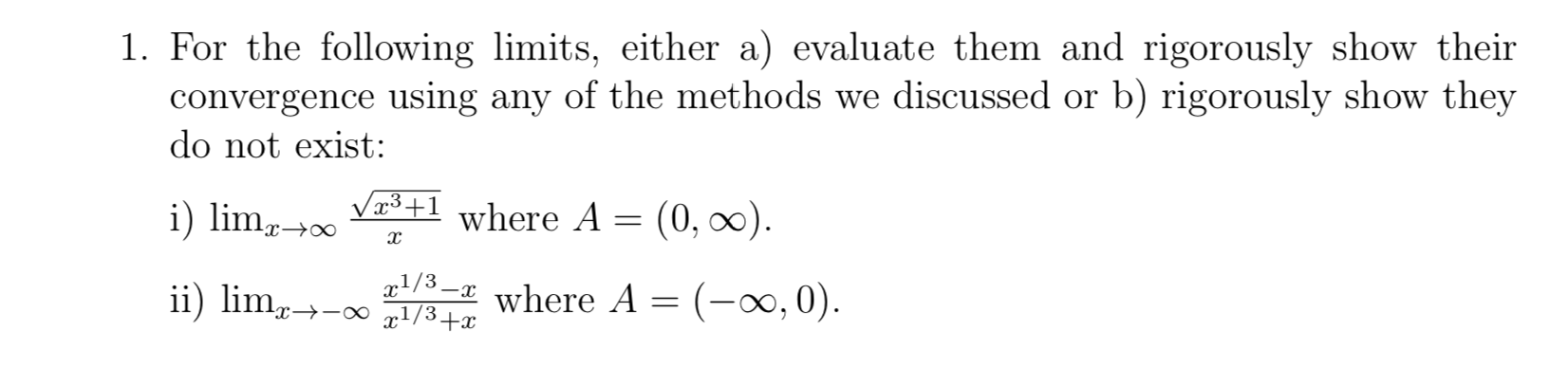
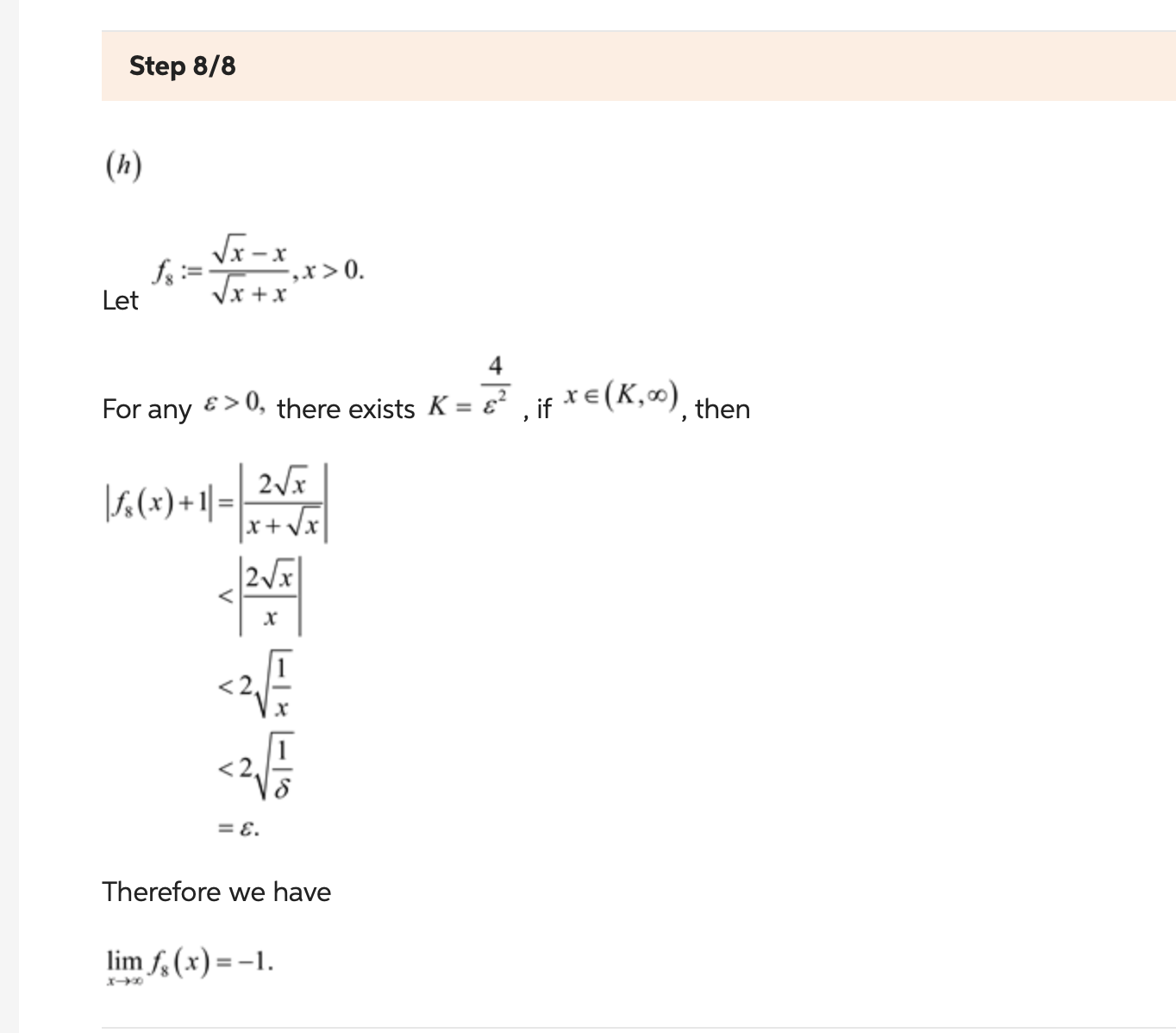
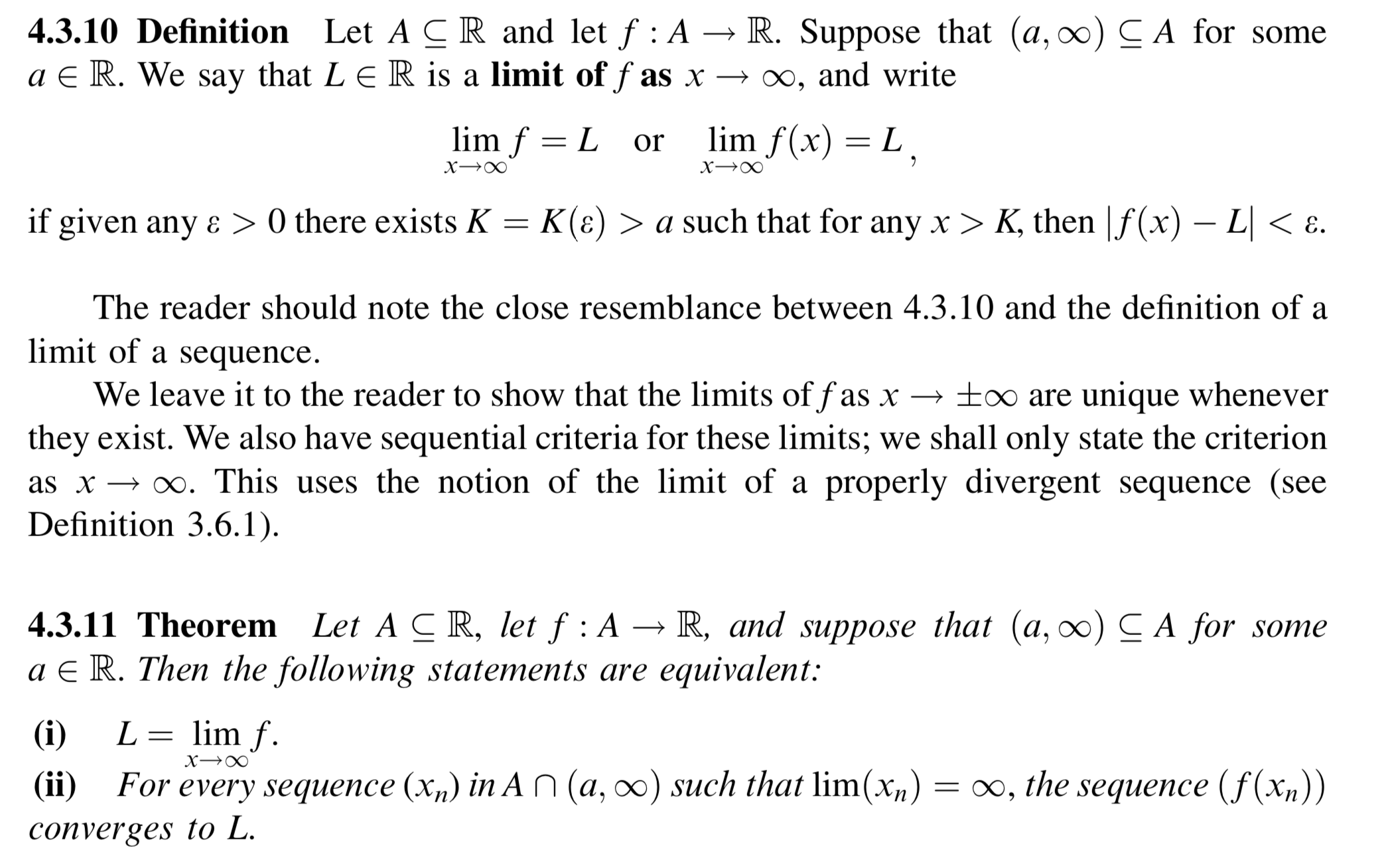
1. For the following limits, either a) evaluate them and rigorously show their convergence using any of the methods we discussed or b) rigorously show they do not exist: x3. 3+1 where A = (0,). x i) lim x ii) lim -xx1/3+x x1/3-x where A = (-, 0). (h) Step 8/8 x-x fs= ,x>0. Let x+x E For any &> 0, there exists K = &, if x = (K,), ther |fs(x)+1|= 2x s(x) + 1 = x + x a such that for any x > K, then |(x) L| < . The reader should note the close resemblance between 4.3.10 and the definition of a limit of a sequence. We leave it to the reader to show that the limits of fas x oo are unique whenever they exist. We also have sequential criteria for these limits; we shall only state the criterion as x . This uses the notion of the limit of a properly divergent sequence (see Definition 3.6.1). 4.3.11 Theorem Let A CR, let f : A >> R, and suppose that (a,) CA for some a = R. Then the following statements are equivalent: (i) L = lim f. X-X For every sequence (x) in An (a, ) such that lim(xn) = , the sequence (f(xn)) (ii) converges to L.
Step by Step Solution
There are 3 Steps involved in it

Get step-by-step solutions from verified subject matter experts
 Study Help