







Question: 1. Using the procedure explained in Example 1 generate 50 random samples of size r1=30 from a normal population with p=69 and o=3. Construct 90%
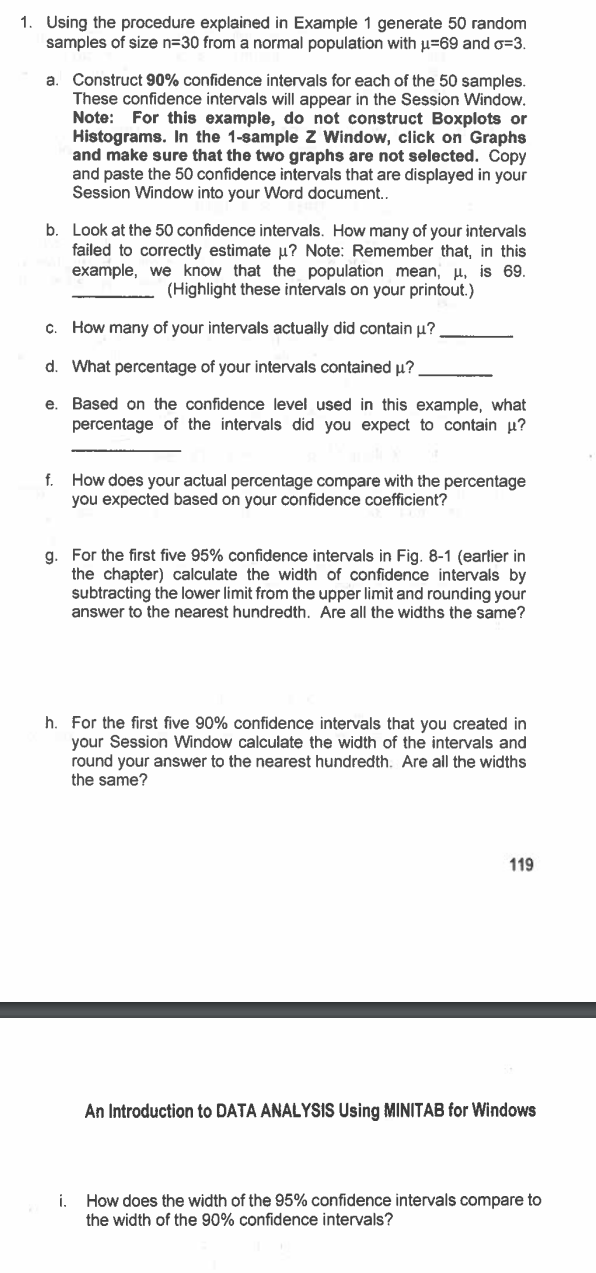
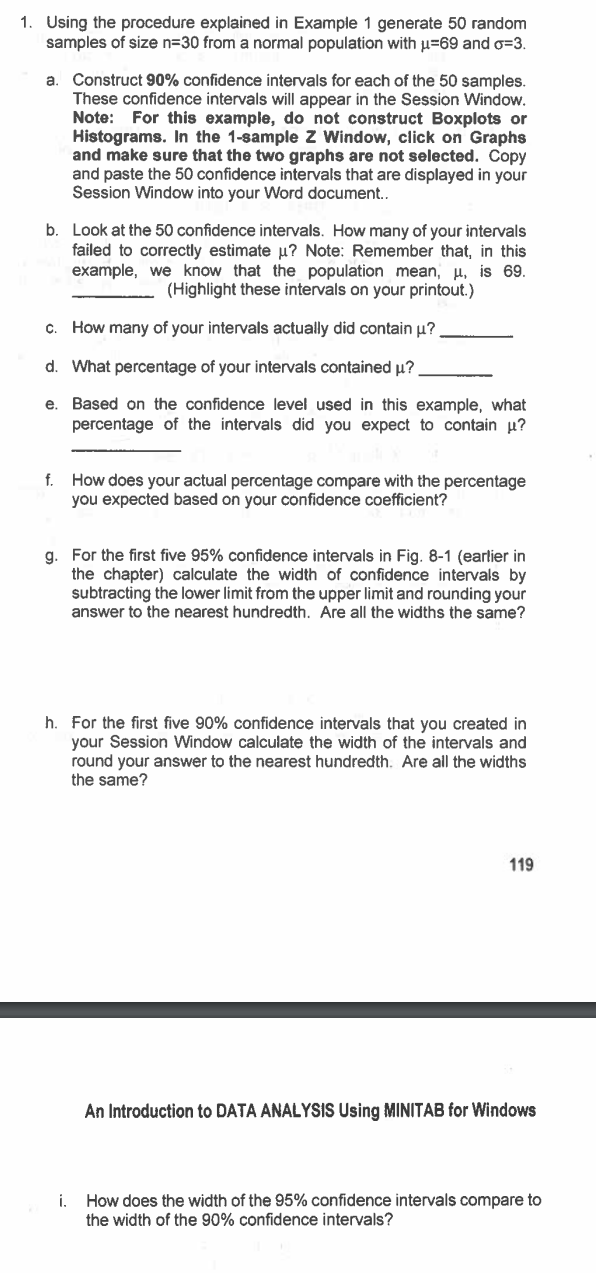
1. Using the procedure explained in Example 1 generate 50 random samples of size r1=30 from a normal population with p=69 and o=3. Construct 90% condence intervals for each or the 50 samples. These condence intervals will appear in the Session Window. Note: For this example, do not construct Boxplou or Histogram. In the 'l-umple Z Window, click on Graphs and make sure that the have graphs are not selected. Copy and paste the 50 condence intervals that are displayed in your Session Window into your Word document. Look at the 50 condence intervals How many of your intervals failed to correctly estimate [1.7 Note: Remember that, in this example. we know that the population mean. p. is 69. (Highlight these intervals on your printout) How many of your intervals actually did contain p? What percentage of your intervals contained p? Based on the condence level used in this example, what percentage of the intervals did you expect to contain [4? How does your actual percentage compare with the percentage you expected based on your condence ooetoient'? For the rst ve 95% condence intervals in Fig. 8-1 (earlier in the chapter) calculate the width of condence intervals by subtracting the lower limit from the upper limit and rounding your answer to the nearest hundredth. Are all the widths the same? For the rst ve 90% condence intervals that you created in your Session Wndow calculate the width of the intervals and round your answer to the nearest hundredth. Are all the widths the same? 119 An Introduction to DATA ANALYstS Using tilltilTAB tor Windows How does the width of the 95% condence intervals compare to the width of the 90% condence intervals
Step by Step Solution
There are 3 Steps involved in it

Get step-by-step solutions from verified subject matter experts
 Study Help