



Question: 1- When an inductor is attached to a charged capacitor with little resistance between them, what determines the frequency that the voltage and current will
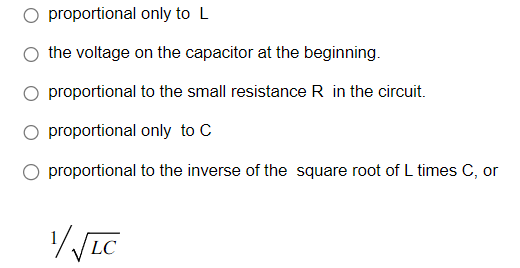
1- When an inductor is attached to a charged capacitor with little resistance between them, what determines the frequency that the voltage and current will oscillate in the simple circuit? The frequency is
![L times C, or LCPick those that apply. C] "he emitter. symbolized](https://dsd5zvtm8ll6.cloudfront.net/si.experts.images/questions/2024/09/66f6ae2d4b417_47766f6ae2d39be4.jpg)
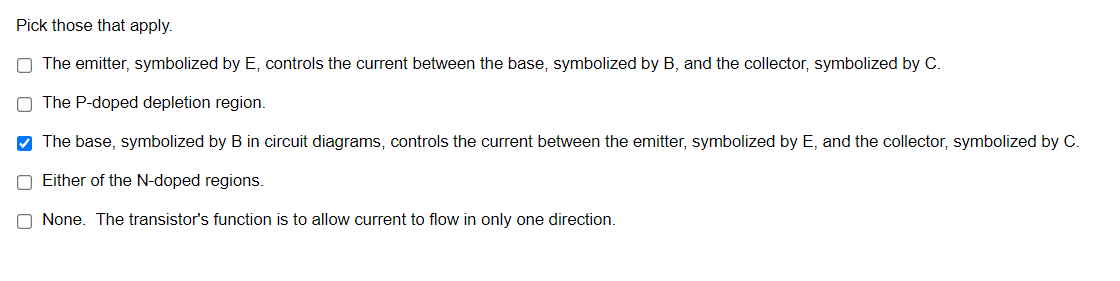
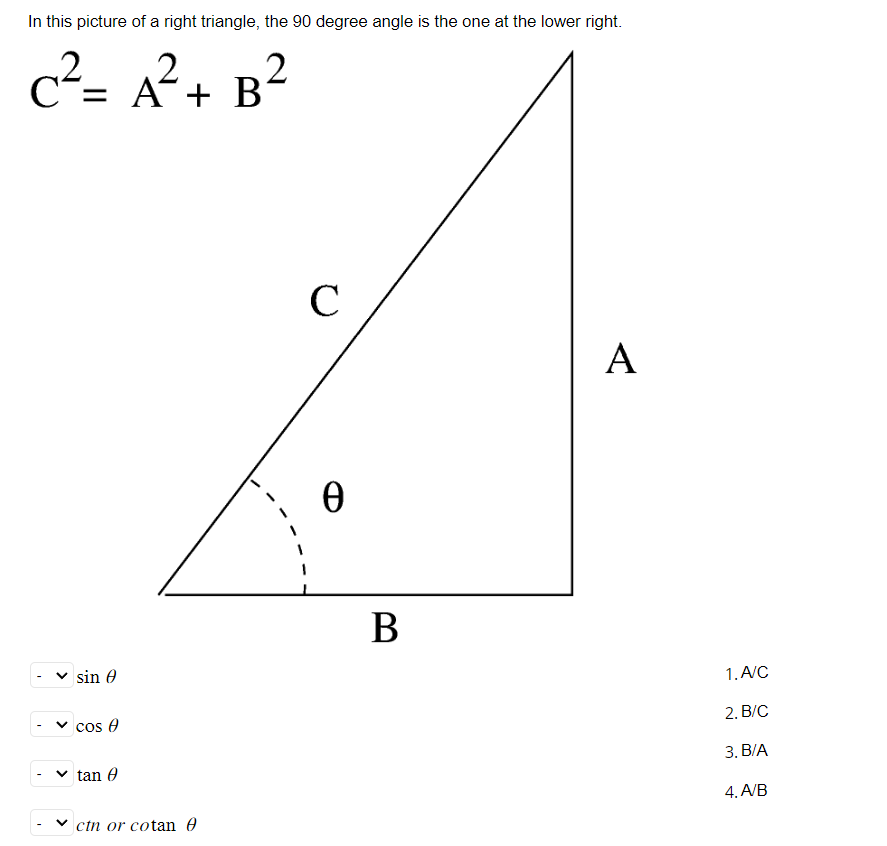
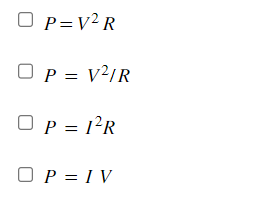
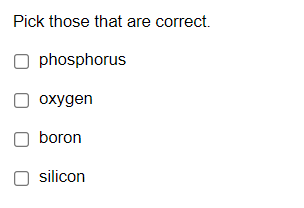
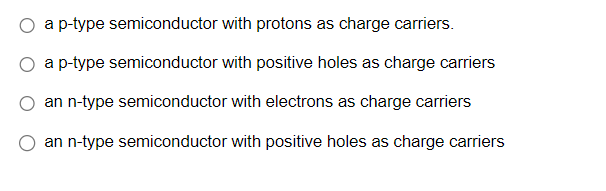
O proportional only to L O the voltage on the capacitor at the beginning. O proportional to the small resistance R in the circuit. O proportional only to C O proportional to the inverse of the square root of L times C, or LCPick those that apply. C] "he emitter. symbolized by E, controls the current between the base, symbolized by B, and the collector, symbolized by C. C] "he Pdoped depletion region. "he base, symbolized by B in circuit diagrams, controls the current between the emitter, symbolized by E. and the collector, symbolized by C. C] Either ofthe N-doped regions. C] None. The transistor's function is to allow current to ow in only one direction. In this picture of a right triangle, the 90 degree angle is the one at the lower right. C2= A2 + B2 C A B - v sin 9 1. A/C 2. B/C cos e 3. B/A tan A 4. A/B - ctn or cotan eO P = V2R O P = V2/R P = 12R OP = IV\fO a p-type semiconductor with protons as charge carriers. O a p-type semiconductor with positive holes as charge carriers O an n-type semiconductor with electrons as charge carriers O an n-type semiconductor with positive holes as charge carriersCoulomb's Law is an inverse square law in which the electric eld is along a line to the source charge and given by E = k qty? C, with the usual meaning of ke as a constant determined by units: q the source charge, and rthe distance to that charge. When you know the electric field. how do you find the force on a charge q? 'he force is Er2 "he force is d: "he force is the same as the field "he force is Er'r2 OOOOO 'he force depends on dim also
Step by Step Solution
There are 3 Steps involved in it

Get step-by-step solutions from verified subject matter experts