







Question: 1. Would you describe Zuckerbergs as having a reflexive, reflective, or consistent decision-making style? 2. How do Mark Zuckerbergs values, self-concept, and ethics affect his
 1. Would you describe Zuckerbergs as having a reflexive, reflective, or consistent decision-making style?
2. How do Mark Zuckerbergs values, self-concept, and ethics affect his life and leadership on Facebook?
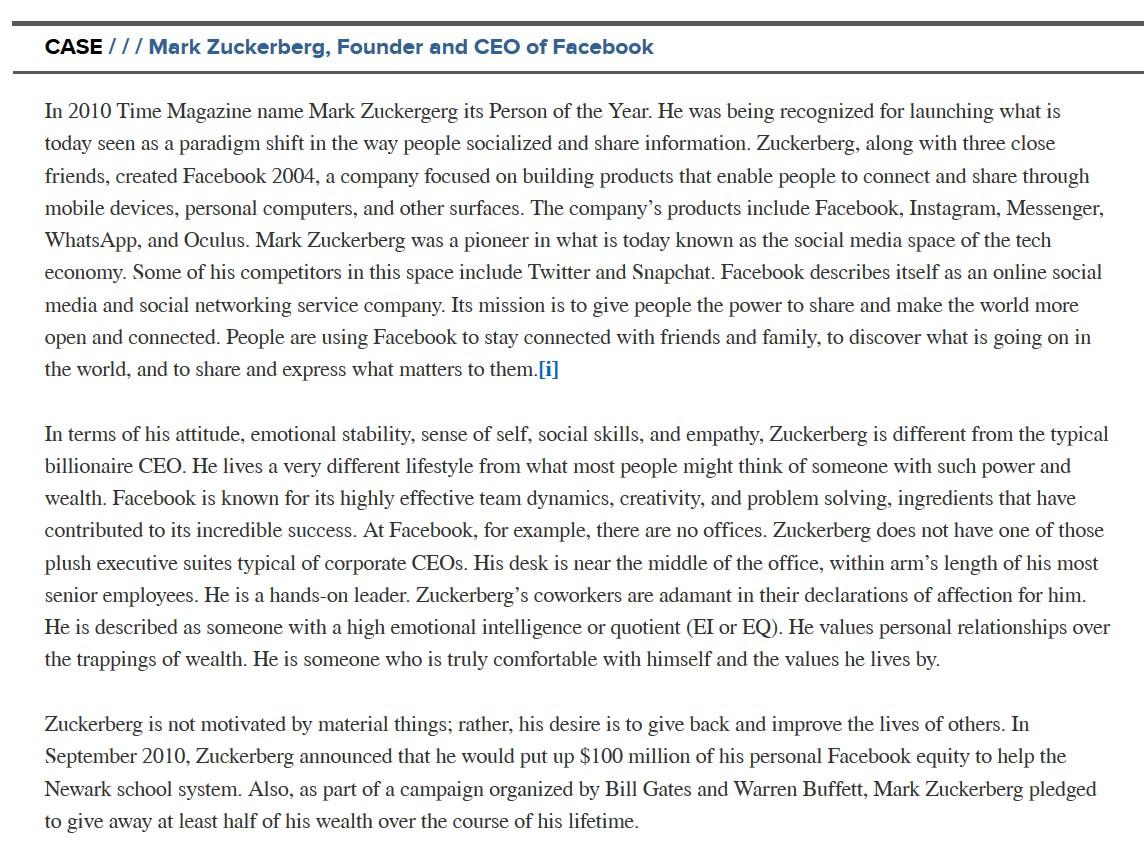
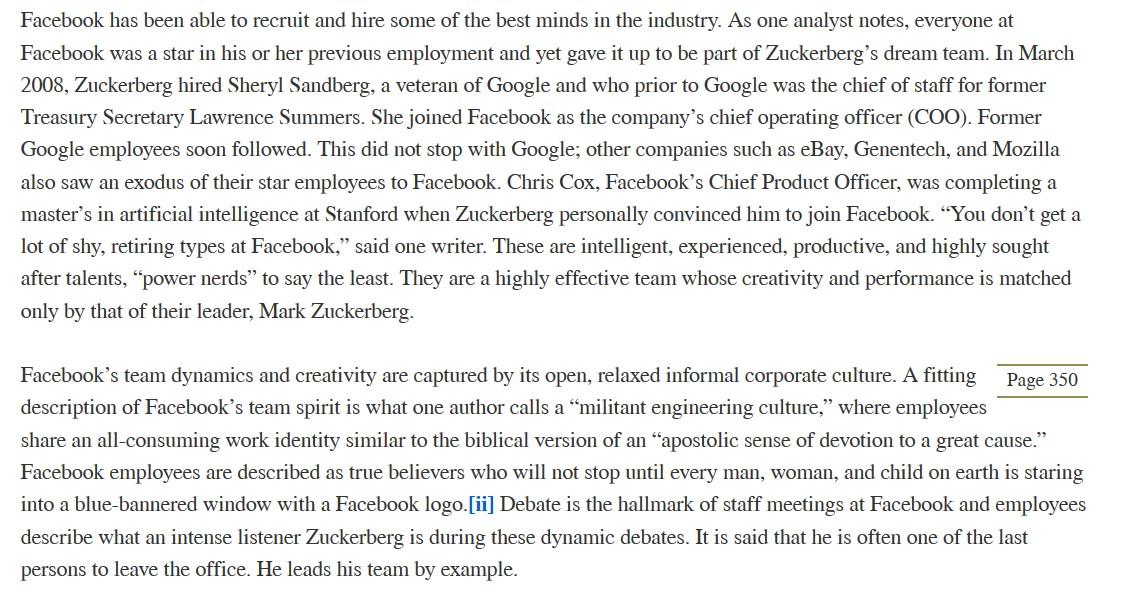
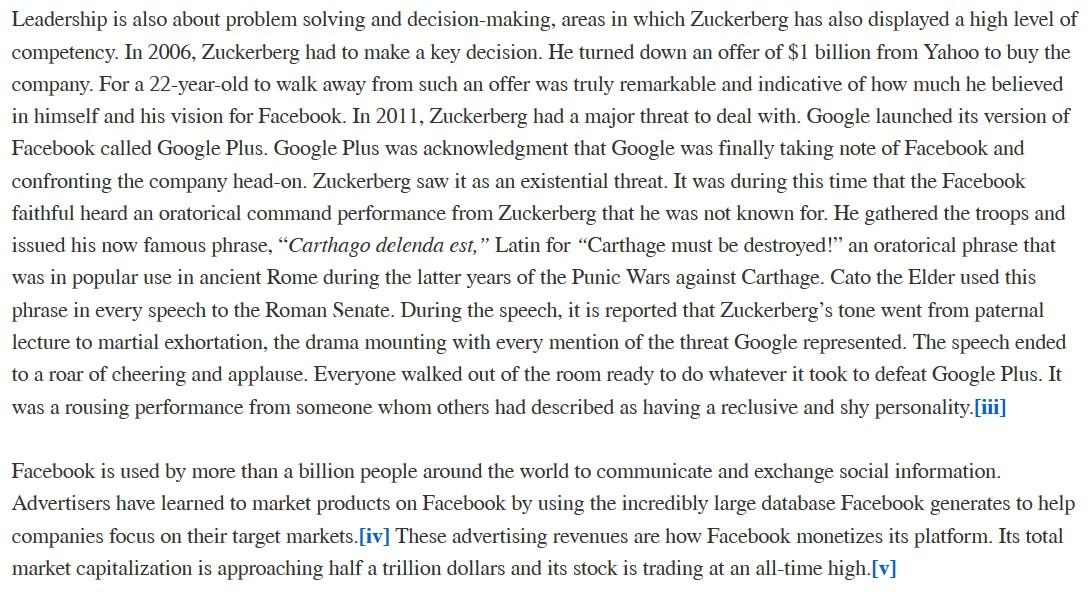
CASE /// Mark Zuckerberg, Founder and CEO of Facebook In 2010 Time Magazine name Mark Zuckergerg its Person of the Year. He was being recognized for launching what is today seen as a paradigm shift in the way people socialized and share information. Zuckerberg, along with three close friends, created Facebook 2004, a company focused on building products that enable people to connect and share through mobile devices, personal computers, and other surfaces. The company's products include Facebook, Instagram, Messenger, WhatsApp, and Oculus. Mark Zuckerberg was a pioneer in what is today known as the social media space of the tech economy. Some of his competitors in this space include Twitter and Snapchat. Facebook describes itself as an online social media and social networking service company. Its mission is to give people the power to share and make the world more open and connected. People are using Facebook to stay connected with friends and family, to discover what is going on in the world, and to share and express what matters to them.[i] In terms of his attitude, emotional stability, sense of self, social skills, and empathy, Zuckerberg is different from the typical billionaire CEO. He lives a very different lifestyle from what most people might think of someone with such power and wealth. Facebook is known for its highly effective team dynamics, creativity, and problem solving, ingredients that have contributed to its incredible success. At Facebook, for example, there are no offices. Zuckerberg does not have one of those plush executive suites typical of corporate CEOs. His desk is near the middle of the office, within arm's length of his most senior employees. He is a hands-on leader. Zuckerberg's coworkers are adamant in their declarations of affection for him. a He is described as someone with a high emotional intelligence or quotient (EI or EQ). He values personal relationships over the trappings of wealth. He is someone who is truly comfortable with himself and the values he lives by. Zuckerberg is not motivated by material things, rather, his desire is to give back and improve the lives of others. In September 2010, Zuckerberg announced that he would put up $100 million of his personal Facebook equity to help the Newark school system. Also, as part of a campaign organized by Bill Gates and Warren Buffett, Mark Zuckerberg pledged to give away at least half of his wealth over the course of his lifetime. Facebook has been able to recruit and hire some of the best minds in the industry. As one analyst notes, everyone at Facebook was a star in his or her previous employment and yet gave it up to be part of Zuckerberg's dream team. In March 2008, Zuckerberg hired Sheryl Sandberg, a veteran of Google and who prior to Google was the chief of staff for former Treasury Secretary Lawrence Summers. She joined Facebook as the company's chief operating officer (COO). Former Google employees soon followed. This did not stop with Google; other companies such as eBay, Genentech, and Mozilla also saw an exodus of their star employees to Facebook. Chris Cox, Facebook's Chief Product Officer, was completing a master's in artificial intelligence at Stanford when Zuckerberg personally convinced him to join Facebook. You don't get a lot of shy, retiring types at Facebook, said one writer. These are intelligent, experienced, productive, and highly sought after talents, power nerds to say the least. They are a highly effective team whose creativity and performance is matched only by that of their leader, Mark Zuckerberg. Facebook's team dynamics and creativity are captured by its open, relaxed informal corporate culture. A fitting Page 350 description of Facebook's team spirit is what one author calls a militant engineering culture," where employees share an all-consuming work identity similar to the biblical version of an apostolic sense of devotion to a great cause." Facebook employees are described as true believers who will not stop until every man, woman, and child on earth is staring into a blue-bannered window with a Facebook logo.[ii] Debate is the hallmark of staff meetings at Facebook and employees describe what an intense listener Zuckerberg is during these dynamic debates. It is said that he is often one of the last persons to leave the office. He leads his team by example. Leadership is also about problem solving and decision-making, areas in which Zuckerberg has also displayed a high level of competency. In 2006, Zuckerberg had to make a key decision. He turned down an offer of $1 billion from Yahoo to buy the company. For a 22-year-old to walk away from such an offer was truly remarkable and indicative of how much he believed in himself and his vision for Facebook. In 2011, Zuckerberg had a major threat to deal with. Google launched its version of Facebook called Google Plus. Google Plus was acknowledgment that Google was finally taking note of Facebook and confronting the company head-on. Zuckerberg saw it as an existential threat. It was during this time that the Facebook faithful heard an oratorical command performance from Zuckerberg that he was not known for. He gathered the troops and issued his now famous phrase, Carthago delenda est, Latin for "Carthage must be destroyed!" an oratorical phrase that was in popular use in ancient Rome during the latter years of the Punic Wars against Carthage. Cato the Elder used this phrase in every speech to the Roman Senate. During the speech, it is reported that Zuckerberg's tone went from paternal lecture to martial exhortation, the drama mounting with every mention of the threat Google represented. The speech ended to a roar of cheering and applause. Everyone walked out of the room ready to do whatever it took to defeat Google Plus. It was a rousing performance from someone whom others had described as having a reclusive and shy personality.[iii] Facebook is used by more than a billion people around the world to communicate and exchange social information. Advertisers have learned to market products on Facebook by using the incredibly large database Facebook generates to help companies focus on their target markets. [iv] These advertising revenues are how Facebook monetizes its platform. Its total market capitalization is approaching half a trillion dollars and its stock is trading at an all-time high.[v]Step by Step Solution
There are 3 Steps involved in it
1 Expert Approved Answer
Step: 1 Unlock

Question Has Been Solved by an Expert!
Get step-by-step solutions from verified subject matter experts
Step: 2 Unlock
Step: 3 Unlock
 Study Help