







Question: 2 . 1 . 3 1 . 2 Finding the Optimal Value of K for KNN The choice of ' K ' in K -
Finding the Optimal Value of for KNN
The choice of K in KNearest Neighbors KNN significantly affects the model's ability to generalize well from the training data to unseen data. This task
focuses on identifying the optimal that achieves a balance between overfitting and underfitting.
Objective:
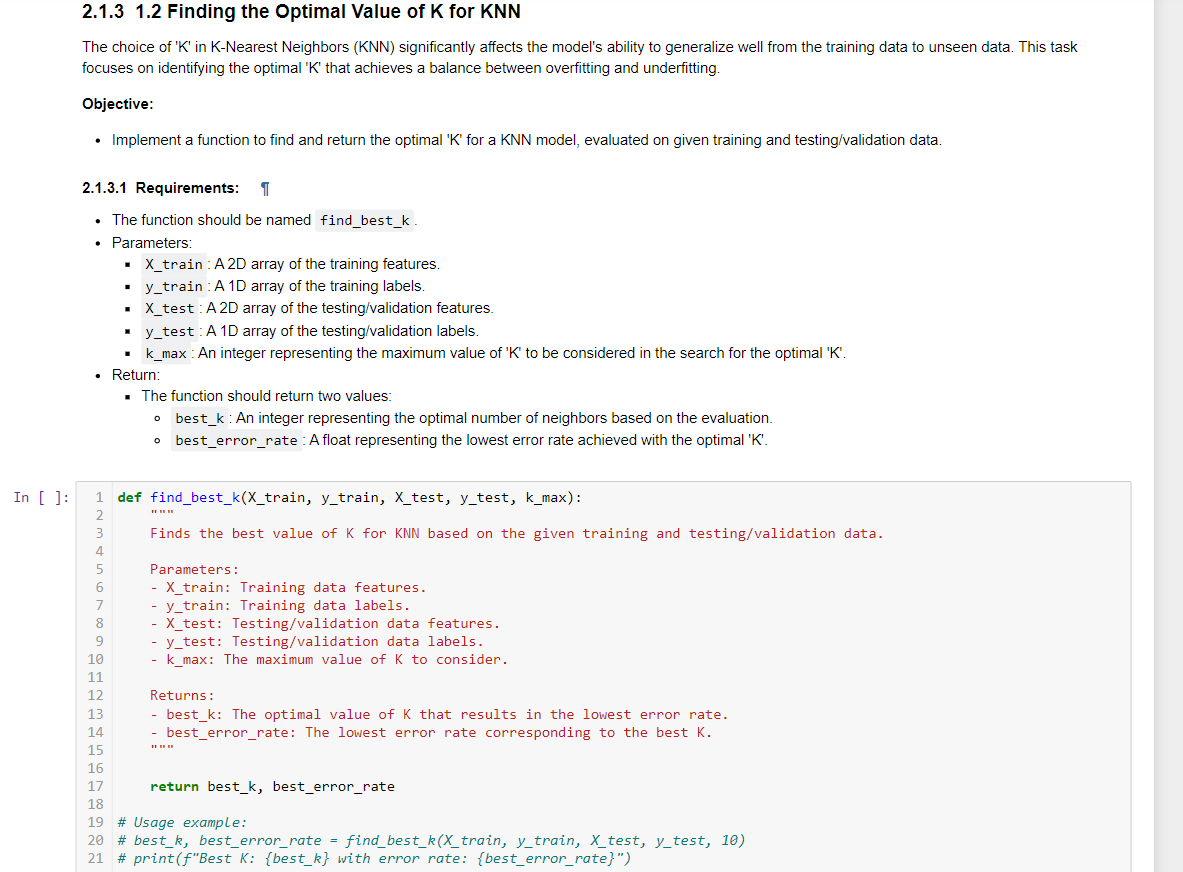
Implement a function to find and return the optimal K for a KNN model, evaluated on given training and testingvalidation data.
Requirements:
The function should be named findbestk
Parameters:
Xtrain : A D array of the training features.
ytrain : A D array of the training labels.
Xtest : A D array of the testingvalidation features.
ytest : A D array of the testingvalidation labels.
kmax : An integer representing the maximum value of to be considered in the search for the optimal
Return:
The function should return two values:
bestk: An integer representing the optimal number of neighbors based on the evaluation.
besterrorrate : A float representing the lowest error rate achieved with the optimal
In : def findbestkXtrain, ytrain, Xtest, ytest, kmax:
Finds the best value of for KNN based on the given training and testingvalidation data.
Parameters:
Xtrain: Training data features.
ytrain: Training data labels.
Xtest: Testingvalidation data features.
ytest: Testingvalidation data labels.
kmax: The maximum value of to consider.
Returns:
bestk: The optimal value of that results in the lowest error rate.
besterrorrate: The lowest error rate corresponding to the best K
return bestk besterrorrate
# Usage example:
# bestk besterrorrate findbest test, :test,
# print : best with error rate: besterrorrate
Step by Step Solution
There are 3 Steps involved in it
1 Expert Approved Answer
Step: 1 Unlock

Question Has Been Solved by an Expert!
Get step-by-step solutions from verified subject matter experts
Step: 2 Unlock
Step: 3 Unlock
 Study Help