







Question: 3 ) ( 3 0 pts ) In a hypothetical system with 2 5 6 bytes of main memory, 6 4 bytes of cache, blocks
pts In a hypothetical system with bytes of main memory, bytes of cache, blocks of byte size, a way associative placement policy and an LRU replacement policy for each set, determine, for each block in cache,
a the block address in decimal representation of the memory block stored in it and
b the content of the age register priority counter of it at the end of each memory access shown in the following address sequence generated by CPU a very unlikely case, of course
xb xf x xd x x x xd xa x x x xae xf xa
Also determine the hit ratio from this sequence of accesses.
Note: in order to start finding the location to place into an empty set in cache, make sure that age registers of all blocks in each set are properly initialized; eg a way set would have the counters initialized as and whereas a way set would have the counters initialized as and and so on Hint: the first address x b would have its block address equal to in decimal value to be placed into your target cache block in your solution.
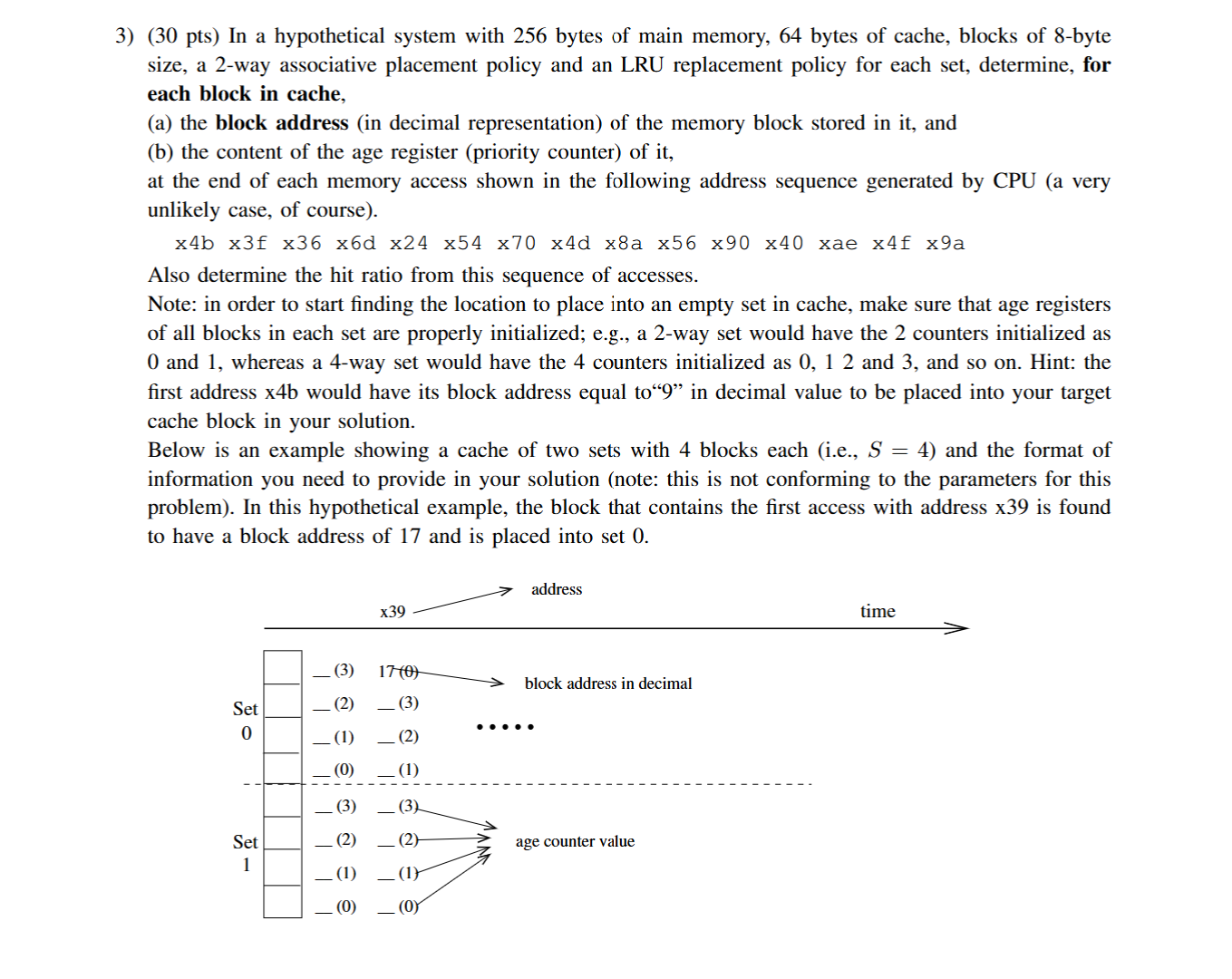
Below is an example showing a cache of two sets with blocks each ie S and the format of information you need to provide in your solution note: this is not conforming to the parameters for this problem In this hypothetical example, the block that contains the first access with address x is found to have a block address of and is placed into set
Step by Step Solution
There are 3 Steps involved in it
1 Expert Approved Answer
Step: 1 Unlock

Question Has Been Solved by an Expert!
Get step-by-step solutions from verified subject matter experts
Step: 2 Unlock
Step: 3 Unlock
 Study Help