







Question: 3. Consider the following Python code, which is part of a game: class Spell: 3 def __init__(self, name, incantation): self.name = name self. incantation -
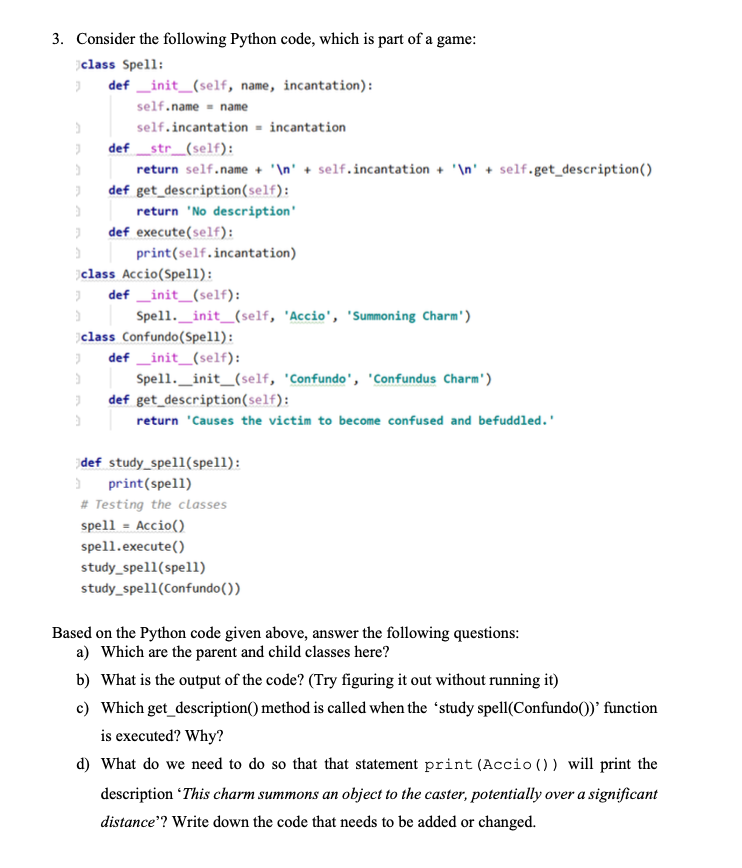
3. Consider the following Python code, which is part of a game: class Spell: 3 def __init__(self, name, incantation): self.name = name self. incantation - incantation def _str_(self): return self.name + ' ' + self.incantation + ' ' + self.get_description() def get_description(self): return 'No description def execute(self): print(self.incantation) class Accio(Spell): def __init__(self): Spell._init__(self, 'Accio', 'Summoning Charm') class Confundo (Spell): def __init_(self): Spell._init__(self, 'Confundo', 'Confundus Charm') def get_description(self): > return 'Causes the victim to become confused and befuddled.' def study_spell(spell): print(spell) # Testing the classes spell - Accio) spell.execute() study_spell(spell) study_spell(Confundo()) Based on the Python code given above, answer the following questions: a) Which are the parent and child classes here? b) What is the output of the code? (Try figuring it out without running it) c) Which get_description() method is called when the study spell(Confundo())' function is executed? Why? d) What do we need to do so that that statement print (Accio()) will print the description This charm summons an object to the caster, potentially over a significant distance'? Write down the code that needs to be added or changed
Step by Step Solution
There are 3 Steps involved in it

Get step-by-step solutions from verified subject matter experts
 Study Help