







Question: (3.) In the bus repair queue example from lecture there were two buses that each broke down independently at rate , and there was
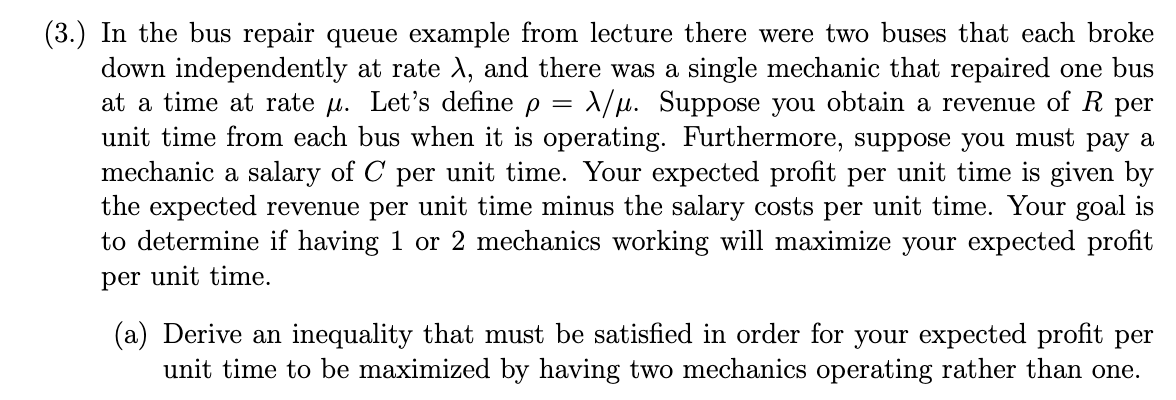
(3.) In the bus repair queue example from lecture there were two buses that each broke down independently at rate , and there was a single mechanic that repaired one bus at a time at rate . Let's define p = X/. Suppose you obtain a revenue of R per unit time from each bus when it is operating. Furthermore, suppose you must pay a mechanic a salary of C per unit time. Your expected profit per unit time is given by the expected revenue per unit time minus the salary costs per unit time. Your goal is to determine if having 1 or 2 mechanics working will maximize your expected profit per unit time. (a) Derive an inequality that must be satisfied in order for your expected profit per unit time to be maximized by having two mechanics operating rather than one.
Step by Step Solution
There are 3 Steps involved in it

Get step-by-step solutions from verified subject matter experts
 Study Help