







Question: 4. Using the graphical polygon method, neatly construct a graphical solution for the three force vectors. Measure the resultant in magnitude and direction. Record
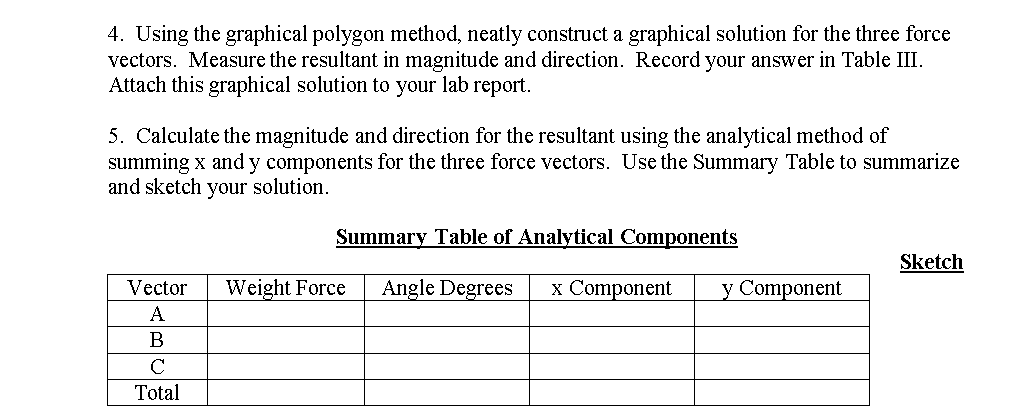
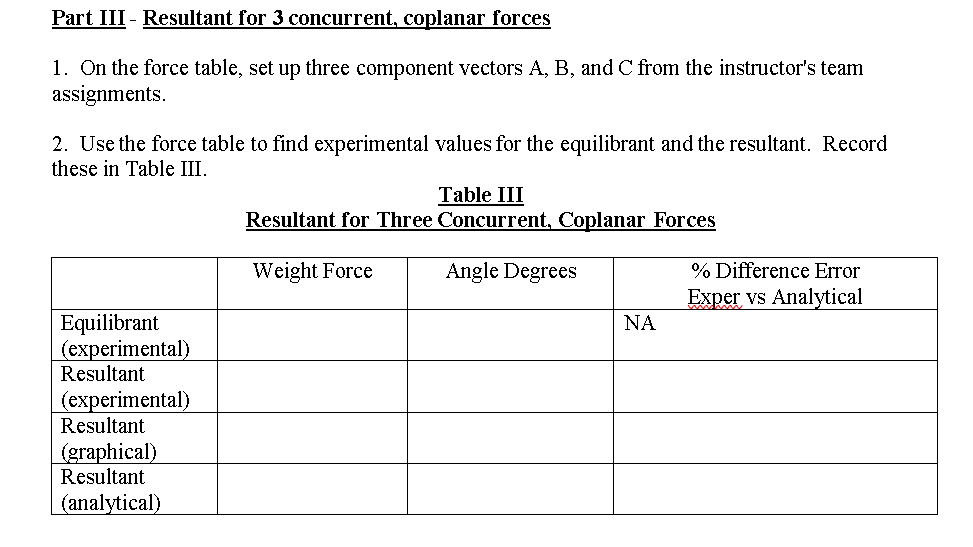
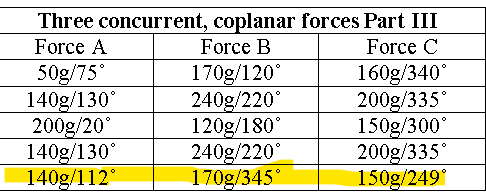
4. Using the graphical polygon method, neatly construct a graphical solution for the three force vectors. Measure the resultant in magnitude and direction. Record your answer in Table III. Attach this graphical solution to your lab report. 5. Calculate the magnitude and direction for the resultant using the analytical method of summing x and y components for the three force vectors. Use the Summary Table to summarize and sketch your solution. Summary Table of Analytical Components Vector A Weight Force Angle Degrees x Component B C Total Sketch y Component Part III - Resultant for 3 concurrent, coplanar forces 1. On the force table, set up three component vectors A, B, and C from the instructor's team assignments. 2. Use the force table to find experimental values for the equilibrant and the resultant. Record these in Table III. Table III Resultant for Three Concurrent, Coplanar Forces Weight Force Equilibrant (experimental) Resultant (experimental) Resultant (graphical) Resultant (analytical) Angle Degrees % Difference Error Exper vs Analytical NA Three concurrent, coplanar forces Part III Force A Force B Force C 50g/75 170g/120 160g/340 140g/130 240g/220 200g/335 200g/20 120g/180 150g/300 140g/130 240g/220 200g/335 140g/112 170g/345 150g/249
Step by Step Solution
There are 3 Steps involved in it

Get step-by-step solutions from verified subject matter experts
 Study Help