





Question: 7. Pay-for-performance programs: a. result in negligible increases in output. b. tie rewards to firm profitability. c. are easy to implement and measure. d. tie
7. Pay-for-performance programs: a. result in
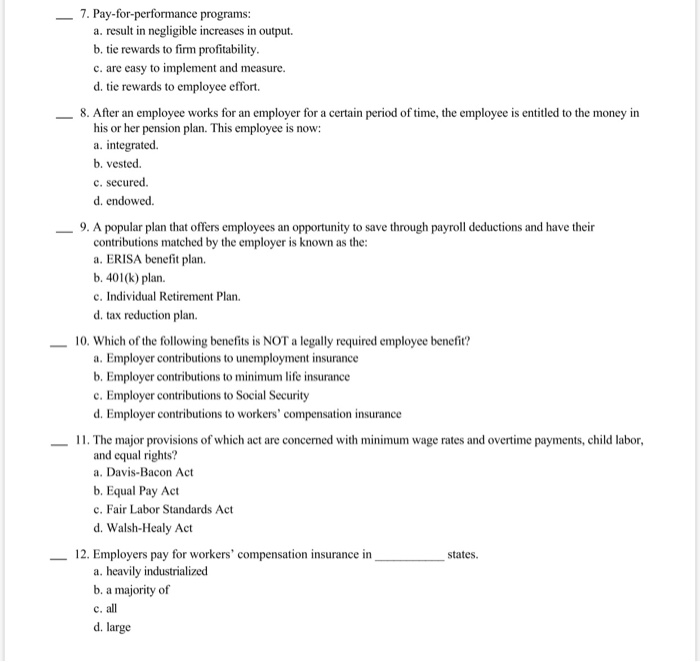
7. Pay-for-performance programs: a. result in negligible increases in output. b. tie rewards to firm profitability. c. are easy to implement and measure. d. tie rewards to employee effort. 8. After an employee works for an employer for a certain period of time, the employee is entitled to the money in his or her pension plan. This employee is now: a integrated b. vested. c. secured. d. endowed. 9. A popular plan that offers employees an opportunity to save through payroll deductions and have their contributions matched by the employer is known as the: a. ERISA benefit plan. b. 401(k) plan. c. Individual Retirement Plan. d. tax reduction plan. 10. Which of the following benefits is NOT a legally required employee benefit? a. Employer contributions to unemployment insurance b. Employer contributions to minimum life insurance c. Employer contributions to Social Security d. Employer contributions to workers' compensation insurance 11. The major provisions of which act are concerned with minimum wage rates and overtime payments, child labor, and equal rights? a. Davis-Bacon Act b. Equal Pay Act c. Fair Labor Standards Act d. Walsh-Healy Act states. 12. Employers pay for workers' compensation insurance in a. heavily industrialized b. a majority of c. all d. large

Step by Step Solution

There are 3 Steps involved in it

1 Expert Approved Answer
Step: 1 Unlock blur-text-image

Question Has Been Solved by an Expert!

Get step-by-step solutions from verified subject matter experts

Step: 2 Unlock
Step: 3 Unlock

Students Have Also Explored These Related General Management Questions!