







Question: A. Complete the table with the headings, subheadings, and visuals that can be seen in the text. Headings Subheadings Titles of Visuals B. Fill the
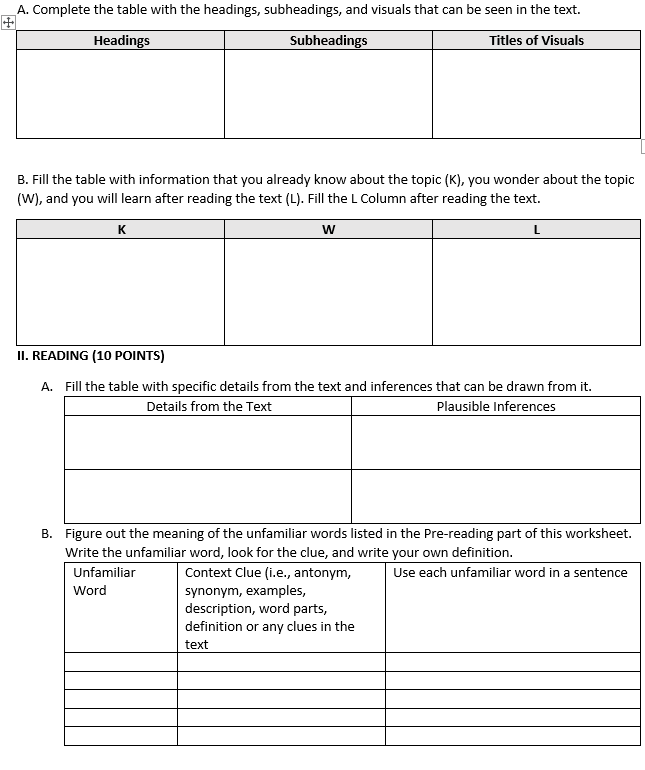
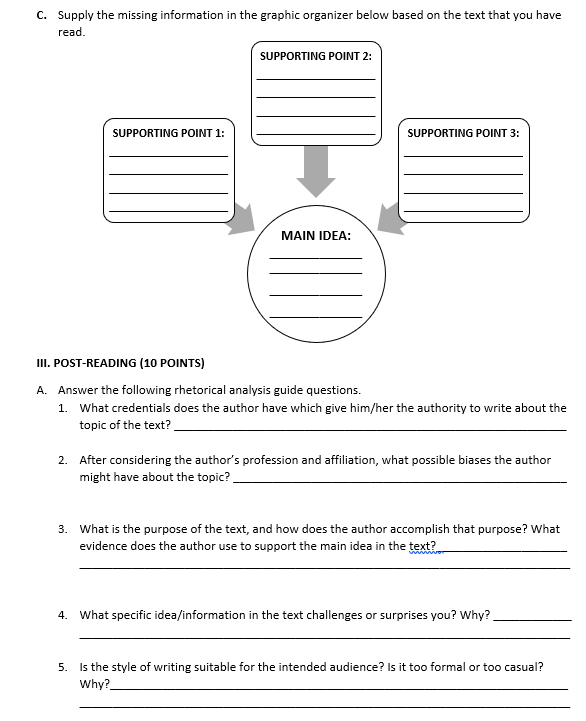
A. Complete the table with the headings, subheadings, and visuals that can be seen in the text. Headings Subheadings Titles of Visuals B. Fill the table with information that you already know about the topic (K), you wonder about the topic (W), and you will learn after reading the text (L). Fill the L Column after reading the text. K W L II. READING (10 POINTS) A. Fill the table with specific details from the text and inferences that can be drawn from it. Details from the Text Plausible Inferences B. Figure out the meaning of the unfamiliar words listed in the Pre-reading part of this worksheet. Write the unfamiliar word, look for the clue, and write your own definition. Unfamiliar Context Clue (i.e., antonym, Use each unfamiliar word in a sentence Word synonym, examples, description, word parts, definition or any clues in the textC. Supply the missing information in the graphic organizer below based on the text that you have read. SUPPORTING POINT 2: SUPPORTING POINT 1: SUPPORTING POINT 3: MAIN IDEA: III. POST-READING (10 POINTS) A. Answer the following rhetorical analysis guide questions. 1. What credentials does the author have which give him/her the authority to write about the topic of the text? 2. After considering the author's profession and affiliation, what possible biases the author might have about the topic? 3. What is the purpose of the text, and how does the author accomplish that purpose? What evidence does the author use to support the main idea in the text? 4. What specific idea/information in the text challenges or surprises you? Why? 5. Is the style of writing suitable for the intended audience? Is it too formal or too casual? Why
Step by Step Solution
There are 3 Steps involved in it

Get step-by-step solutions from verified subject matter experts
 Study Help