







Question: A process that is considered to be in control measures an ingredient in ounces. Below are the last 10 samples (each of size n =

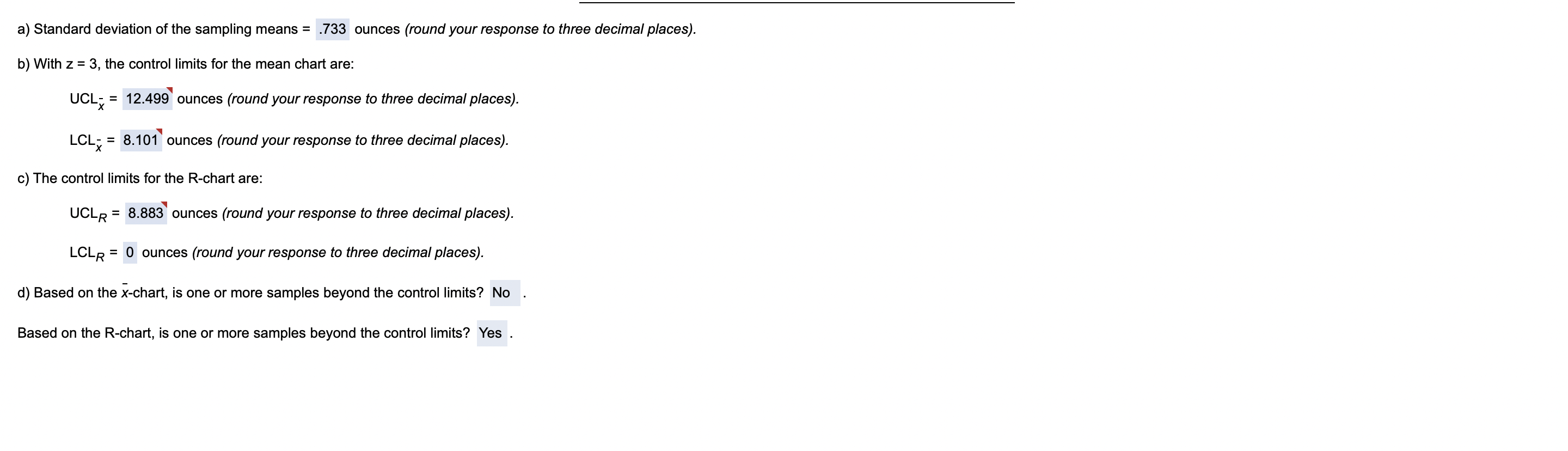 A process that is considered to be in control measures an ingredient in ounces. Below are the last 10 samples (each of size n = 5) taken. The population process standard deviation is 1.64. Samples 1 2 3 4 5 6 7 8 9 10 11 13 12 9 12 9 9 12 8 10 9 11 9 9 9 11 12 11 9 13 9 12 10 12 10 9 10 7 12 9 9 13 9 10 10 13 8 9 12 8 11 11 8 10 9 10 10 8 10 13 Part 2
Step by Step Solution
There are 3 Steps involved in it
1 Expert Approved Answer
Step: 1 Unlock

Question Has Been Solved by an Expert!
Get step-by-step solutions from verified subject matter experts
Step: 2 Unlock
Step: 3 Unlock
 Study Help