







Question: A rm uses components A, B, and C to assemble a nal product F; see the bill of materials in Figure 2. 1. [5 marks]
A rm uses components A, B, and C to assemble a nal product F; see the bill of materials in Figure 2.
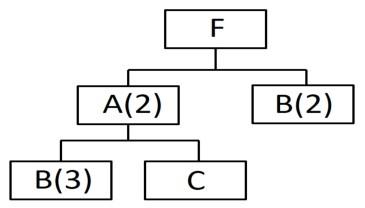
1. [5 marks] You are required to ll in Table 1 to prepare a master schedule for product F. Each time when the rm assembles the product, the rm always uses the xed lot size rule to make 50 units of F. The rms assembly time for product F is 1 week. The beginning inventory for F is 72 units; the forecast and promised customer orders for this end item are provided in Table 1.
| Week | 0 | 1 | 2 | 3 | 4 | 5 | 6 | 7 | 8 |
| Forecast | 30 | 30 | 25 | 25 | 40 | 40 | 30 | 30 | |
| Customer orders (committed) | 28 | 32 | 20 | 16 | 10 | 5 | |||
| Projected on-hand inventory | 72 | ||||||||
| Net inventory before MPS | |||||||||
| MPS Receipt | |||||||||
| MPS Start | |||||||||
| Available-to-promise inventory (uncommitted) |
Table 1: MPS table for end item F in Question AQ5.
2. [8 marks] Use your master schedule in Table 1 to develop material requirements plans (MRPs) for components A and B. Note that you are required to nish the MRP tablei.e., Table 2 on page 7in which you can nd the present on-hand quantity (i.e., the beginning inventory), lead time, lot-size policy, and scheduled receipts for each of components A and B.
| Week | 1 | 2 | 3 | 4 | 5 | 6 | 7 | 8 |
| MPS | ||||||||
| Component A | Lot-sizing policy: xed period of two; Lead time: 2 weeks; Present on hand: 68; Scheduled receipts: 100 units in Week 1. | |||||||
| Gross Requirement | ||||||||
| Scheduled Receipts | ||||||||
| Projected On Hand | ||||||||
| Net Requirements | ||||||||
| PO Receipts | ||||||||
| PO Releases | ||||||||
| Component B | Lot-sizing policy: lot-for-lot; Lead time: 2 weeks; Present on hand: 310; Scheduled receipts: 200 units in Week 2. | |||||||
| Gross Requirement | ||||||||
| Scheduled Receipts | ||||||||
| Projected On Hand | ||||||||
| Net Requirements | ||||||||
| PO Receipts | ||||||||
| PO Releases | ||||||||
Table 2: MRP table for Question AQ5.
F A(2) B(2) B(3) F A(2) B(2) B(3)Step by Step Solution
There are 3 Steps involved in it

Get step-by-step solutions from verified subject matter experts
 Study Help