







Question: Consider a 2-sector model with labour mobility across the sector as explained in Lecture video 10. In sector 1, production function is given by
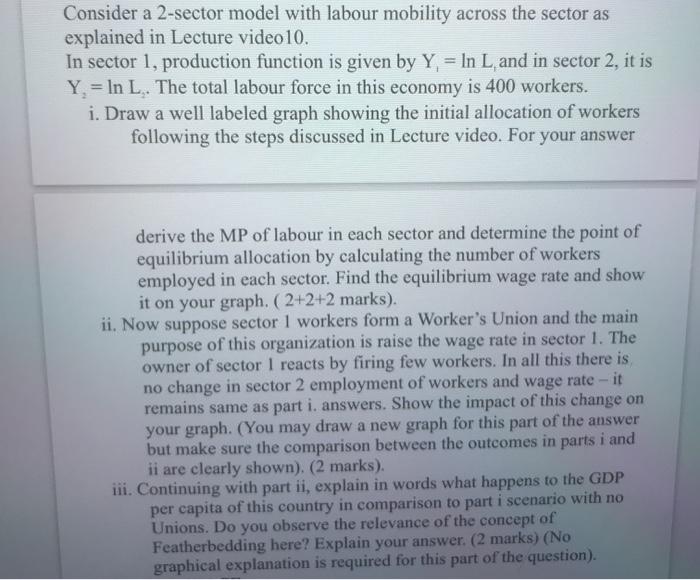
Consider a 2-sector model with labour mobility across the sector as explained in Lecture video 10. In sector 1, production function is given by Y = In L, and in sector 2, it is Y = In L. The total labour force in this economy is 400 workers. i. Draw a well labeled graph showing the initial allocation of workers following the steps discussed in Lecture video. For your answer derive the MP of labour in each sector and determine the point of equilibrium allocation by calculating the number of workers employed in each sector. Find the equilibrium wage rate and show it on your graph. (2+2+2 marks). ii. Now suppose sector 1 workers form a Worker's Union and the main purpose of this organization is raise the wage rate in sector 1. The owner of sector 1 reacts by firing few workers. In all this there is no change in sector 2 employment of workers and wage rate - it remains same as part i. answers. Show the impact of this change on your graph. (You may draw a new graph for this part of the answer but make sure the comparison between the outcomes in parts i and ii are clearly shown). (2 marks). iii. Continuing with part ii, explain in words what happens to the GDP per capita of this country in comparison to part i scenario with no Unions. Do you observe the relevance of the concept of Featherbedding here? Explain your answer. (2 marks) (No graphical explanation is required for this part of the question).
Step by Step Solution
3.49 Rating (146 Votes )
There are 3 Steps involved in it
i In a 2sector model with labour mobility the initial allocation of workers can be represented on a graph with the xaxis representing workers in secto... View full answer

Get step-by-step solutions from verified subject matter experts
 Study Help