







Question: Analysis of each subject (Recycling program, linen reuse program.......,training on green initiatives to employees)? Presenting Research about Eco-Friendly Practices Creating Charts to Emphasize Key Messages
Analysis of each subject (Recycling program, linen reuse program.......,training on green initiatives to employees)?
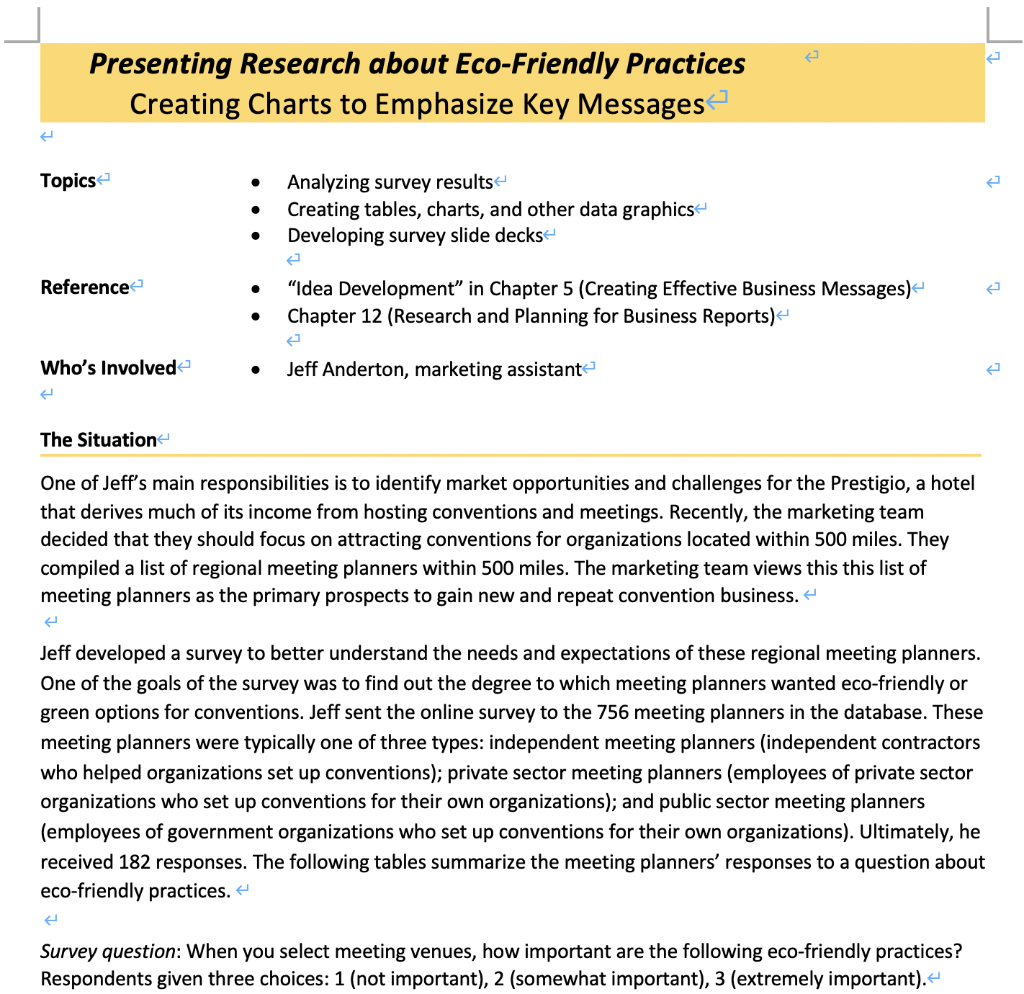
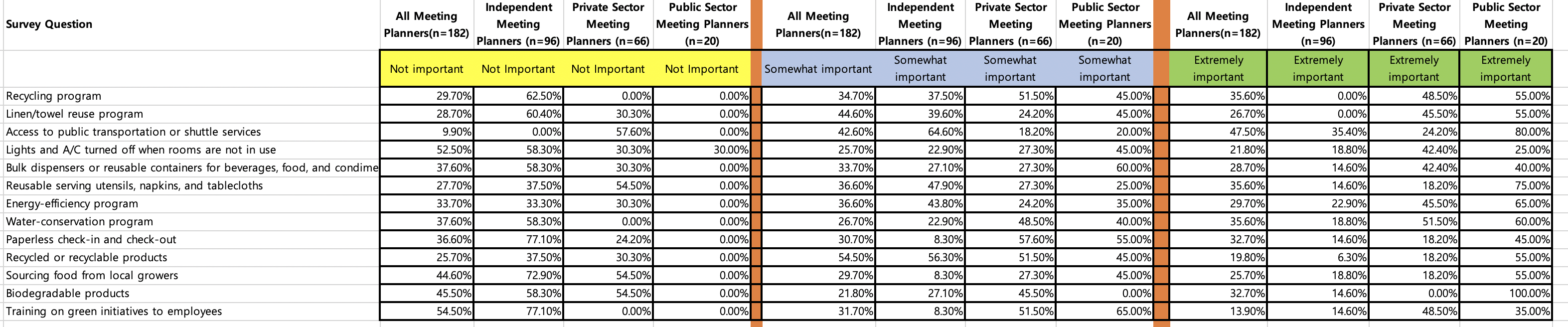
Presenting Research about Eco-Friendly Practices Creating Charts to Emphasize Key Messages Topics Analyzing survey results Creating tables, charts, and other data graphics Developing survey slide decks . Reference "Idea Development in Chapter 5 (Creating Effective Business Messages) Chapter 12 (Research and Planning for Business Reports) . Who's Involved Jeff Anderton, marketing assistant The Situation One of Jeff's main responsibilities is to identify market opportunities and challenges for the Prestigio, a hotel that derives much of its income from hosting conventions and meetings. Recently, the marketing team decided that they should focus on attracting conventions for organizations located within 500 miles. They compiled a list of regional meeting planners within 500 miles. The marketing team views this this list of meeting planners as the primary prospects to gain new and repeat convention business. Jeff developed a survey to better understand the needs and expectations of these regional meeting planners. One of the goals of the survey was to find out the degree to which meeting planners wanted eco-friendly or green options for conventions. Jeff sent the online survey to the 756 meeting planners in the database. These meeting planners were typically one of three types: independent meeting planners (independent contractors who helped organizations set up conventions); private sector meeting planners (employees of private sector organizations who set up conventions for their own organizations); and public sector meeting planners (employees of government organizations who set up conventions for their own organizations). Ultimately, he received 182 responses. The following tables summarize the meeting planners' responses to a question about eco-friendly practices. Survey question: When you select meeting venues, how important are the following eco-friendly practices? Respondents given three choices: 1 (not important), 2 (somewhat important), 3 (extremely important).- Survey Question All Meeting Planners(n=182) Independent Private Sector Meeting Meeting Planners (n=96) Planners (n=66) Public Sector Meeting Planners (n=20) All Meeting Planners(n=182) All Meeting Planners(n=182) Not important Not Important Not Important Not Important Somewhat important Extremely important 35.60% 26.70% 0.00% Independent Meeting Planners (n=96) Extremely important 0.00% 0.00% 35.40% 18.80% 14.60% 0.00% 0.00% 29.70% 28.70% 9.90% 52.50% 37.60% 62.50% 60.40% 0.00% 58.30% 58.30% 30.30% 57.60% 30.30% 30.30% Public Sector Meeting Planners (n=20) Somewhat important 45.00% 45.00% 20.00% 45.00% 60.00% 25.00% 35.00% 40.00% 34.70% 44.60% 42.60% 25.70% 33.70% 47.50% 0.00% 30.00% Independent Private Sector Meeting Meeting Planners (n=96) Planners (n=66) Somewhat Somewhat important important 37.50% 51.50% 39.60% 24.20% 64.60% 18.20% 22.90% 27.30% 27.10% 27.30% 47.90% 27.30% 43.80% 24.20% 22.90% 48.50% 8.30% 57.60% 56.30% 51.50% 8.30% 27.30% 27.10% 45.50% 8.30% 51.50% Recycling program Linen/towel reuse program Access to public transportation or shuttle services Lights and A/C turned off when rooms are not in use Bulk dispensers or reusable containers for beverages, food, and condime Reusable serving utensils, napkins, and tablecloths Energy-efficiency program Water-conservation program Paperless check-in and check-out Recycled or recyclable products Sourcing food from local growers Biodegradable products Training on green initiatives to employees 27.70% Private Sector Public Sector Meeting Meeting Planners (n=66) Planners (n=20) Extremely Extremely important important 48.50% 55.00% 45.50% 55.00% 24.20% 80.00% 42.40% 25.00% 42.40%) 40.00% 18.20% 75.00% 45.50% 65.00% 51.50% 60.00% 18.20% 45.00% 18.20% 55.00% 18.20% 55.00% 36.60% 14.60% 0.00% 0.00% 0.00% 37.50% 33.30% 58.30% 54.50% 30.30% 0.00% 33.70% 37.60% 22.90% 36.60% 26.70% 0.00% 21.80% 28.70% 35.60% 29.70% 35.60% 32.70% 19.80% 25.70% 32.70% 18.80% 36.60% 30.70% 77.10% 37.50% 72.90% 24.20% 30.30% 54.50% 0.00% 0.00% 25.70% 14.60% 6.30% 54.50% 29.70% 44.60% 0.00% 55.00% 45.00% 45.00% 0.00% 65.00% 58.30% 0.00% 21.80% 45.50% 54.50% 100.00% 18.80% 14.60% 14.60% 54.50% 0.00% 0.00% 48.50% 77.10% 0.00% 31.70% 13.90% 35.00% Presenting Research about Eco-Friendly Practices Creating Charts to Emphasize Key Messages Topics Analyzing survey results Creating tables, charts, and other data graphics Developing survey slide decks . Reference "Idea Development in Chapter 5 (Creating Effective Business Messages) Chapter 12 (Research and Planning for Business Reports) . Who's Involved Jeff Anderton, marketing assistant The Situation One of Jeff's main responsibilities is to identify market opportunities and challenges for the Prestigio, a hotel that derives much of its income from hosting conventions and meetings. Recently, the marketing team decided that they should focus on attracting conventions for organizations located within 500 miles. They compiled a list of regional meeting planners within 500 miles. The marketing team views this this list of meeting planners as the primary prospects to gain new and repeat convention business. Jeff developed a survey to better understand the needs and expectations of these regional meeting planners. One of the goals of the survey was to find out the degree to which meeting planners wanted eco-friendly or green options for conventions. Jeff sent the online survey to the 756 meeting planners in the database. These meeting planners were typically one of three types: independent meeting planners (independent contractors who helped organizations set up conventions); private sector meeting planners (employees of private sector organizations who set up conventions for their own organizations); and public sector meeting planners (employees of government organizations who set up conventions for their own organizations). Ultimately, he received 182 responses. The following tables summarize the meeting planners' responses to a question about eco-friendly practices. Survey question: When you select meeting venues, how important are the following eco-friendly practices? Respondents given three choices: 1 (not important), 2 (somewhat important), 3 (extremely important).- Survey Question All Meeting Planners(n=182) Independent Private Sector Meeting Meeting Planners (n=96) Planners (n=66) Public Sector Meeting Planners (n=20) All Meeting Planners(n=182) All Meeting Planners(n=182) Not important Not Important Not Important Not Important Somewhat important Extremely important 35.60% 26.70% 0.00% Independent Meeting Planners (n=96) Extremely important 0.00% 0.00% 35.40% 18.80% 14.60% 0.00% 0.00% 29.70% 28.70% 9.90% 52.50% 37.60% 62.50% 60.40% 0.00% 58.30% 58.30% 30.30% 57.60% 30.30% 30.30% Public Sector Meeting Planners (n=20) Somewhat important 45.00% 45.00% 20.00% 45.00% 60.00% 25.00% 35.00% 40.00% 34.70% 44.60% 42.60% 25.70% 33.70% 47.50% 0.00% 30.00% Independent Private Sector Meeting Meeting Planners (n=96) Planners (n=66) Somewhat Somewhat important important 37.50% 51.50% 39.60% 24.20% 64.60% 18.20% 22.90% 27.30% 27.10% 27.30% 47.90% 27.30% 43.80% 24.20% 22.90% 48.50% 8.30% 57.60% 56.30% 51.50% 8.30% 27.30% 27.10% 45.50% 8.30% 51.50% Recycling program Linen/towel reuse program Access to public transportation or shuttle services Lights and A/C turned off when rooms are not in use Bulk dispensers or reusable containers for beverages, food, and condime Reusable serving utensils, napkins, and tablecloths Energy-efficiency program Water-conservation program Paperless check-in and check-out Recycled or recyclable products Sourcing food from local growers Biodegradable products Training on green initiatives to employees 27.70% Private Sector Public Sector Meeting Meeting Planners (n=66) Planners (n=20) Extremely Extremely important important 48.50% 55.00% 45.50% 55.00% 24.20% 80.00% 42.40% 25.00% 42.40%) 40.00% 18.20% 75.00% 45.50% 65.00% 51.50% 60.00% 18.20% 45.00% 18.20% 55.00% 18.20% 55.00% 36.60% 14.60% 0.00% 0.00% 0.00% 37.50% 33.30% 58.30% 54.50% 30.30% 0.00% 33.70% 37.60% 22.90% 36.60% 26.70% 0.00% 21.80% 28.70% 35.60% 29.70% 35.60% 32.70% 19.80% 25.70% 32.70% 18.80% 36.60% 30.70% 77.10% 37.50% 72.90% 24.20% 30.30% 54.50% 0.00% 0.00% 25.70% 14.60% 6.30% 54.50% 29.70% 44.60% 0.00% 55.00% 45.00% 45.00% 0.00% 65.00% 58.30% 0.00% 21.80% 45.50% 54.50% 100.00% 18.80% 14.60% 14.60% 54.50% 0.00% 0.00% 48.50% 77.10% 0.00% 31.70% 13.90% 35.00%Step by Step Solution
There are 3 Steps involved in it
1 Expert Approved Answer
Step: 1 Unlock

Question Has Been Solved by an Expert!
Get step-by-step solutions from verified subject matter experts
Step: 2 Unlock
Step: 3 Unlock
 Study Help