







Question: ANSWER A. (1-3) AND B. (1-5) A. Answer the following questions completely. 1. How does a simple event differ from a compound event? 2. Give
ANSWER A. (1-3) AND B. (1-5)
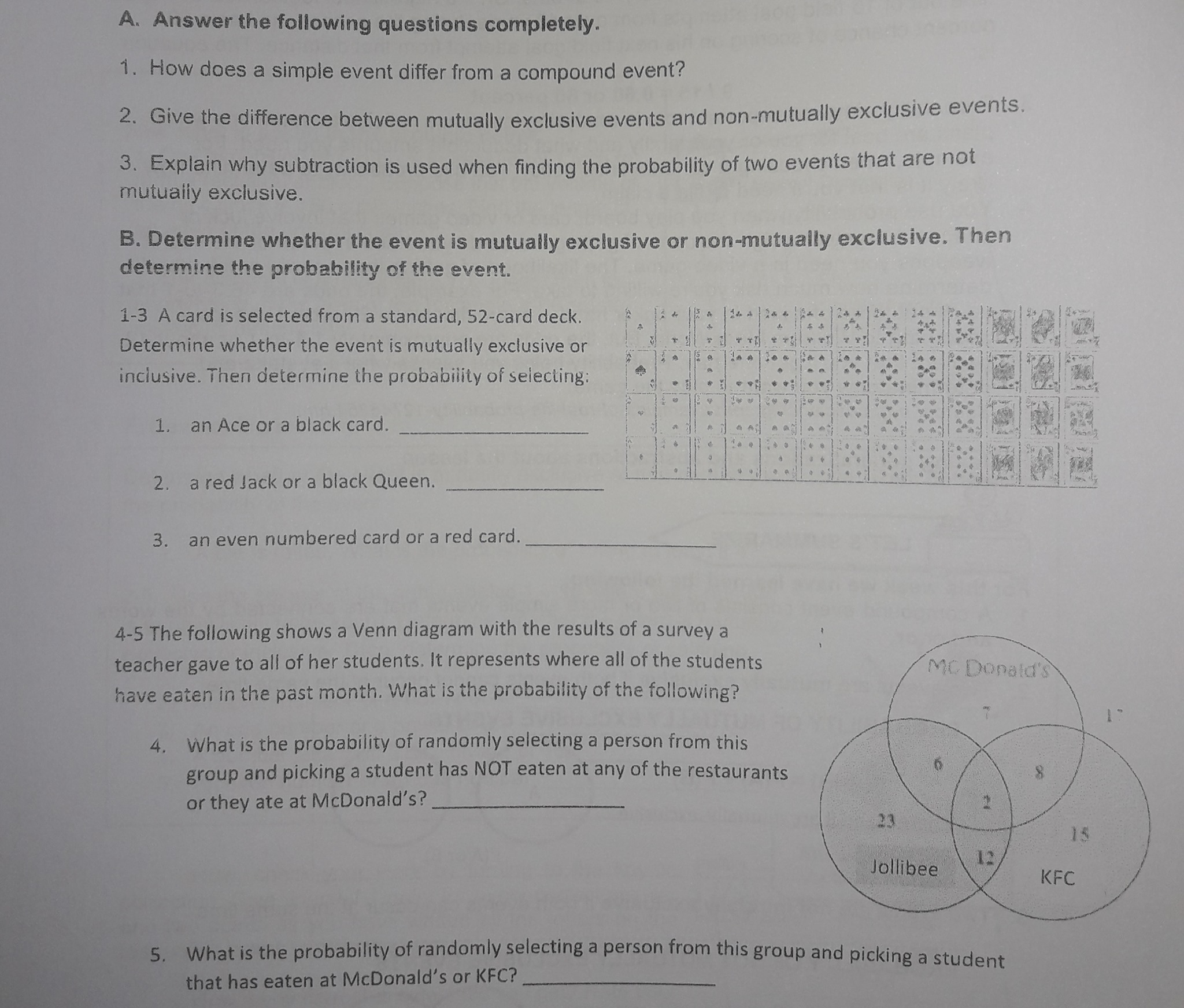
A. Answer the following questions completely. 1. How does a simple event differ from a compound event? 2. Give the difference between mutually exclusive events and non-mutually exclusive events. 3. Explain why subtraction is used when finding the probability of two events that are not mutually exclusive. B. Determine whether the event is mutually exclusive or non-mutually exclusive. Then determine the probability of the event. 1-3 A card is selected from a standard, 52-card deck. Determine whether the event is mutually exclusive or inA ina la inclusive. Then determine the probability of selecting: 1. an Ace or a black card. is s 2. a red Jack or a black Queen. 3. an even numbered card or a red card. 4-5 The following shows a Venn diagram with the results of a survey a teacher gave to all of her students. It represents where all of the students MC Donald's have eaten in the past month. What is the probability of the following? 4. What is the probability of randomly selecting a person from this group and picking a student has NOT eaten at any of the restaurants or they ate at Mcdonald's?_ 23 15 Jollibee 12 KFC 5. What is the probability of randomly selecting a person from this group and picking a student that has eaten at Mcdonald's or KFC
Step by Step Solution
There are 3 Steps involved in it

Get step-by-step solutions from verified subject matter experts
 Study Help