Answer all numbers and tell me which the correct ones please. thank you
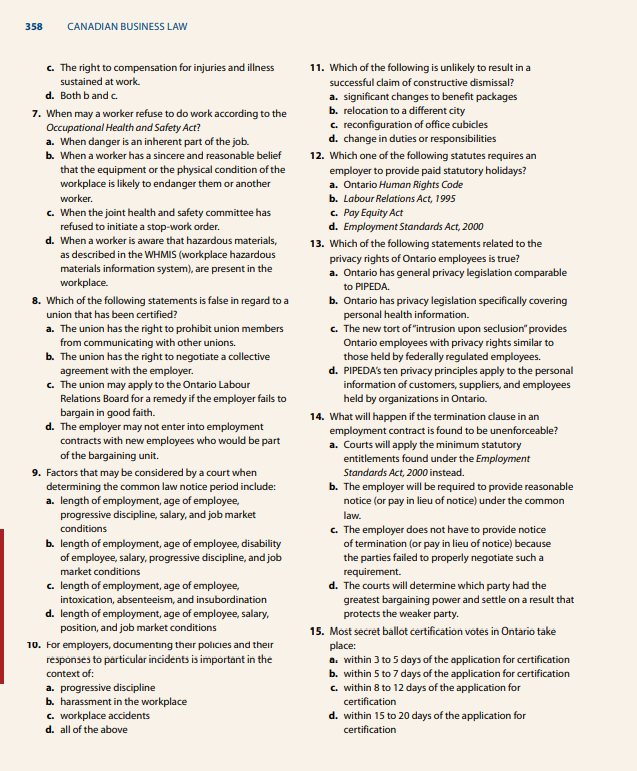
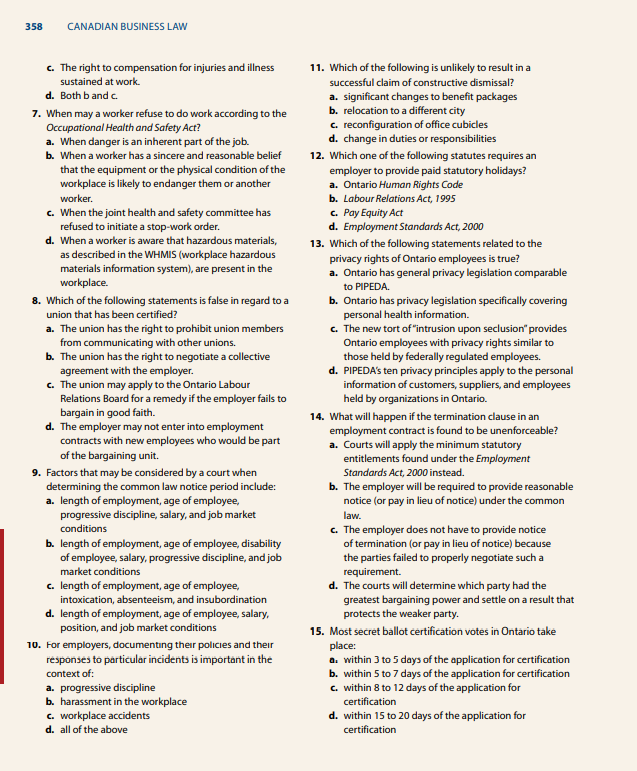
c. The right to compensation for injuries and illness 11. Which of the following is unlikely to result in a sustained at work. d. Both b and c. successful claim of constructive dismissal? b. relocation to a different city 7. When may a worker refuse to do work according to the c. reconfiguration of office cubicles Occupational Health and Safety Act? d. change in duties or responsibilities a. When danger is an inherent part of the job. 12. Which one of the following statutes requires an b. When a worker has a sincere and reasonable belief employer to provide paid statutory holidays? workplace is likely to endanger them or another a. Ontario Human Rights Code worker. b. Labour Relations Act, 1995 c. When the joint health and safety committee has c. Pay Equity Act refused to initiate a stop-work order. d. When a worker is aware that hazardous materials, 13. Which of the following statements related to the as described in the WHMIS (workplace hazardous privacy rights of Ontario employees is true? materials information system), are present in the workplace. to PIPEDA. union that has been certified? b. Ontario has privacy legislation a. The union has the right to prohibit union members c. The new tort of "intrusion upon seclusion" provides from communicating with other unions. b. The union has the right to negotiate a collective agreement with the employer. those held by federally regulated employees. c. The union may apply to the Ontario Labour d. PIPEDA's ten privacy principles apply to the personal Relations Board for a remedy if the employer fails to held by organizations in Ontario. bargain in good faith. d. The employer may not enter into employment contracts with new employees who would be of the bargaining unit. 14. What will happen if the termination clause in an employment contract is found to be unenforceable? a. Courts will apply the minimum statutory entitlements found under the Employment b. Tandards Act, 2000 instead. determining the common law notice period include: a. length of employment, age of employee, notice (or pay in lieu of notice) under the common progressive discipline, salary, and job market c. The employer does not have to provide notice b. length of employment, age of employee, disability of employee, salary, progressive discipline, and job market conditions c. length of employment, age of employee, intoxication, absenteeism, and insubordination d. length of employment, age of employee, salary, position, and job market conditions of termination (or pay in lieu of notice) because the parties failed to properly negotiate such a requirement. d. The courts will determine which party had the greatest bargaining power and settle on a result that protects the weaker party. 10. For employers, documenting their policies and their 15. Most secret ballot certification votes in Ontario take responses to particular incidents is important in the place: context of: a. within 3 to 5 days of the application for certification a. progressive discipline b. within 5 to 7 days of the application for certification b. harassment in the workplace c. within 8 to 12 days of the application for c. workplace accidents certification d. all of the above d. within 15 to 20 days of the application for certification c. The right to compensation for injuries and illness 11. Which of the following is unlikely to result in a sustained at work. d. Both b and c. successful claim of constructive dismissal? b. relocation to a different city 7. When may a worker refuse to do work according to the c. reconfiguration of office cubicles Occupational Health and Safety Act? d. change in duties or responsibilities a. When danger is an inherent part of the job. 12. Which one of the following statutes requires an b. When a worker has a sincere and reasonable belief employer to provide paid statutory holidays? workplace is likely to endanger them or another a. Ontario Human Rights Code worker. b. Labour Relations Act, 1995 c. When the joint health and safety committee has c. Pay Equity Act refused to initiate a stop-work order. d. When a worker is aware that hazardous materials, 13. Which of the following statements related to the as described in the WHMIS (workplace hazardous privacy rights of Ontario employees is true? materials information system), are present in the workplace. to PIPEDA. union that has been certified? b. Ontario has privacy legislation a. The union has the right to prohibit union members c. The new tort of "intrusion upon seclusion" provides from communicating with other unions. b. The union has the right to negotiate a collective agreement with the employer. those held by federally regulated employees. c. The union may apply to the Ontario Labour d. PIPEDA's ten privacy principles apply to the personal Relations Board for a remedy if the employer fails to held by organizations in Ontario. bargain in good faith. d. The employer may not enter into employment contracts with new employees who would be of the bargaining unit. 14. What will happen if the termination clause in an employment contract is found to be unenforceable? a. Courts will apply the minimum statutory entitlements found under the Employment b. Tandards Act, 2000 instead. determining the common law notice period include: a. length of employment, age of employee, notice (or pay in lieu of notice) under the common progressive discipline, salary, and job market c. The employer does not have to provide notice b. length of employment, age of employee, disability of employee, salary, progressive discipline, and job market conditions c. length of employment, age of employee, intoxication, absenteeism, and insubordination d. length of employment, age of employee, salary, position, and job market conditions of termination (or pay in lieu of notice) because the parties failed to properly negotiate such a requirement. d. The courts will determine which party had the greatest bargaining power and settle on a result that protects the weaker party. 10. For employers, documenting their policies and their 15. Most secret ballot certification votes in Ontario take responses to particular incidents is important in the place: context of: a. within 3 to 5 days of the application for certification a. progressive discipline b. within 5 to 7 days of the application for certification b. harassment in the workplace c. within 8 to 12 days of the application for c. workplace accidents certification d. all of the above d. within 15 to 20 days of the application for certification




