







Question: ANSWER QUESTION 2 Table Change Management Image and Vision: Links and Focus Image Vision-Change Link Focusing Attention on Director Vision is essential to successful Need
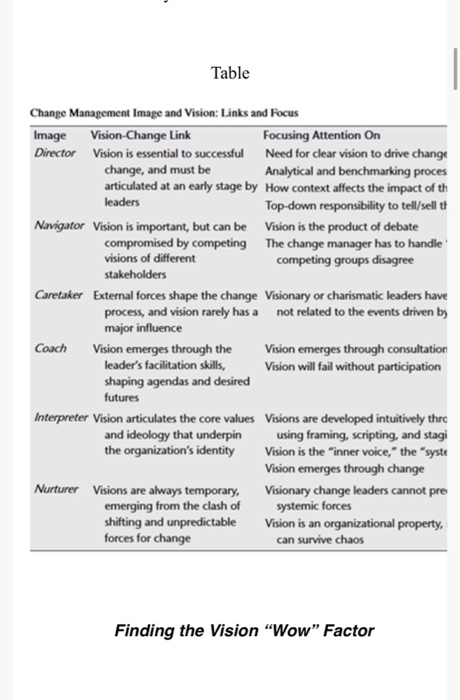
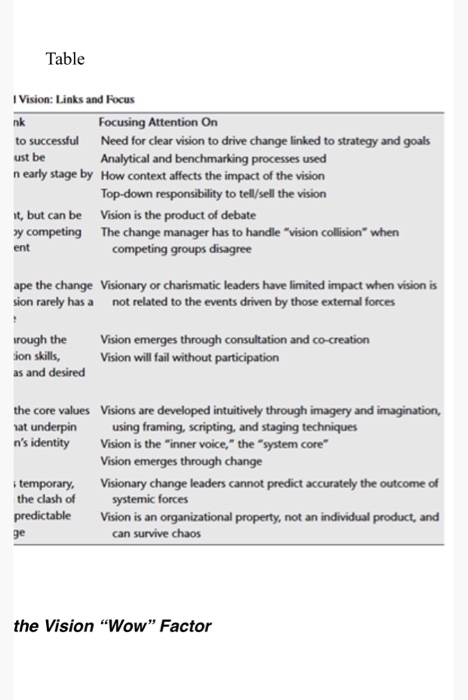
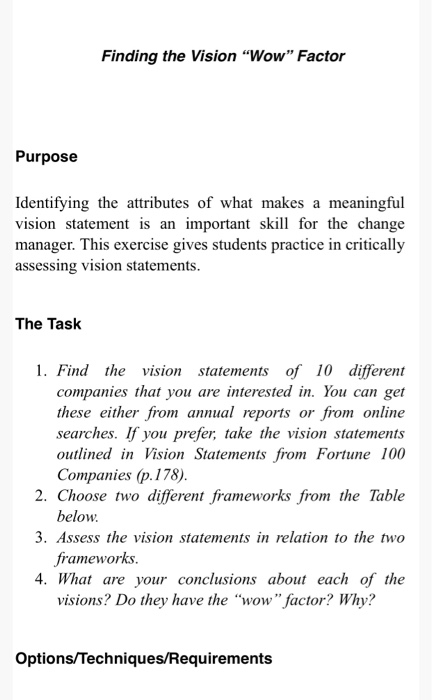
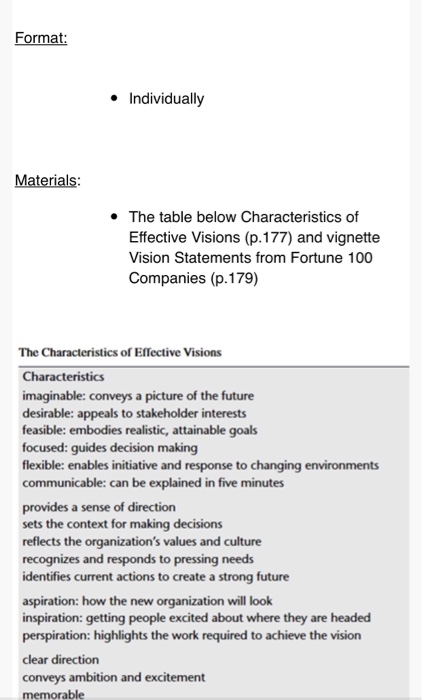
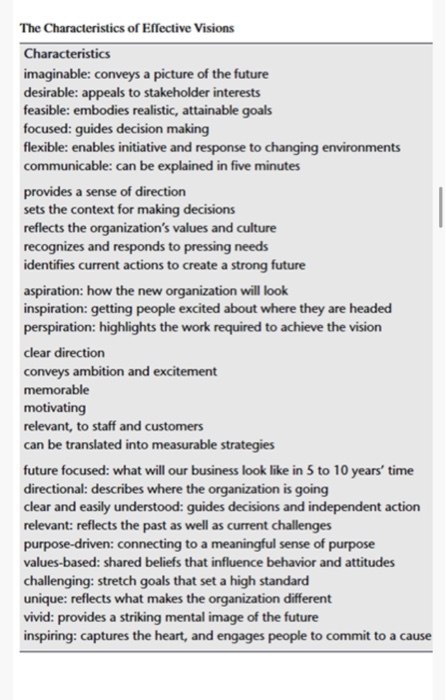
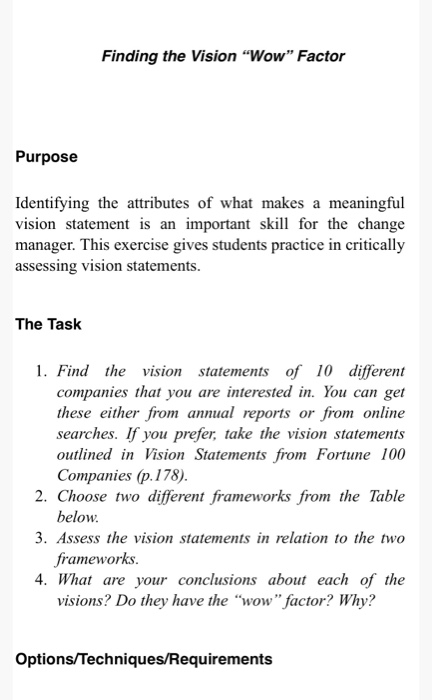
Table Change Management Image and Vision: Links and Focus Image Vision-Change Link Focusing Attention on Director Vision is essential to successful Need for clear vision to drive change change, and must be Analytical and benchmarking proces articulated at an early stage by How context affects the impact of th leaders Top-down responsibility to tell/sell tt Navigator Vision is important, but can be vision is the product of debate compromised by competing The change manager has to handle visions of different competing groups disagree stakeholders Caretaker External forces shape the change Visionary or charismatic leaders have process, and vision rarely has a not related to the events driven by major influence Coach Vision emerges through the Vision emerges through consultation leader's facilitation skills, Vision will fail without participation shaping agendas and desired futures Interpreter Vision articulates the core values Visions are developed intuitively thrc and ideology that underpin using framing, scripting, and stagi the organization's identity Vision is the "inner voice," the "syste Vision emerges through change Nurturer Visions are always temporary, Visionary change leaders cannot pre emerging from the clash of systemic forces shifting and unpredictable Vision is an organizational property, forces for change can survive chaos Finding the Vision "Wow" Factor Table I Vision: Links and Focus nk Focusing Attention on to successful Need for clear vision to drive change linked to strategy and goals ust be Analytical and benchmarking processes used n early stage by How context affects the impact of the vision Top-down responsibility to tell sell the vision it, but can be vision is the product of debate y competing The change manager has to handle "vision collision when ent competing groups disagree ape the change Visionary or charismatic leaders have limited impact when vision is sion rarely has a not related to the events driven by those external forces rough the sion skills, as and desired Vision emerges through consultation and co-creation Vision will fail without participation the core values Visions are developed intuitively through imagery and imagination, at underpin using framing, scripting, and staging techniques n's identity Vision is the inner voice," the "system core" Vision emerges through change i temporary Visionary change leaders cannot predict accurately the outcome of the clash of systemic forces predictable Vision is an organizational property, not an individual product, and ge can survive chaos the Vision "Wow" Factor Finding the Vision Wow Factor Purpose Identifying the attributes of what makes a meaningful vision statement is an important skill for the change manager. This exercise gives students practice in critically assessing vision statements. The Task 1. Find the vision statements of 10 different companies that you are interested in. You can get these either from annual reports or from online searches. If you prefer, take the vision statements outlined in Vision Statements from Fortune 100 Companies (p.178) 2. Choose two different frameworks from the Table below. 3. Assess the vision statements in relation to the two frameworks. 4. What are your conclusions about each of the visions? Do they have the wow factor? Why? Options/Techniques/Requirements Format: Individually Materials: The table below Characteristics of Effective Visions (p.177) and vignette Vision Statements from Fortune 100 Companies (p.179) The Characteristics of Effective Visions Characteristics imaginable: conveys a picture of the future desirable: appeals to stakeholder interests feasible: embodies realistic, attainable goals focused: guides decision making flexible: enables initiative and response to changing environments communicable: can be explained in five minutes provides a sense of direction sets the context for making decisions reflects the organization's values and culture recognizes and responds to pressing needs identifies current actions to create a strong future aspiration: how the new organization will look inspiration: getting people excited about where they are headed perspiration: highlights the work required to achieve the vision clear direction conveys ambition and excitement memorable The Characteristics of Effective Visions Characteristics imaginable: conveys a picture of the future desirable: appeals to stakeholder interests feasible: embodies realistic, attainable goals focused: guides decision making flexible: enables initiative and response to changing environments communicable: can be explained in five minutes provides a sense of direction sets the context for making decisions reflects the organization's values and culture recognizes and responds to pressing needs identifies current actions to create a strong future aspiration: how the new organization will look inspiration: getting people excited about where they are headed perspiration: highlights the work required to achieve the vision clear direction conveys ambition and excitement memorable motivating relevant to staff and customers can be translated into measurable strategies future focused: what will our business look like in 5 to 10 years' time directional: describes where the organization is going clear and easily understood: guides decisions and independent action relevant: reflects the past as well as current challenges purpose-driven: connecting to a meaningful sense of purpose values-based: shared beliefs that influence behavior and attitudes challenging: stretch goals that set a high standard unique: reflects what makes the organization different vivid: provides a striking mental image of the future inspiring: captures the heart, and engages people to commit to a cause Finding the Vision Wow Factor Purpose Identifying the attributes of what makes a meaningful vision statement is an important skill for the change manager. This exercise gives students practice in critically assessing vision statements. The Task 1. Find the vision statements of 10 different companies that you are interested in. You can get these either from annual reports or from online searches. If you prefer, take the vision statements outlined in Vision Statements from Fortune 100 Companies (p. 178). 2. Choose two different frameworks from the Table below. 3. Assess the vision statements in relation to the two frameworks. 4. What are your conclusions about each of the visions? Do they have the wow factor? Why? Options/Techniques/Requirements Table Change Management Image and Vision: Links and Focus Image Vision-Change Link Focusing Attention on Director Vision is essential to successful Need for clear vision to drive change change, and must be Analytical and benchmarking proces articulated at an early stage by How context affects the impact of th leaders Top-down responsibility to tell/sell tt Navigator Vision is important, but can be vision is the product of debate compromised by competing The change manager has to handle visions of different competing groups disagree stakeholders Caretaker External forces shape the change Visionary or charismatic leaders have process, and vision rarely has a not related to the events driven by major influence Coach Vision emerges through the Vision emerges through consultation leader's facilitation skills, Vision will fail without participation shaping agendas and desired futures Interpreter Vision articulates the core values Visions are developed intuitively thrc and ideology that underpin using framing, scripting, and stagi the organization's identity Vision is the "inner voice," the "syste Vision emerges through change Nurturer Visions are always temporary, Visionary change leaders cannot pre emerging from the clash of systemic forces shifting and unpredictable Vision is an organizational property, forces for change can survive chaos Finding the Vision "Wow" Factor Table I Vision: Links and Focus nk Focusing Attention on to successful Need for clear vision to drive change linked to strategy and goals ust be Analytical and benchmarking processes used n early stage by How context affects the impact of the vision Top-down responsibility to tell sell the vision it, but can be vision is the product of debate y competing The change manager has to handle "vision collision when ent competing groups disagree ape the change Visionary or charismatic leaders have limited impact when vision is sion rarely has a not related to the events driven by those external forces rough the sion skills, as and desired Vision emerges through consultation and co-creation Vision will fail without participation the core values Visions are developed intuitively through imagery and imagination, at underpin using framing, scripting, and staging techniques n's identity Vision is the inner voice," the "system core" Vision emerges through change i temporary Visionary change leaders cannot predict accurately the outcome of the clash of systemic forces predictable Vision is an organizational property, not an individual product, and ge can survive chaos the Vision "Wow" Factor Finding the Vision Wow Factor Purpose Identifying the attributes of what makes a meaningful vision statement is an important skill for the change manager. This exercise gives students practice in critically assessing vision statements. The Task 1. Find the vision statements of 10 different companies that you are interested in. You can get these either from annual reports or from online searches. If you prefer, take the vision statements outlined in Vision Statements from Fortune 100 Companies (p.178) 2. Choose two different frameworks from the Table below. 3. Assess the vision statements in relation to the two frameworks. 4. What are your conclusions about each of the visions? Do they have the wow factor? Why? Options/Techniques/Requirements Format: Individually Materials: The table below Characteristics of Effective Visions (p.177) and vignette Vision Statements from Fortune 100 Companies (p.179) The Characteristics of Effective Visions Characteristics imaginable: conveys a picture of the future desirable: appeals to stakeholder interests feasible: embodies realistic, attainable goals focused: guides decision making flexible: enables initiative and response to changing environments communicable: can be explained in five minutes provides a sense of direction sets the context for making decisions reflects the organization's values and culture recognizes and responds to pressing needs identifies current actions to create a strong future aspiration: how the new organization will look inspiration: getting people excited about where they are headed perspiration: highlights the work required to achieve the vision clear direction conveys ambition and excitement memorable The Characteristics of Effective Visions Characteristics imaginable: conveys a picture of the future desirable: appeals to stakeholder interests feasible: embodies realistic, attainable goals focused: guides decision making flexible: enables initiative and response to changing environments communicable: can be explained in five minutes provides a sense of direction sets the context for making decisions reflects the organization's values and culture recognizes and responds to pressing needs identifies current actions to create a strong future aspiration: how the new organization will look inspiration: getting people excited about where they are headed perspiration: highlights the work required to achieve the vision clear direction conveys ambition and excitement memorable motivating relevant to staff and customers can be translated into measurable strategies future focused: what will our business look like in 5 to 10 years' time directional: describes where the organization is going clear and easily understood: guides decisions and independent action relevant: reflects the past as well as current challenges purpose-driven: connecting to a meaningful sense of purpose values-based: shared beliefs that influence behavior and attitudes challenging: stretch goals that set a high standard unique: reflects what makes the organization different vivid: provides a striking mental image of the future inspiring: captures the heart, and engages people to commit to a cause Finding the Vision Wow Factor Purpose Identifying the attributes of what makes a meaningful vision statement is an important skill for the change manager. This exercise gives students practice in critically assessing vision statements. The Task 1. Find the vision statements of 10 different companies that you are interested in. You can get these either from annual reports or from online searches. If you prefer, take the vision statements outlined in Vision Statements from Fortune 100 Companies (p. 178). 2. Choose two different frameworks from the Table below. 3. Assess the vision statements in relation to the two frameworks. 4. What are your conclusions about each of the visions? Do they have the wow factor? Why? Options/Techniques/Requirements
Step by Step Solution
There are 3 Steps involved in it

Get step-by-step solutions from verified subject matter experts
 Study Help