







Question: Answer the question by choosing the best answer skill development Question II Answer the question by choosing the best answer: 1. In a horizontal organization,
Answer the question by choosing the best answer 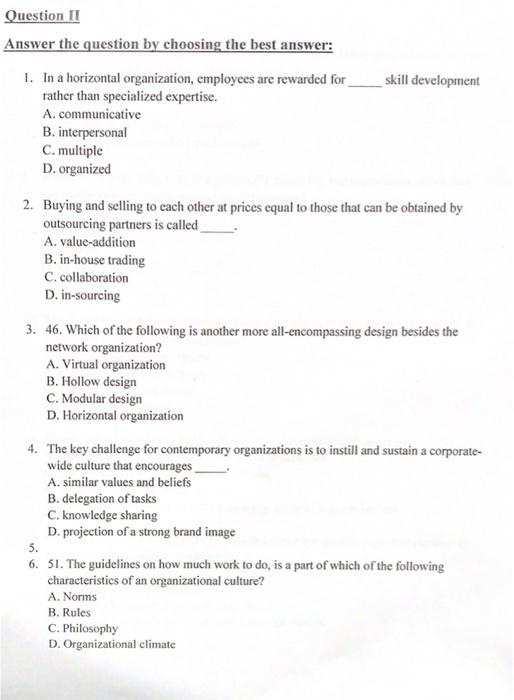
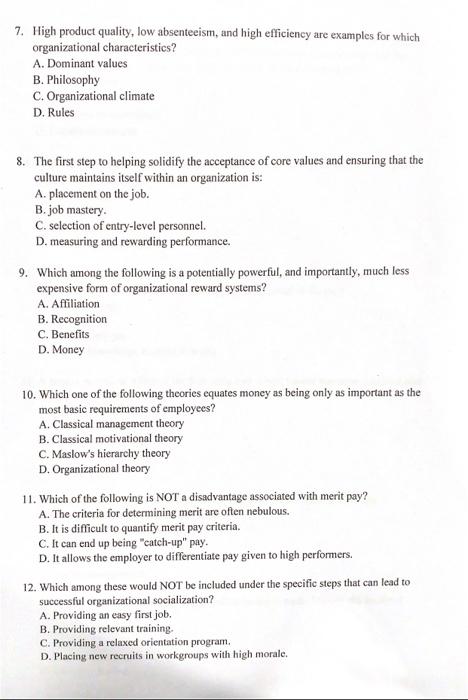
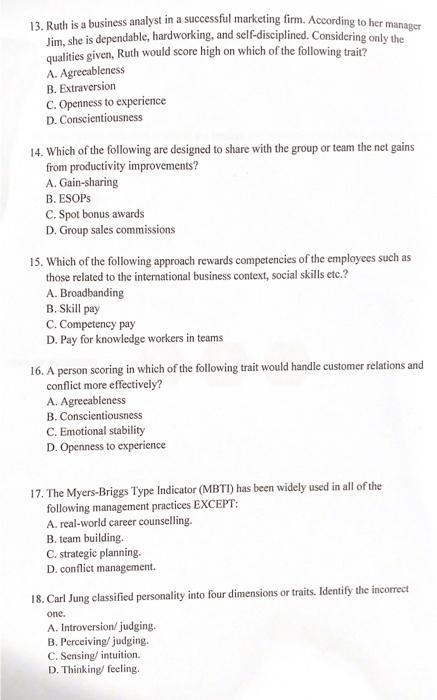
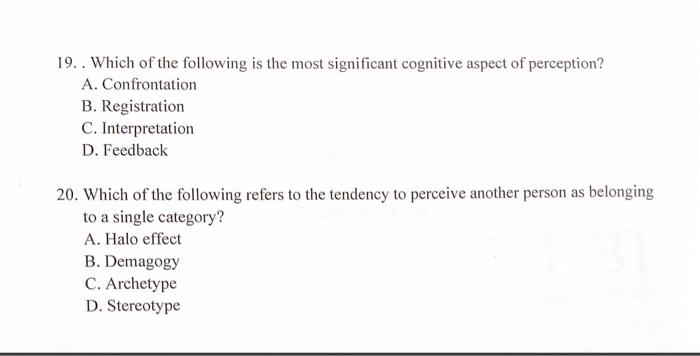
skill development Question II Answer the question by choosing the best answer: 1. In a horizontal organization, employees are rewarded for rather than specialized expertise. A. communicative B. interpersonal C. multiple D. organized 2. Buying and selling to each other at prices equal to those that can be obtained by outsourcing partners is called A. value-addition B. in-house trading C. collaboration D. in-sourcing 3. 46. Which of the following is another more all-encompassing design besides the network organization? A. Virtual organization B. Hollow design C. Modular design D. Horizontal organization 4. The key challenge for contemporary organizations is to instill and sustain a corporate- wide culture that encourages A. similar values and beliefs B. delegation of tasks C. knowledge sharing D. projection of a strong brand image 5. 6. 51. The guidelines on how much work to do, is a part of which of the following characteristics of an organizational culture? A. Norms B. Rules C. Philosophy D. Organizational climate 7. High product quality, low absenteeism, and high efficiency are examples for which organizational characteristics? A. Dominant values B. Philosophy C. Organizational climate D. Rules 8. The first step to helping solidify the acceptance of core values and ensuring that the culture maintains itself within an organization is: A. placement on the job. B.job mastery C. selection of entry-level personnel. D. measuring and rewarding performance. 9. Which among the following is a potentially powerful, and importantly, much less expensive form of organizational reward systems? A. Affiliation B. Recognition C. Benefits D. Money 10. Which one of the following theories equates money as being only as important as the most basic requirements of employees? A. Classical management theory B. Classical motivational theory C. Maslow's hierarchy theory D. Organizational theory 11. Which of the following is NOT a disadvantage associated with merit pay? A. The criteria for determining merit are often nebulous. B. It is difficult to quantify merit pay criteria. C. It can end up being "catch-up" pay. D. It allows the employer to differentiate pay given to high performers. 12. Which among these would NOT be included under the specific steps that can lead to successful organizational socialization? A. Providing an easy first job. B. Providing relevant training, C. Providing a relaxed orientation program. D. Placing new recruits in workgroups with high morale, 13. Ruth is a business analyst in a successful marketing firm. According to her manager Jim, she is dependable, hardworking, and self-disciplined. Considering only the qualities given, Ruth would score high on which of the following trait? A. Agreeableness B. Extraversion C. Openness to experience D. Conscientiousness 14. Which of the following are designed to share with the group or team the net gains from productivity improvements? A. Gain-sharing B. ESOPS C. Spot bonus awards D. Group sales commissions 15. Which of the following approach rewards competencies of the employees such as those related to the international business context, social skills etc.? A. Broadbanding B. Skill pay C. Competency pay D. Pay for knowledge workers in teams 16. A person scoring in which of the following trait would handle customer relations and conflict more effectively? A. Agreeableness B. Conscientiousness C. Emotional stability D. Openness to experience 17. The Myers-Briggs Type Indicator (MBTI) has been widely used in all of the following management practices EXCEPT: A. real-world career counselling. B.team building. C. strategic planning. D. conflict management 18. Carl Jung classified personality into four dimensions or traits. Identify the incorrect one. A. Introversion/judging, B. Perceiving/judging. C. Sensing/ intuition. D. Thinking feeling 19. . Which of the following is the most significant cognitive aspect of perception? A. Confrontation B. Registration C. Interpretation D. Feedback 20. Which of the following refers to the tendency to perceive another person as belonging to a single category? A. Halo effect B. Demagogy C. Archetype D. Stereotype Step by Step Solution
There are 3 Steps involved in it
1 Expert Approved Answer
Step: 1 Unlock

Question Has Been Solved by an Expert!
Get step-by-step solutions from verified subject matter experts
Step: 2 Unlock
Step: 3 Unlock
 Study Help