







Question: answer the question please Requirement 3 . Based on the information about two jobs, determine the total overhead costs for each job by using rates
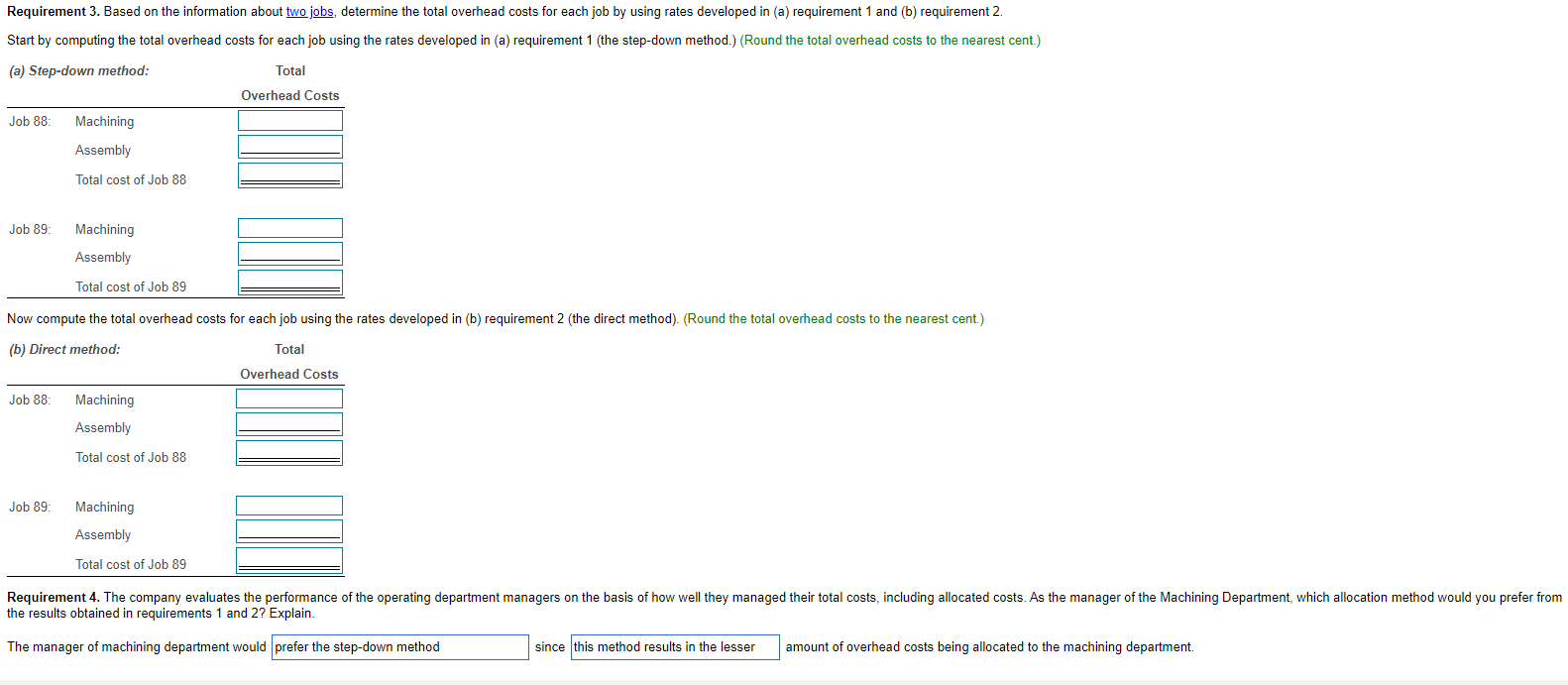
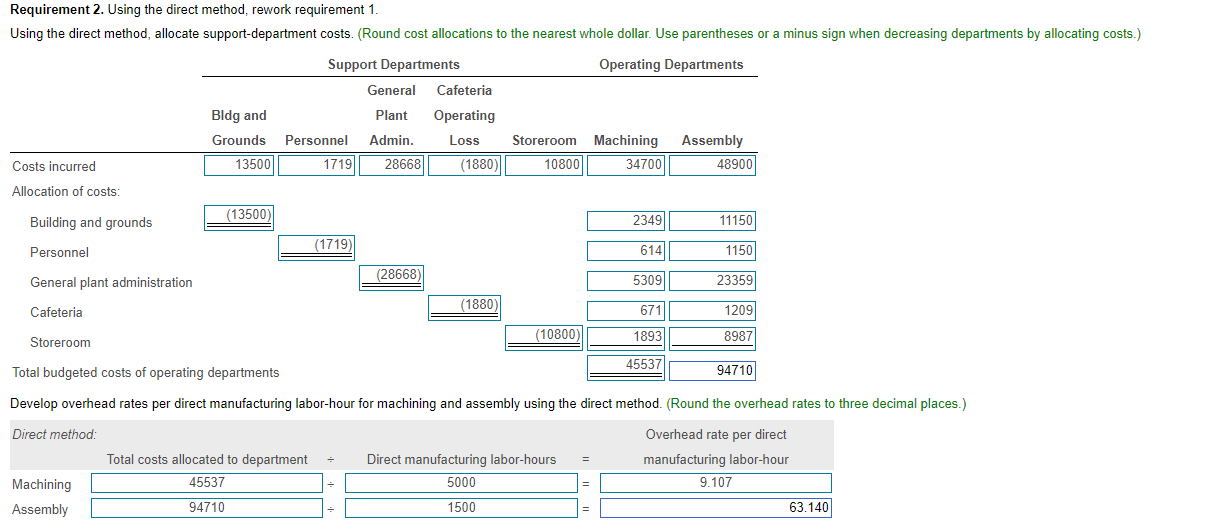
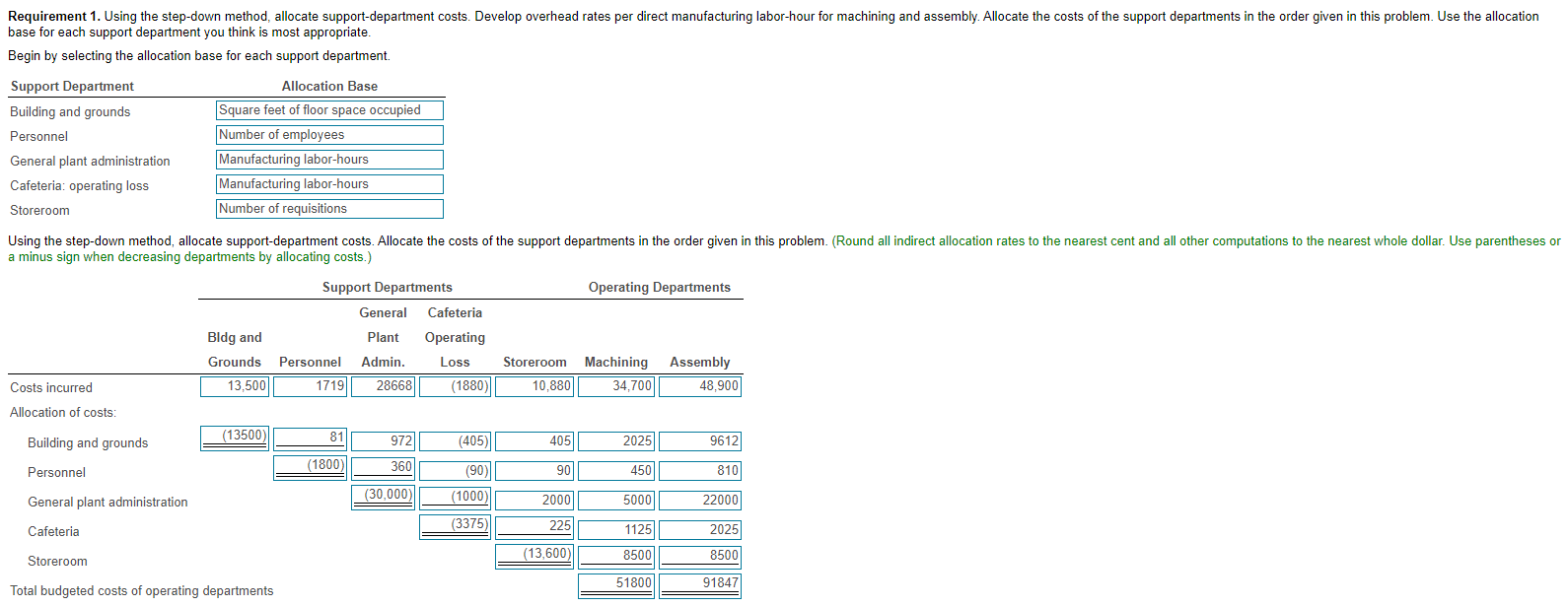
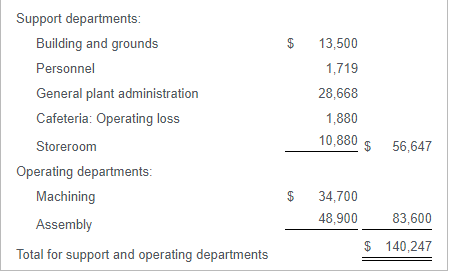
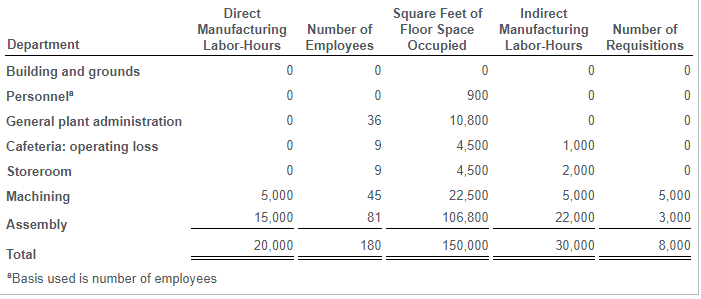
Requirement 3 . Based on the information about two jobs, determine the total overhead costs for each job by using rates developed in (a) requirement 1 and (b) requirement 2 . Start by computing the total overhead costs for each job using the rates developed in (a) requirement 1 (the step-down method.) (Round the total overhead costs to the nearest cent.) Now compute the total overhead costs for each job using the rates developed in (b) requirement 2 (the direct method). (Round the total overhead costs to the nearest cent.) the results obtained in requirements 1 and 2 ? Explain. The manager of machining department would since amount of overhead costs being allocated to the machining department. Requirement 2. Using the direct method, rework requirement 1. Develop overhead rates per direct manufacturing labor-hour for machining and assembly using the direct method. (Round the overhead rates to three decimal places.) base for each support department you think is most appropriate. Begin by selecting the allocation base for each support department. \begin{tabular}{ll|} Support Department & \multicolumn{1}{c}{ Allocation Base } \\ \hline Building and grounds & Square feet of floor space occupied \\ Personnel & Number of employees \\ General plant administration & Manufacturing labor-hours \\ Cafeteria: operating loss & Manufacturing labor-hours \\ Storeroom & Number of requisitions \\ \hline \end{tabular} a minus sign when decreasing departments by allocating costs.) Support departments: Building and grounds Personnel General plant administration Cafeteria: Operating loss Storeroom Operating departments: Machining Assembly $13,500 1,719 28,668 1,880 10,880$ 56,647 $34,700 Total for support and operating departments Requirement 3 . Based on the information about two jobs, determine the total overhead costs for each job by using rates developed in (a) requirement 1 and (b) requirement 2 . Start by computing the total overhead costs for each job using the rates developed in (a) requirement 1 (the step-down method.) (Round the total overhead costs to the nearest cent.) Now compute the total overhead costs for each job using the rates developed in (b) requirement 2 (the direct method). (Round the total overhead costs to the nearest cent.) the results obtained in requirements 1 and 2 ? Explain. The manager of machining department would since amount of overhead costs being allocated to the machining department. Requirement 2. Using the direct method, rework requirement 1. Develop overhead rates per direct manufacturing labor-hour for machining and assembly using the direct method. (Round the overhead rates to three decimal places.) base for each support department you think is most appropriate. Begin by selecting the allocation base for each support department. \begin{tabular}{ll|} Support Department & \multicolumn{1}{c}{ Allocation Base } \\ \hline Building and grounds & Square feet of floor space occupied \\ Personnel & Number of employees \\ General plant administration & Manufacturing labor-hours \\ Cafeteria: operating loss & Manufacturing labor-hours \\ Storeroom & Number of requisitions \\ \hline \end{tabular} a minus sign when decreasing departments by allocating costs.) Support departments: Building and grounds Personnel General plant administration Cafeteria: Operating loss Storeroom Operating departments: Machining Assembly $13,500 1,719 28,668 1,880 10,880$ 56,647 $34,700 Total for support and operating departments
Step by Step Solution
There are 3 Steps involved in it

Get step-by-step solutions from verified subject matter experts
 Study Help