



Question: applied flight dynamics My private pilot training took place in 1977 in a Cessna 150 from Ryan field near Tucson, Arizona. No one can exaggerate
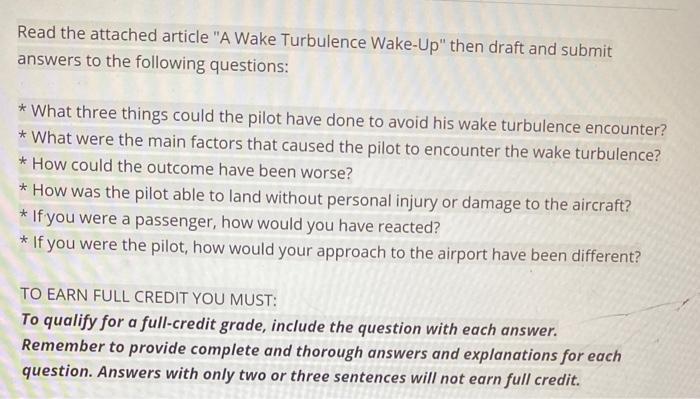
My private pilot training took place in 1977 in a Cessna 150 from Ryan field near Tucson, Arizona. No one can exaggerate the benefits of training as a student pilot in the persistent "severe clear" conditions that predominate the Arizona desert. However, even the perfect training environment could not prevent a nearly disastrous event that occurred during one of my solo cross-country flights. meticulous planniig Ryan field called Michael, my CFI, the preparation man because he demanded cross-country flying, sill aspects of his private pilot curriculum. This was especially true with respect to included the predictable private was then a luxury available only to the military. Michael's curriculum love for cross-country navivate pilot FAR mandates for solo cross-country flying. Michael knew of my flight was significant. The vast Arizona desert does not lend itself to an abundance of airports, so Michael rightfully supervised all planning aspects of this challenging flight. My route included a 96 -mile leg-one flight from Ryan field to Scottsdale airport north of Phoenix. There was no Bravo airspace around Phoenix Sky Harbor airport in 1977. It had more general aviation and business traffic than commercial flights. Leg two was a 140-mile flight from Scottsdale to Blythe California, followed by 200 -mile flight from Blythe back to Ryan field. Interestingly, it was not the 436-miles of this triangle that would challenge me, but an unexpected situation at the end of leg two. The morning of my flight, Michael made sure I was properly prepared, even commenting that although Scottsdale airport might be busy, Blythe would be a zero traffic event. He had been to that uncontrolled airport many times and never experienced any traffic concerns. My situation would be considerably different. The first leg was awesome, with unlimited visibility and easy navigation. I was able to enjoy a clear view of snow-capped Humphries Peak 120 miles north of Sky Harbor as I approached the Phoenix clear view of snow-capped Humphries Peklimited visibility and easy navigation. I was able to enjoy a area. I kept thinking that if the two remaining 120 miles north of Sky Harbor as I approached the Phoenix pilot in the world. The flight from Scottsdale to near Blythe was uneventful. Great visibility again allowed me to identify the airport west of Blythe from distance, and my course put me on a convenient long final approach for runway 26. During this extended final, I noticed a Lockheed P-3 Orion turning base to final. How cool, I thought, to share this uncontrolled airspace with such a large four-engine machine. Imagine my surprise when the P3 performed a touch-and-go, just as I had practiced so many times. This was my first mistake. It never crossed my mind that this immense aircraft would leave behind a tornadic wake turbulence as it departed. An airport advisory from the Blythe Flight Service Station made me feel even better abqut my mission thus far; light winds nearly straight down the runway. This was my second mistake. I became complacent about what I believed was going to be the perfect touchdown. I noticed the P-3 entering a left crosswind when I was about one mile out. Plenty of time, I thought, to execute a safe touchdown and clear the active. At about 300 feet AGL, however, I encountered an uncomfortable turbulence. It was not severe, but choppy enough for me to abort my landing and initiate a go-around. Full throttle, bleed off the flaps, trim for best ROC, and fly a normal left traffic pattern. I quickly disregarded this meteorological unrest as an anomaly of the region. During my turn from crosswind to downwind, I noticed the P-3 ahead of me, still on downwind. This was perfect, so I thought. The Orion, a much faster airplane, would complete its next touch-and-go clear view of snow-capped Humphries Peklimited visibility and easy navigation. I was able to enjoy a area. I kept thinking that if the two remaining 120 miles north of Sky Harbor as I approached the Phoenix pilot in the world. The flight from Scottsdale to near Blythe was uneventful. Great visibility again allowed me to identify the airport west of Blythe from distance, and my course put me on a convenient long final approach for runway 26. During this extended final, I noticed a Lockheed P-3 Orion turning base to final. How cool, I thought, to share this uncontrolled airspace with such a large four-engine machine. Imagine my surprise when the P3 performed a touch-and-go, just as I had practiced so many times. This was my first mistake. It never crossed my mind that this immense aircraft would leave behind a tornadic wake turbulence as it departed. An airport advisory from the Blythe Flight Service Station made me feel even better abqut my mission thus far; light winds nearly straight down the runway. This was my second mistake. I became complacent about what I believed was going to be the perfect touchdown. I noticed the P-3 entering a left crosswind when I was about one mile out. Plenty of time, I thought, to execute a safe touchdown and clear the active. At about 300 feet AGL, however, I encountered an uncomfortable turbulence. It was not severe, but choppy enough for me to abort my landing and initiate a go-around. Full throttle, bleed off the flaps, trim for best ROC, and fly a normal left traffic pattern. I quickly disregarded this meteorological unrest as an anomaly of the region. During my turn from crosswind to downwind, I noticed the P-3 ahead of me, still on downwind. This was perfect, so I thought. The Orion, a much faster airplane, would complete its next touch-and-go ahead of my touchdown. This was my third mistake. I failed to consider that a Lockheed P-3 Orion does not fly the pattern like a Cessna 150. Before long, the Orion had extended its downwind much further than I expected. Michael emphasized a regimented way to know when to turn downwind to base. I would use the runway threshold as a reference between my left wingtip and the horizontal stabilizer. Unfortunately, I could not do this, unless I thought it wise to broadside a P-3 Orion, now on final. Instead, I too extended my downwind to compensate for the Orion's pattern. But I also did not want to create my own excessively long and flat final approach. In what I considered a smart compromise, I flew the remainder of my approach for a planned touchdown only a minute or so after the Orion's touch-and-go. This was my final mistake. What the heck was I thinking? Base to final, no problem. The P-3 had just finished its touch-and-go as I crossed the threshold of runway 26. Then, as I began to flair, everything unraveled. My little Cessna pitched up violently and banked uncontrollably to the right at least 60 degrees. The airspeed dropped off rapidly as the stall warning horn and my screaming expletives filled the cabin. I knew I was going to crash. Hard opposite controls and quick power management corrected the upset, but I was now about twenty feet above the runway centerline with an airspeed needle winding rapidly counterclockwise. As my littlo craft sank toward the concrete, my only option was a hard pull on the yoke, which through some miracle of acrodynamics allowed me to settle perfectly onto runway 26. In retrospect, 1 find it quite interesting that my only concern while taxiing to the Blythe FSS for my logbook signoff, other than finding the nearest bathroom, was whether anyone on the ramp observed my hair-raising perfect landing. Thankfully, both the ramp and the bathroom were empty. Leg three of my trip was great. Tucson's Ryan field greeted me with a pristine desert evening and Michael with his predictable thorough debriefing. Although I did mention an unusual landing to Michael, I did not share the details. I am sure, however, that had he known of my wake turbulence wake-up, he would have agreed with my assessment. I became so comfortable with my "beautiful" trip that even the most basic safety rule--wake turbulence separation--got lost in the majesty and fun of everything else. Read the attached article "A Wake Turbulence Wake-Up" then draft and submit answers to the following questions: * What three things could the pilot have done to avoid his wake turbulence encounter? * What were the main factors that caused the pilot to encounter the wake turbulence? * How could the outcome have been worse? * How was the pilot able to land without personal injury or damage to the aircraft? * If you were a passenger, how would you have reacted? * If you were the pilot, how would your approach to the airport have been different? TO EARN FULL CREDIT YOU MUST: To qualify for a full-credit grade, include the question with each answer. Remember to provide complete and thorough answers and explanations for each question. Answers with only two or three sentences will not earn full credit
Step by Step Solution
There are 3 Steps involved in it

Get step-by-step solutions from verified subject matter experts