







Question: Apriori Implementation def generate_frequent_itemsets (dataset, support, items, n=1, frequent_items={}): Input: 1. dataset - A python dictionary containing the transactions. 2. support - A floating point
Apriori Implementation
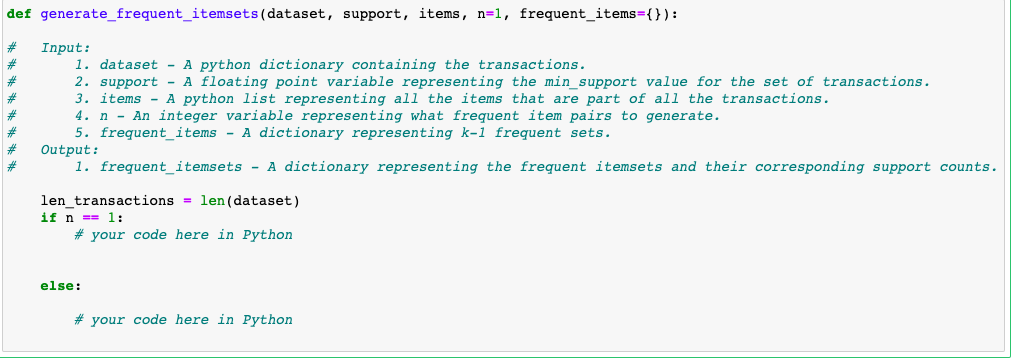
def generate_frequent_itemsets (dataset, support, items, n=1, frequent_items={}): Input: 1. dataset - A python dictionary containing the transactions. 2. support - A floating point variable representing the min_support value for the set of transactions. 3. items - A python list representing all the items that are part of all the transactions. 4. n - An integer variable representing what frequent item pairs to generate. 5. frequent_items - A dictionary representing k-1 frequent sets. Output: 1. frequent_itemsets - A dictionary representing the frequent itemsets and their corresponding support counts. len_transactions = len (dataset) if n = 1: # your code here in Python else: # your code here in Python def generate_frequent_itemsets (dataset, support, items, n=1, frequent_items={}): Input: 1. dataset - A python dictionary containing the transactions. 2. support - A floating point variable representing the min_support value for the set of transactions. 3. items - A python list representing all the items that are part of all the transactions. 4. n - An integer variable representing what frequent item pairs to generate. 5. frequent_items - A dictionary representing k-1 frequent sets. Output: 1. frequent_itemsets - A dictionary representing the frequent itemsets and their corresponding support counts. len_transactions = len (dataset) if n = 1: # your code here in Python else: # your code here in Python
Step by Step Solution
There are 3 Steps involved in it

Get step-by-step solutions from verified subject matter experts
 Study Help